Ethiopia’s election delivers power, but not peace


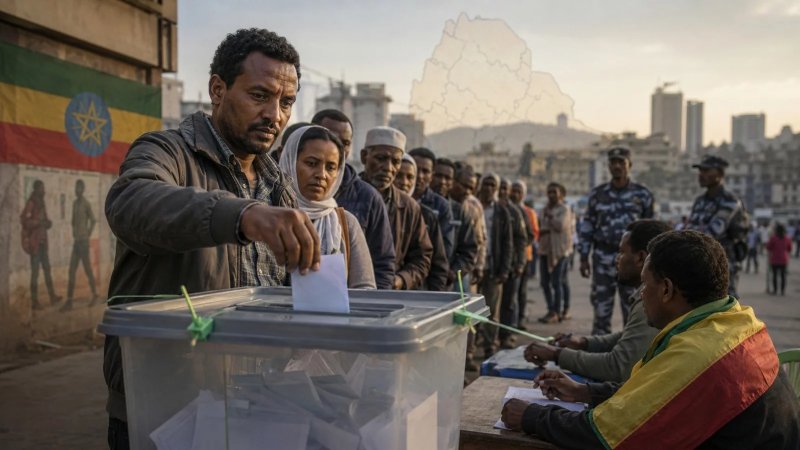
Ethiopia held parliamentary and regional elections on June 1 in a vote widely expected to strengthen the position of Prime Minister Abiy Ahmed and his ruling Prosperity Party. While polling took place across much of the country, the election was far from a fully inclusive or calm political process. It unfolded against the backdrop of armed instability, a fragmented opposition, the continued exclusion of Tigray from the vote, and serious questions over the competitiveness of Ethiopia’s political environment.
More than 50 million people were registered to vote. Ethiopians were choosing members of the lower house of parliament, the House of Peoples’ Representatives, as well as representatives for regional and local bodies. The new parliament will effectively determine the next government. Given the dominance of the Prosperity Party, observers do not expect major surprises: Abiy Ahmed’s party is widely seen as likely to retain its majority and secure him another five-year term.
However, the central issue of these elections was not the identity of the likely winner, but the legitimacy of the process itself. Voting did not take place in the northern region of Tigray, which has now remained outside a full federal electoral process for a second consecutive cycle. Tigray was devastated by the 2020–2022 war between federal forces and the Tigray People’s Liberation Front. Although a peace agreement was signed in 2022, the region’s political and institutional situation remains fragile. For critics, the absence of Tigray from the elections means that millions of citizens have once again been left without full representation at the federal level.
Serious problems were also reported in other parts of the country. In Amhara and Oromia, where armed clashes and tensions continue between the federal government, regional forces and various armed groups, voting was either limited or disrupted in some areas. According to international media reports, more than a hundred polling stations faced security-related disruptions and were unable to resume operations. At the same time, voting continued at tens of thousands of polling stations across the country.
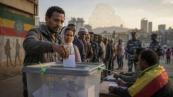
In the capital, Addis Ababa, voting took place under heightened security. Authorities presented the election as a sign that Ethiopia’s institutions remain functional despite years of internal turmoil. But opposition groups and critics argue that the political field remains heavily restricted and that the vote cannot be seen as a fully competitive contest.
Photo Credit: Pablographix
Opposition parties and rights groups have previously complained of pressure, arrests, administrative obstacles and unequal conditions during the campaign. The government denies these accusations. Nevertheless, Ethiopia’s opposition remains weak, divided and unable to compete with the resources and reach of the ruling party. As a result, the election is being viewed by many observers less as a genuine struggle for power and more as a mechanism for confirming the dominance of the existing leadership.
For Abiy Ahmed, the vote carries particular significance. He came to power in 2018 amid high expectations of reform and democratic opening. In 2019, he was awarded the Nobel Peace Prize for normalizing relations with Eritrea. But the years that followed dramatically changed the perception of his leadership. Ethiopia went through the devastating Tigray war, rising ethnic tensions, conflicts in Amhara and Oromia, growing criticism over human rights, and strained relations with some neighbors, including Eritrea.
At the same time, the government has focused heavily on economic achievements. The Prosperity Party campaigned on messages of growth, food security, infrastructure development and national modernization. For the ruling party, this is one of its key arguments: despite security challenges, Ethiopia, according to the government, remains on a path of development and needs political continuity.
Yet stability remains the most contested issue. Ethiopia is facing several crises at once. Armed conflicts continue in parts of the country, and tensions between the central government and regional forces remain unresolved. The country’s political system, built on a complex model of ethnic federalism, is under serious strain. Abiy Ahmed’s efforts to strengthen a more centralized national political structure through the Prosperity Party have met resistance in several regions.
That is why these elections should be seen not only as a domestic political event, but also as a test of the Ethiopian state’s resilience. If the Prosperity Party secures the expected majority, Abiy Ahmed will receive a formal mandate to continue his course. But that mandate will come with an important limitation: part of the country did not vote, some regions voted under unstable conditions, and much of the opposition believes the process was unfair.
Final results are expected by June 11. But the broader political conclusion is already clear: Ethiopia’s elections are unlikely to bring a change of power or mark the beginning of a new political era. Instead, they are expected to consolidate the current balance of power, with the ruling party maintaining control over federal institutions while the country’s key challenges — regional conflicts, a crisis of trust, a weakened opposition and the need for national reconciliation — remain unresolved.
In this sense, the election’s main outcome is not simply the expected victory of the Prosperity Party. It is also a reflection of Ethiopia’s complex reality. The country continues to function as a state with a powerful central government and an ambitious development agenda, but it also remains deeply divided politically, regionally and ethnically. A new mandate for Abiy Ahmed may strengthen his position, but it will not remove the central challenge facing his leadership: whether a formal electoral victory can be turned into genuine national reconciliation.
By Ulviyya Salmanli


Similar news