South Korea votes in local elections: First major test for president Lee Jae-Myung


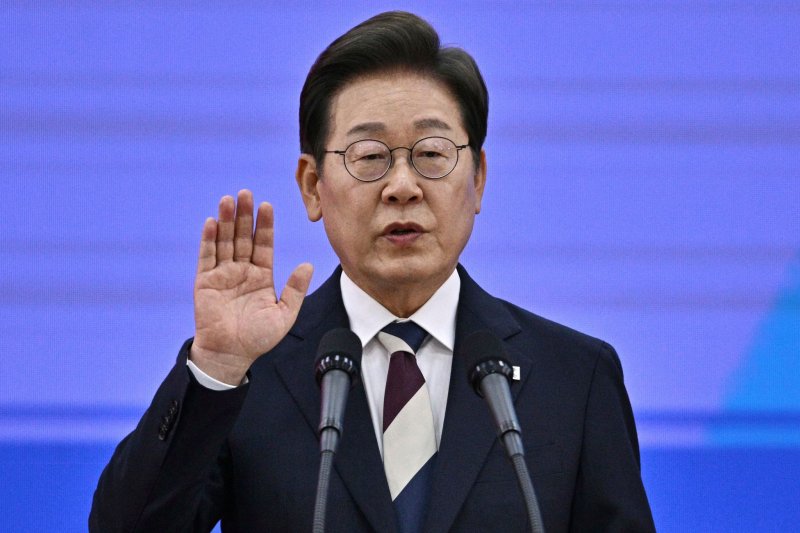
South Korea is holding nationwide local elections on June 3, in what has become one of the country’s most important domestic political events of the year and the first major electoral test for President Lee Jae-myung since he came to power.
Formally, the vote concerns regional and municipal offices, but in practice its significance goes far beyond local politics. The elections are widely seen as a political barometer that will show how solid the new president’s public support remains, how voters assess his first year in office, and whether the conservative opposition can recover after a period of serious political turmoil.
The vote covers mayoral and gubernatorial races in 16 major cities and provinces across the country. Particular attention is focused on South Korea’s largest political and economic centers — Seoul and Busan. These cities traditionally carry special weight in national politics. Victory in Seoul is seen not only as an administrative success but also as a major symbol of political influence, as the capital reflects the mood of the middle class, young voters, business circles, and the politically active part of society. Busan, meanwhile, is important as the country’s second-largest city, a major port and industrial hub, and a region where conservative forces have traditionally sought to maintain strong positions.
Alongside the local elections, South Korea is also holding parliamentary by-elections. This gives the vote additional significance, as the results could affect the balance of power in the National Assembly. In South Korea’s political system, parliament plays a crucial role in advancing legislative initiatives, approving key reforms, and overseeing the government. Even a limited change in parliamentary dynamics could therefore strengthen or complicate the position of Lee Jae-myung’s administration.
For the president, these elections are especially important. Lee Jae-myung came to power after the early presidential election of 2025, which followed a deep political crisis surrounding former President Yoon Suk Yeol. His victory was viewed by a significant part of society as an opportunity for political renewal, the restoration of trust in state institutions, and the easing of domestic confrontation. But a year after the change in leadership, voters are now judging not only promises but also the first practical results of the new administration.
That is why the current vote can be seen as Lee Jae-myung’s first major nationwide exam. If the ruling Democratic Party performs strongly, it will mean that a substantial share of the public is still ready to support the president’s course. Such an outcome would give the administration additional political momentum to advance reforms, strengthen the party’s position at the local level, and allow the president to act with greater confidence in parliament and in relations with the opposition. A weak performance by the ruling camp, on the other hand, could be interpreted as a sign of voter dissatisfaction and a warning to the administration that it may need to adjust its political course.
RECOMMENDED STORIES
The battle for Seoul is particularly important. In South Korean politics, the capital is often not just a place of administrative competition but a stage for the struggle between national political projects. Winning Seoul can strengthen a party’s image as a force capable of governing the country’s most complex and influential urban space. For the Democratic Party, success in the capital would confirm that the liberal camp continues to enjoy the support of a significant share of the urban electorate. For conservatives, however, victory in Seoul would serve as evidence that they can regain public trust after the political crisis and once again compete seriously for national power.
Busan is also strategically important. The city is not only a major economic center but also a politically sensitive region. The result there will show how much influence the conservative opposition has retained in areas traditionally more favorable to it, and whether it can resist the expansion of the ruling party’s influence. For the president and his supporters, success in Busan would be particularly significant, as it would demonstrate the Democratic Party’s ability to broaden its electoral base beyond its usual strongholds.
For the opposition People Power Party, these elections are a test of survival and recovery. After the crisis linked to former President Yoon Suk Yeol, the conservative camp found itself in a difficult position. Its image was seriously damaged, while internal disputes intensified over the party’s future direction. Some conservatives argue for renewal of the party leadership and a clear distancing from the legacy of the previous administration, while others believe the party should maintain a hard line against the liberal government. The elections are expected to show which strategy resonates more with voters.
If conservatives manage to succeed in major cities or at least hold key positions in certain regions, this could mark the beginning of their political rehabilitation. Such a result would allow the opposition to argue that society is not ready to give the ruling party a monopoly on power. But if the People Power Party suffers defeat in most significant races, calls for deeper renewal, new leadership, and a revision of the party’s agenda will likely grow stronger inside the conservative camp.
The social and economic agenda has been an important factor in the campaign. South Korea remains one of Asia’s most advanced economies, but the country faces a number of domestic challenges. These include high housing costs, pressure on young families, rising living expenses, a demographic crisis, competition in the labor market, problems faced by small and medium-sized businesses, and the need to maintain competitiveness amid the global technology race. These issues directly shape the mood of voters, especially in major cities.
For many South Koreans, the local elections have become an opportunity to express their views not only on city or provincial candidates but also on the broader economic policy of the authorities. Voters are assessing how effectively the administration can respond to everyday concerns: housing prices, public transport, urban infrastructure, education, healthcare, and employment support. This is why local elections in South Korea often turn into a broader vote of confidence in the central government.
Lee Jae-myung came to power promising a more socially oriented policy, support for households, reduced pressure on citizens, and greater attention to economic inequality. But fulfilling such promises requires not only political will but also strong positions for the ruling party at all levels of government. If the Democratic Party strengthens its presence in the regions, the president will gain a more convenient institutional foundation for implementing his program. Local administrations can become an important tool for translating presidential policy into practice — from housing programs to infrastructure projects.
At the same time, the opposition has an opportunity to use public dissatisfaction with certain aspects of government policy. Conservatives are emphasizing economic efficiency, administrative competence, security, and the need to prevent an excessive concentration of power in the hands of the president and his party. Their central argument is that the country needs political balance, not the domination of one political force. For some voters, this message may be persuasive, especially given South Korea’s traditionally high level of political polarization.
The issue of political stability also occupies a special place in this campaign. In recent years, South Korean society has gone through a period of intense confrontation, with the struggle between liberals and conservatives moving far beyond ordinary party competition. The crisis surrounding former President Yoon Suk Yeol deepened mistrust between political camps and sharpened social divisions. Against this backdrop, the June 3 elections are being viewed as a test of the country’s ability to return to a normal democratic process, where the government and opposition compete through elections rather than prolonged institutional conflict.
The high level of interest in the vote shows that South Korean society remains politically active. For a country with a strong electoral culture, local elections traditionally matter because they allow citizens to directly influence the quality of governance in their city or province. This campaign, however, is different because the regional agenda has become closely intertwined with national politics. Issues such as transport, housing, education, and urban development are linked to a broader question: do voters still trust the new government, and are they ready to give it more time?
The parliamentary by-elections add further intrigue. They could affect how confidently the administration can push its initiatives through the National Assembly. For President Lee Jae-myung, it is important not only to preserve public support but also to have the political tools needed to implement his program. If the by-elections strengthen the ruling party, it could make it easier to pass legislation and reduce dependence on compromises with the opposition. If the opposition gains additional seats, it will be able to block or reshape government initiatives more actively.
In the long term, these elections could also influence the next presidential race. In South Korea, local elections often serve as a platform for the emergence of new national political figures. Successful mayors of major cities, provincial governors, and winners of parliamentary by-elections can quickly move onto the national stage. That is why the results of June 3 will be studied not only in terms of the current balance of power but also as a possible signal of the formation of a future generation of political leaders.
The foreign policy backdrop should not be ignored either. Although local elections are primarily about domestic issues, their outcome could affect the administration’s confidence in pursuing its broader foreign policy agenda. South Korea operates in a complex strategic environment: the alliance with the United States remains the foundation of its security, relations with Japan are important for regional coordination, China remains its largest economic partner, and North Korea continues to pose a serious challenge. Lee Jae-myung has advocated a pragmatic approach, under which Seoul should maintain its alliance commitments while avoiding excessive dependence on external powers and preserving space for diplomacy.
A strong performance by the ruling party could strengthen the president’s position in this area as well. It would give him greater domestic legitimacy to pursue a balanced foreign policy involving Washington, Beijing, Tokyo, and Pyongyang. A weak result, by contrast, could make the administration more cautious, as the opposition would gain additional arguments to criticize foreign policy decisions.
For international observers, South Korea’s local elections are important because the country is one of Asia’s key democracies, a major U.S. ally, a technological powerhouse, and a vital participant in global supply chains. Political stability in Seoul matters not only for domestic affairs but also for the regional balance in East Asia. Any major shift in the political mood of South Korean society could affect economic policy, defense planning, and diplomatic priorities.
Thus, the June 3 vote has become far more than another round of local elections. It has turned into a comprehensive test for South Korea’s entire political system. For President Lee Jae-myung, it is a test of public trust after his first year in office. For the Democratic Party, it is a chance to consolidate influence at the regional level and gain additional resources for advancing reforms. For the conservative opposition, it is an opportunity to prove that it can return to the political game after a damaging crisis. For voters, it is a way to express their views on the government, economic challenges, and the country’s future political direction.
The outcome of the elections will show how durable Lee Jae-myung’s political mandate remains, whether society is ready to continue supporting his course, and whether the opposition can turn dissatisfaction among part of the electorate into a real political result. Regardless of which party wins more posts, these elections will become an important starting point for the next stage of South Korean politics. They will determine not only the composition of regional governments but also the tone of political competition in the years ahead.


Similar news