Russian business lobby asks Putin for heavy weapons to fight drones


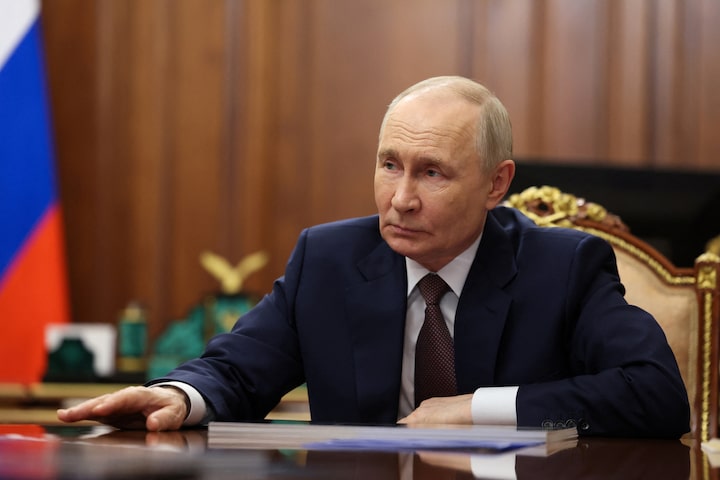
Faced with a devastating surge in Ukrainian drone strikes, Russia’s most powerful corporate lobbying group has appealed directly to President Vladimir Putin for permission to purchase heavier weaponry, electronic warfare systems, and laser defense installations to safeguard industrial plants.
Alexander Shokhin, the head of the Russian Union of Industrialists and Entrepreneurs, detailed the proposal during a high-profile meeting with Putin, according to transcripts published on the Kremlin’s official website. Shokhin emphasized that Russian businesses are fully prepared to self-fund these high-tech defense upgrades, but urgently require a clear legal and financial mechanism—such as a specialized state-managed fund—to facilitate the procurement of military-grade hardware, News.Az reports, citing Reuters.
The corporate appeal underscores the severe toll that long-range Ukrainian drone operations have taken on Russia's economic backbone this year, crippling vital oil refineries, maritime ports, fertilizer plants, and fuel storage facilities.
RECOMMENDED STORIES
While Moscow has already taken emergency steps to allow private security firms to deploy standard 7.62mm automatic rifles, like the AK-47, corporate leaders insist that light firearms are entirely inadequate against modern, fast-moving aerial threats.
"Businesses are ready to finance all this work, but a mechanism is needed where financing schemes are clear," Shokhin told Putin, arguing that factories need an immediate upgrade to heavy-caliber weaponry, sophisticated laser counter-measures, and signal-jamming electronic warfare grids.
Beyond requesting advanced military hardware, Shokhin raised several operational and financial grievances born from the ongoing conflict:
Tax Relief for Repairs: The business lobby requested that the Kremlin defer penalties, fines, and interest on delayed tax payments for companies whose cash flows have been disrupted while repairing infrastructure heavily damaged by drone bombardments.
Security Unit Fracturing: Shokhin complained that local security forces and military reservists assigned to protect vulnerable industrial facilities are being moved between different geographic sites too frequently, leaving critical factories open to ambush and weakening overall defensive lines.
By Aysel Mammadzada


Similar news