SpaceX to launch NASA, NOAA missions exploring solar impacts


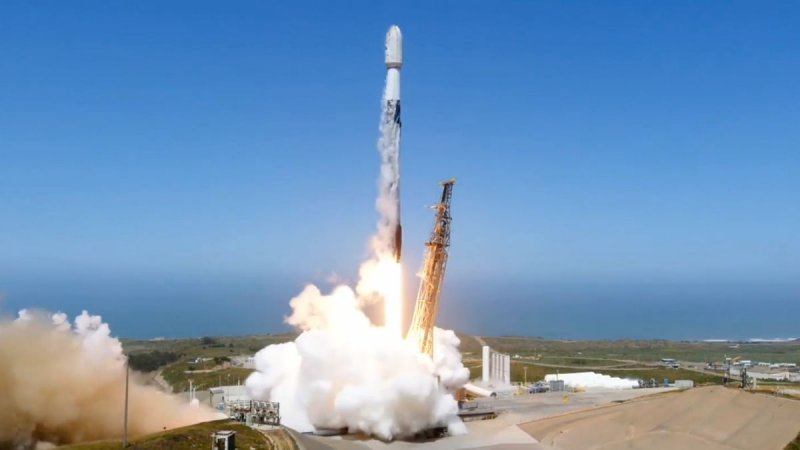
SpaceX is preparing to launch a Falcon 9 rocket carrying three major solar research missions for NASA and the National Oceanic and Atmospheric Administration (NOAA).
The liftoff is scheduled for shortly after sunrise on Wednesday, News.Az reports, citing Spaceflight Now.
Leading this rideshare missions is NASA’s Interstellar Mapping and Acceleration Probe (IMAP) alongside the agency’s Carruthers Geocorona Observatory and NOAA’s Space Weather Follow-On Lagrange 1 (SWFO-L1).
Liftoff of the Falcon 9 rocket from Launch Complex 39A at NASA’s Kennedy Space Center is set for 7:30 a.m. EDT (1130 UTC).
Heading into Wednesday’s launch opportunity, the 45th Weather Squadron forecast a 90 percent chance for favorable weather. Meteorologists are tracking a low chance for storms to spoil the launch.
“Atlantic showers will linger over the local waters into the Wednesday morning window and there remains a low chance for this activity to drift close enough to coast to be a concern,” launch weather officers wrote. “Some mid and upper level clouds, likely once again anvils from Gulf storms, will be around, but model consensus continues to have this too high to be a concern for Thick Cloud Layers or Anvil Cloud Rules.”
SpaceX will launch the mission using a relatively new Falcon 9 first stage booster: 1096. It’s flying for a second time after launching the KF-01 mission for Amazon’s Project Kuiper satellite constellation in July.
More than 8.5 minutes after liftoff, SpaceX will attempt to land B1096 on the drone ship, Just Read the Instructions. If all goes well, this will be the 137th landing on this vessel and the 510th booster landing to date.
The deployment sequence for the three spacecraft is scheduled to begin about an hour and 23 minutes after liftoff, with roughly seven minutes separating each spacecraft jettison.
NASA said it anticipates acquiring signal from IMAP at about 10 minutes after it’s released, which should be about 9:03 a.m. EDT (1303 UTC). It notes that this is an approximate time.
Acquisition of signal for Carruthers is expected about 30 minutes after that.
Each of the three mission is focusing on a different aspect of the Sun. Those range from immediate impacts to our planet and the technology we rely on to deep space exploration, like the upcoming Artemis 2 mission, launching no earlier than February 5.


Similar news