The Gaza Strip between war and peace



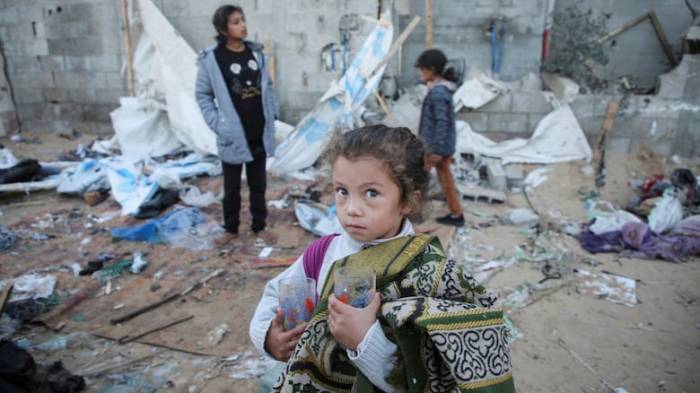
Photo: Hatem Khaled/Reuters
Editor's note: Moses Becker is a special commentator on political issues for News.az, a PhD in political science and an expert on interethnic and interreligious relations. The article expresses the personal opinion of the author and may not coincide with the view of News.az.
The war triggered by Hamas on October 7, 2023, between the State of Israel and the Gaza Strip has been temporarily halted. An agreement on a three-phase ceasefire between the opposing sides was reached on January 15, 2025, and hostilities ceased on Sunday, January 19. To a large extent, the truce became possible thanks to unprecedented pressure from the outgoing Biden administration and the incoming U.S. president, Donald Trump, who had promised “hell” for Hamas. As a result of the hostilities in Gaza, more than 90% of the housing stock was destroyed. According to initial estimates, rebuilding the Strip will require at least 100 billion dollars.At present, it is unclear where such funds could come from or who would specifically undertake the reconstruction of the Strip (contractors, personnel, construction equipment, materials, etc.). The Hamas movement is clearly incapable of handling such a massive task on its own. Moreover, Islamist formations, by definition, are not suited to address peacetime challenges. But that is a concern for the future. For now, there is no discussion of a long-term peace.
After the ceasefire agreement with Hamas was reached, a rift emerged within Israel’s military and political leadership. Three ministers, who view the cessation of hostilities in the Gaza Strip as a defeat for the Jewish state, resigned. All of them are members of the Otzma Yehudit party, including Minister of National Security Itamar Ben-Gvir, Minister of Heritage Amichai Eliyahu, and Minister for the Development of the Negev, Galilee, and National Resilience Yitzhak Wasserlauf.
Israel’s Finance Minister Bezalel Smotrich declared that Israel “must occupy Gaza and establish a temporary military government.” He also threatened to leave the coalition and force the country into new elections.
Under heavy pressure, Prime Minister Benjamin Netanyahu has not ruled out the possibility of resuming the war if peace agreements are violated. However, even if we assume that the ceasefire could evolve into a process of ending the conflict, it is unlikely that Gaza will become livable. Its infrastructure was built over decades, and its economy has never adequately met the population’s basic needs. Most of its funding came from wealthy Palestinians living abroad and from private individuals in the Gulf states. Some social assistance was provided by Islamic charitable organizations.
In 2006–2007, Egypt and Israel imposed a blockade of the Strip, which led to a mass exodus of Palestinians. For many years after the blockade began, Hamas funded its budget by taxing goods delivered through an extensive network of tunnels that bypassed Egyptian checkpoints. These tunnels were also used to bring in weapons, ammunition, and equipment for manufacturing workshops, in addition to food and medicine. Egypt only officially permitted the import of certain commercial goods into Gaza through the Salah ad-Din border crossing in 2018.
The goods entering the Strip turned out to be a goldmine for Hamas leaders: in 2021, they collected over 12 million dollars each month by taxing everything brought in from Egypt. Until recently, one of Hamas’s largest sponsors was Iran, which is currently experiencing serious economic difficulties of its own. Since the early 1990s, Iran’s Islamic Revolutionary Guard Corps (IRGC) has financed, trained, and armed Hamas militants. Around the same time, the Palestinian group opened an office in Tehran. In 2020, the U.S. State Department reported that Iran annually provided Hamas and Palestinian Islamic Jihad with more than 100 million dollars.
According to a report in The Wall Street Journal, the Iranian IRGC helped Hamas plan attacks on Israel and gave the militants the green light for the unprecedented assault on October 7, 2023. One key factor influencing Iran’s involvement was the diplomatic effort to normalize relations between Saudi Arabia and Israel. This prospect was wholly unacceptable to Iran, which feared Saudi dominance in the Islamic world.
Another important source of funding for the Gaza Strip remains Qatar. Previously, aid from this country was channeled through Israel; today, it is transferred via banks under UN control. The total annual amount is estimated at around 400 million dollars. These funds go to social payments as well as salaries for Hamas’s civilian and military officials. They are also used for civilian needs, such as fuel for the Gaza power plant and freshwater supplies from Israel. Customs duties and taxes levied by Hamas constitute additional revenue, including fees imposed on smugglers. After the Egyptians destroyed the tunnels, smuggling continued by various other means, albeit on a reduced scale. A significant portion of the goods that enter through the Rafah crossing carry a high “tax component” (gasoline, cigarettes, etc.), and all taxes on them go to Hamas, which maintains absolute control over everything that happens in Gaza.
It should be noted that the enclave’s per capita national income, which before Hamas came to power was almost on par with that of the West Bank, has since dropped to one-third of its former level. This figure reflects the depth of the economic crisis, the appalling poverty, and the exploitation of Gaza’s population. Nevertheless, Hamas has remained the strongest player in this corner of the world, largely thanks to its skillful propaganda and the indoctrination of local residents, who have been subject to Islamist influence from birth.
With the coming of Donald Trump’s administration in the United States, the situation is likely to change dramatically. It seems improbable that Hamas will once again secure funding from Qatar, which is highly dependent on the United States and its military base. As for Iran’s ruling clerics, they face their own survival challenges. Given the massive destruction caused by the hostilities, Gaza will require immense resources that no one appears able to provide at this time. Furthermore, the United States is already considering ending its funding of UNRWA, which provides humanitarian aid to residents of the enclave.
In light of this, Steve Witkoff, President-elect Donald Trump’s envoy to the Middle East, proposed the idea of temporarily relocating Gaza Strip residents to Indonesia. This will likely not be the last such proposal, nor is it the only possible relocation site in the world.
(If you possess specialized knowledge and wish to contribute, please reach out to us at opinions@news.az).


Similar news