Trump hikes tariffs on Canada to 35%, citing fentanyl concerns


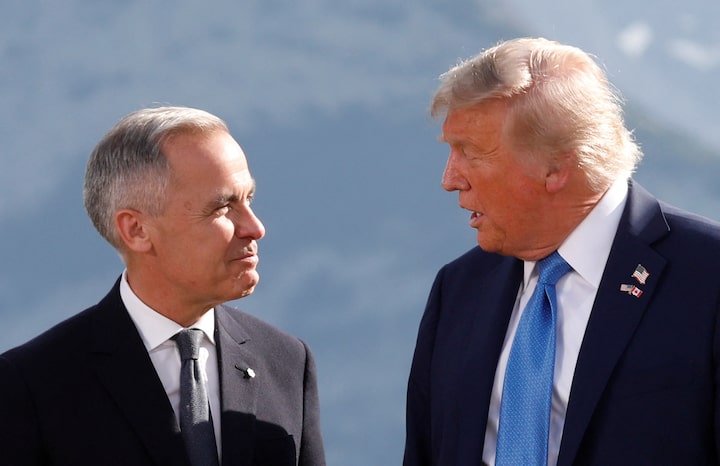
U.S. President Donald Trump has raised tariffs on Canadian goods to 35%, up from 25%, citing Canada’s alleged failure to curb fentanyl smuggling and ongoing trade retaliation. The new rate, announced Thursday via executive order, applies to all Canadian exports not covered under the U.S.-Mexico-Canada Agreement (USMCA).
According to a White House fact sheet, goods transshipped through other countries to bypass the tariff will face an even steeper 40% transshipment levy, News.Az reports, citing Reuters.
The move escalates a months-long tariff standoff between Washington and Ottawa, with Trump saying any country failing to reach a new deal with the U.S. by August 1 would face increased duties.
“Canada’s continued inaction and retaliation have left us no choice,” the White House said in a statement.
Canadian Prime Minister Mark Carney said he reached out to the White House ahead of the deadline but never spoke directly with Trump. Early Friday, Carney expressed disappointment over the decision.
“While we will continue to negotiate with the United States on our trading relationship, the Canadian government is laser focused on what we can control: building Canada strong,” Carney posted on X.
Carney added that the tariffs would heavily impact key Canadian sectors including lumber, steel, aluminum, and automotive exports. He vowed to protect Canadian jobs, support local industries, and expand into new export markets.
While the U.S. blames Canada for cross-border fentanyl smuggling, Carney noted that Canada accounts for just 1% of fentanyl entering the U.S. and has taken steps to further reduce that number.
Ontario Premier Doug Ford, representing Canada’s industrial heartland, called for a 50% counter-tariff on U.S. steel and aluminum.
“Canada shouldn’t settle for anything less than the right deal,” Ford said. “We need to stand our ground.”
Trump, meanwhile, told NBC News he was open to talks and “might even speak with Carney later tonight.” He added:
“I love Canada, but they’ve treated the United States very badly for years.”
Commerce Secretary Howard Lutnick said Trump may reconsider the new tariff if Carney shows a “willingness to de-escalate” and drops retaliatory measures.
Earlier in the week, Trump agreed to give Mexico a 90-day window to negotiate and avoid a 30% tariff. However, Mexican exports not compliant with USMCA rules will still face a 25% duty, tied to Trump’s demand for stronger drug and human smuggling enforcement.
With nearly 75% of Canadian exports heading to the U.S., Canada remains highly vulnerable to U.S. trade policy shifts. Despite that, economists say Canada’s economy has shown surprising resilience and is expected to avoid recession in the near term.


Similar news