Trump revises metal tariffs to ease compliance and cut duties on some products


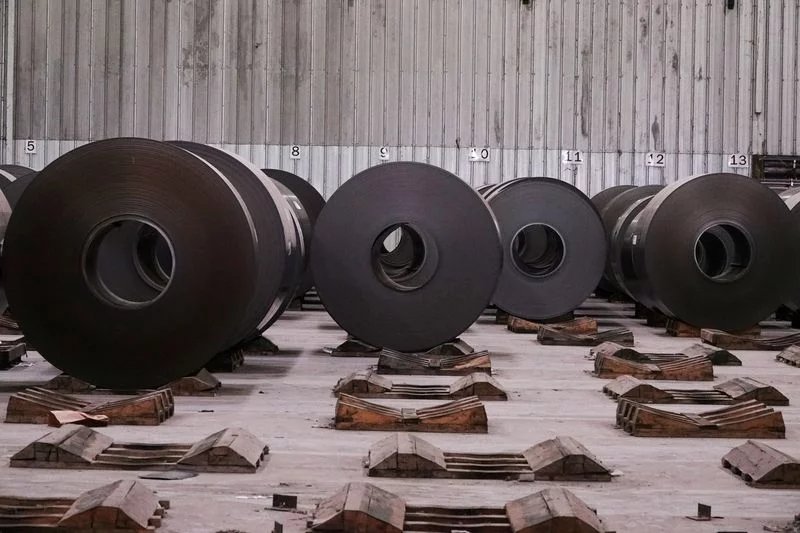
US President Donald Trump has announced adjustments to national security tariffs on steel, aluminium and copper imports, aiming to simplify the system and reduce duties on certain manufactured goods.
The changes, unveiled on Thursday through a presidential proclamation, modify how tariffs are applied under Section 232 of the Trade Act, while maintaining core protections for domestic metal industries, News.az reports, citing Telegraph.
RECOMMENDED STORIES
Core tariffs unchanged on raw metals
The administration will keep a 50 percent tariff on imports of primary steel, aluminium and copper products.
However, the duty will now be calculated based on the price paid by US buyers rather than declared import values, in a move intended to curb under-reporting.
Officials said some importers had previously lowered declared values to reduce tariff liabilities, prompting the shift.
Relief for low metal content products
One of the most significant changes affects derivative products with minimal metal content.
Items containing less than 15 percent steel, aluminium or copper by weight will no longer be subject to the 50 percent tariff.
Officials said this would remove duties on products such as consumer goods with small metal components, including packaging items or household accessories.
Reduced tariffs for higher metal content goods
For derivative products with more than 15 percent metal content, a revised tariff of 25 percent will apply.
Unlike the previous system, which attempted to isolate the value of the metal content, the new rate will be applied to the full value of the imported product.
This means goods such as household appliances and industrial equipment will face a flat tariff, simplifying calculations for importers.
Simplification of complex system
The administration said the overhaul is designed to streamline what had become a complicated tariff regime.
Previously, companies had to determine the precise value of metal content across a wide range of products, from machinery components to consumer goods, creating compliance challenges.
Officials said the revised approach offers a more straightforward structure, reducing administrative burdens while maintaining trade protections.
Limited overall economic impact expected
According to the administration, the changes are not expected to significantly alter the overall economic impact of the tariffs.
While some products may face lower duties and others slightly higher costs, the overall effect is expected to remain broadly similar.
However, applying the 50 percent tariff to the full sales value of raw metal imports could result in increased tariff revenue for the US government.
Balancing protection and practicality
The move reflects an effort to balance industrial policy objectives with practical considerations for businesses navigating the tariff system.
Analysts say the revised framework may reduce uncertainty for importers while continuing to support domestic metal producers under national security provisions.
The adjustments come as the administration continues to refine its broader trade strategy amid evolving global supply chain dynamics.
By Faig Mahmudov


Similar news