US announces Syria sanctions exemption to support aid relief efforts


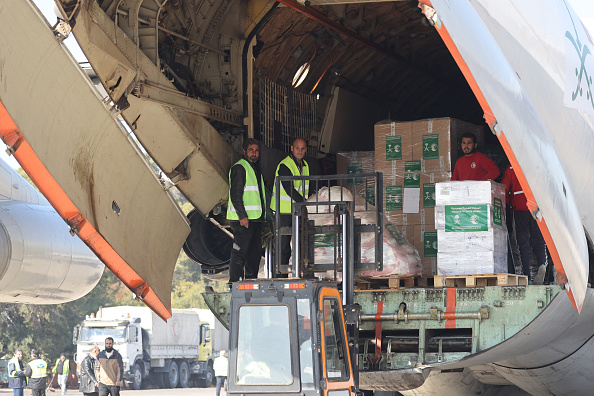
Creator: ANWAR AMRO | Credit: AFP via Getty Images
A month following the rebel offensive that ousted Syrian President Bashar al-Assad, the United States announced a six-month waiver to facilitate the delivery of humanitarian aid to the heavily sanctioned country, News.az reports citing foreign media.
“The end of Bashar al-Assad’s brutal and repressive rule, backed by Russia and Iran, provides a unique opportunity for Syria and its people to rebuild,” said Deputy Secretary of the Treasury Wally Adeyemo in a Monday statement. “During this period of transition, Treasury will continue to support humanitarian assistance and responsible governance in Syria.”Syria’s new leadership has inherited an economy shattered by nearly 14 years of civil war and more than half a century of ironfisted Assad family rule. The vast majority of people across the country live in poverty, with three in every four people requiring aid to survive, according to the United Nations. The cost of reconstruction is estimated at $400 billion.
During a visit to Doha on Sunday, Syria's interim Foreign Minister Asaad Hassan al-Shibani urged the United States to lift sanctions he said “constitute a barrier and an obstacle to the rapid recovery and development of the Syrian people.”
The Biden administration stopped short of lifting the sweeping sanctions imposed during the civil war to punish the Assad regime, a decision that is expected to fall to President-elect Donald Trump when he takes office later this month.
The outgoing administration has also resisted removing the terrorist blacklisting of Hayat Tahrir al-Sham, the Islamist group that spearheaded the lightning-fast offensive to oust Assad and is now overseeing the country’s political transition.
Federal law makes it a crime to knowingly provide “material support or resources” to any member of a US-designated foreign terrorist organization. Aid workers in Syria say they are proceeding with caution, unsure of whether they would run afoul of the law for routine interactions such as paying road tolls, utility bills or local taxes to the HTS-affiliated government in Damascus.
HTS traces its origins to al-Qaeda but broke ties with the group in 2016. During a visit to Syria last month, US officials informed HTS leader Ahmed al-Sharaa that they were dropping the $10 million bounty on his head after he agreed to prevent terrorist groups in Syria from posing a threat to the United States or the region.
The Biden administration remains wary of promises made by Sharaa, who is seeking international recognition for his de facto Syrian government. In recent weeks, the HTS leader has hosted in Damascus a flurry of US, European and Middle Eastern diplomats who have conditioned future economic support on a peaceful transition that protects the rights of Syria’s women and minorities.
“Europe will support” Syria in its transition, “but Europe will not finance new Islamist structures,” German Foreign Minister Annalena Baerbock told reporters after her meetings in Syria last week.


Similar news