Who are European migrants?


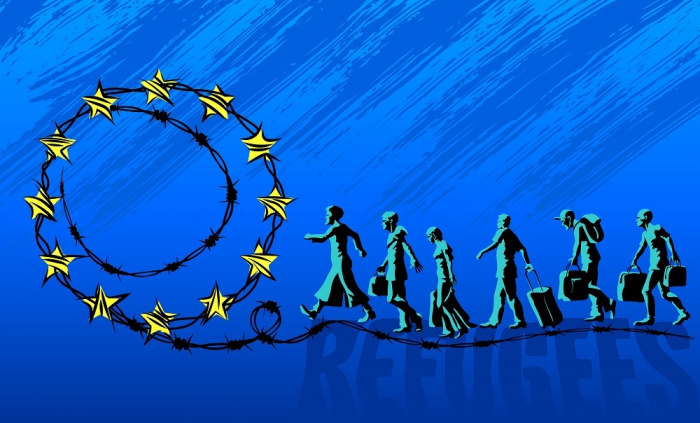
European migration is a complex and multifaceted phenomenon that involves millions of people arriving in the continent for various reasons. From January to September 24, 2023, approximately 186,000 people arrived in Southern Europe (Italy, Greece, Spain, Cyprus, and Malta) by sea, with the majority — over 130,000 — landing in Italy, an 83 percent increase from the same period in 2022.
In 2022, nearly 3.4 million legal and 300,000 illegal migrants arrived in Europe . These people come to work, study, reunite with their families, escape wars, or for other reasons and are often categorized separately in visa statistics. Migration is a topic of much debate: some see it as necessary to compensate for Europe's aging population, while others highlight issues such as crime, poor integration, and social welfare costs.Eurostat data show that almost every European country has a positive net migration rate, except for Greece, Romania, Croatia, and Latvia. Net migration in the EU in 2022 was 1.2 million people , with a significant number of migrants arriving from Ukraine due to the Russian invasion. This large wave of Ukrainian migrants sought refuge from the war, and their temporary protection status reflects their unique circumstances.

Regular migration constitutes the majority of the overall migration flow. Major categories for residence permits include work, family, education, asylum, and others. Work accounts for 42% of all permits, family for 24%, education for 13%, asylum for 11%, and other reasons for 10%. Poland issued the most residence permits, largely due to around 450,000 work visas granted to Ukrainians, representing nearly 40% of all EU work permits in 2022.
Illegal migration in 2022 involved about 300,000 people, a number likely underestimated as it only includes those apprehended and processed. Illegal stays refer to individuals who arrive on a tourist visa or short-term work permit and remain after their documents expire. Around 430,000 orders to leave the EU were issued , with 73,000 actually enforced. Illegal entries and stays are difficult to compare, as illegal entrants may eventually obtain asylum or legal status through government legalization campaigns in some countries. Compared to legal migration, illegal migration is a small part of the total number, though it garners significant political attention.
The distribution of migrants by region and country varies widely. For example, migrants from Sub-Saharan Africa head to Sweden, France, Belgium, and Portugal, where they constitute 20-25% of all residence permits. Migration from the Middle East, North Africa, Pakistan, and Turkey primarily goes to Western European countries and also to Romania and Bulgaria, influenced by significant Turkish minorities in Bulgaria. Migration from Latin America mainly targets Spain and Portugal, constituting 33% and 44% of migrants, respectively, due to historical, linguistic, and social ties.
Differences among migrants from various countries and their residence permits are notable. Ukrainians, Indians, Filipinos, and Chinese often arrive on work visas, highlighting the importance of these countries as sources of labor migration to Europe. Syrians and Afghans mostly arrive as refugees seeking asylum from wars and conflicts. Algerians, Moroccans, and Turks typically enter for family reunification or other permits, including unaccompanied minors, emphasizing family ties and existing migration networks.
The UK post-Brexit is a special case. About 80% of residence permits for Britons fall under the "other" category due to special residence schemes established by EU countries following the UK's departure from the EU. These schemes provide a legal basis for UK citizens residing in EU countries and their families.
These data indicate that broad narratives about migration to Europe are virtually useless. There is a vast difference in reasons for migration and countries of origin. While labor migration is a leading factor for the EU overall, family reunification drives migration in many Western European countries, reflecting a long history of migration and existing social networks.
Migration significantly impacts the demographic situation in Europe. Europe's aging population requires an influx of young , working-age migrants to sustain the economy and social systems. Migrants from North Africa and the Middle East often find jobs in sectors with labor shortages, such as agriculture, construction, and elderly care, highlighting the importance of migration for maintaining economic activity in countries with rapidly aging populations. However, migration also sparks debates and controversies related to migrant integration, their impact on the welfare system, and cultural differences. In some countries, migrants face discrimination and difficulties accessing education or the labor market. These aspects require careful analysis and the development of effective policies aimed at harmonizing migration processes and ensuring sustainable development in European societies.
In conclusion, migration to Europe is a diverse process that requires deep analysis and understanding to adequately address the challenges and opportunities it brings. Understanding the causes and structure of migration flows is key to developing effective migration policies and ensuring social harmony in Europe. European countries must cooperate on migration issues, share experiences, and develop joint strategies for effectively managing migration and integrating migrants into society.
(If you possess specialized knowledge and wish to contribute, please reach out to us at opinions@news.az).


Similar news