Wolf Moon 2025: A guide to January’s celestial event


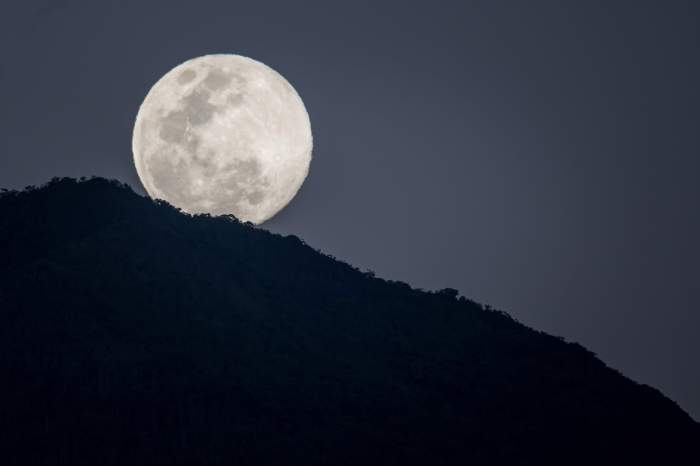
A full moon behind Waraira Repano National Park, in Caracas, Venezuela, in January 2024. Photo: EPA
The first full moon of 2025, known as the Wolf Moon, is set to brighten the skies, marking a stellar start to the new year.
The Wolf Moon will occur on January 13, 2025, at 5:27 p.m. ET, according to NASA. The moon will appear full for approximately three days, from Sunday evening to Wednesday morning, News.az reports, citing ABC News.Why is it called the Wolf Moon?
The Old Farmer's Almanac first began publishing the names for the full moons in the 1930s. It recorded that January's full Moon "came to be known as the Wolf Moon because wolves were more likely to be heard howling at this time."
What are other names for the Wolf Moon?
Indigenous groups also have different names for this first full moon, according to the Old Farmer's Almanac.
"Other traditional names for the January Moon emphasize the harsh coldness of the season: Cold Moon (Cree), Frost Exploding Moon (Cree), Freeze Up Moon (Algonquin), and Severe Moon (Dakota). Hard Moon (Dakota) highlights the phenomenon of the fallen snow developing a hard crust," the almanac states. "Canada Goose Moon (Tlingit), Great Moon (Cree), Greetings Moon (Western Abenaki), and Spirit Moon (Ojibwe) have also been recorded as Moon names for this month."
Some also call it the Moon after Yule, referencing the three-day winter solstice festival of pre-Christian Europe, according to NASA.
What’s visible in the sky alongside the Wolf Moon?
NASA states this lunar cycle offers great stargazing opportunities, with five planets visible in the evening sky.
Venus: The brightest, visible in the southwest, shifts from half-full to a crescent and reaches peak brightness just after February’s full moon.
Jupiter: Second brightest in the east, its four moons—Ganymede, Callisto, Europa, and Io—are visible with a telescope.
Mars: Low in the east-northeast, it will reach its closest and brightest just days after the Wolf Moon.
Saturn: Near Venus in the southwest, its moon Titan and thin rings are visible through a telescope. Saturn will appear closest to Venus on Jan. 18.
Uranus: High in the southeast, it’s visible with a telescope or in very dark skies.
These planets move westward around Polaris during this lunar cycle, making them easier to spot earlier in the evening, perfect for backyard stargazing!


Similar news