Elections: How right-wing parties reshape Europe



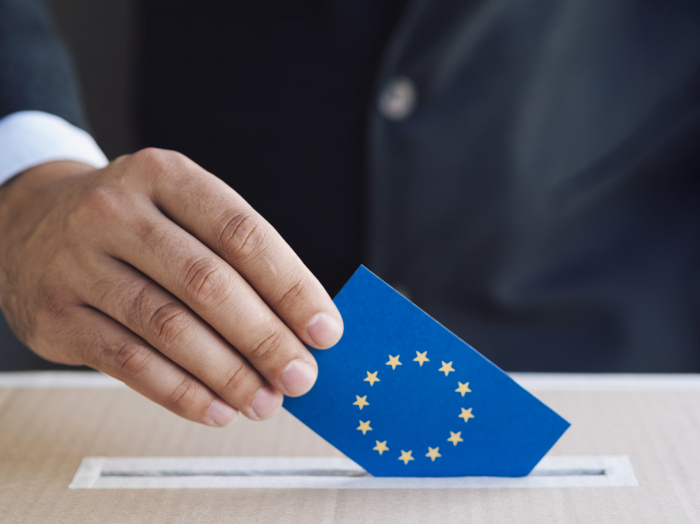
The forthcoming elections to the European Parliament from June 6 to 9, 2024, will affect 705 members of this collective body from 27 EU countries and the leadership of the European Commission and the European Council as many notable figures in European politics might lose their positions.
Elections are held every five years, with over 400 million citizens of a united Europe participating.Over the years, numerous problems have accumulated in the EU, related to economic and migration policies, relations with other countries, the war in the east of the continent and the Middle East, and interaction with the USA and China. The European Parliament is elected by direct vote. Its main function is legislative, which it shares with the Council of the EU, although the parliamentarians themselves do not propose laws but only review and approve them. New legislative acts are initiated by the European Commission.
Parliamentarians consider requests for new EU members and the signing of international agreements. Additionally, they oversee the activities of various EU institutions and the adoption and implementation of the budget. The European Parliament has the broadest supervisory powers over the main executive institution of the EU — the European Commission, which must regularly report to it on its activities and can be dismissed by the lawmakers through a vote of no confidence.
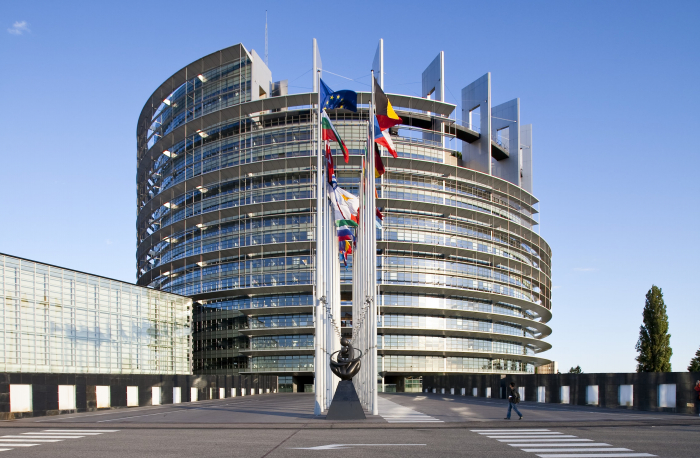
Thus, despite each EU member having its own legislative body, the European Parliament has acquired specific functions since 1979. While it does not interfere in the domestic and foreign policies of member states, its significance has greatly increased, playing a substantial role in the life of the EU, which seeks to adhere to a common line through economic measures.
Frankly speaking, the situation in the EU is very reminiscent of the events that preceded the collapse of the USSR. This includes the irresponsible expansion of the EU, economic troubles, the rise of nationalism associated with ill-conceived migration policies, and much more. Against this backdrop, right-wing parties are uniting, aiming to preserve traditional values and protect their countries from the influx of representatives of other cultures and views, which ultimately leads to the gradual replacement of the native population and, consequently, to increasing interethnic tensions.
Incidentally, this factor triggered the UK's exit from the EU. It should be noted that participation in any union or association implies delegating part of a country's sovereignty. The EU leadership constantly pressures members, especially those from the former Warsaw Pact, regarding sanctions and migration policies dictated by EU pillars like Germany and France.
It is no wonder that Hungarian Prime Minister Viktor Orbán, who defends traditional values and national identity, is considered the main "rebel" in the EU, whom several newly-elected European leaders look up to. According to public opinion polls, Europe's far-right and populist parties could significantly strengthen their positions in the European Parliament, potentially securing up to 25% of the seats, posing a serious challenge to the EU's core values.
The most significant growth is expected from the Alternative for Germany (AfD) and the French National Rally (formerly the National Front), as well as the Dutch and Austrian Freedom Parties. Besides familiar parliamentary movements, new far-right parties have emerged, prioritizing the idea of "nativism"—the principle of "blood and soil" as the main unifying element. Supporters of this direction oppose immigration and defend traditional family and lifestyle values. Although they are relatively small, their influence is significant. Hence, attacks on homosexuals, bisexuals, lesbians, and transgender individuals are intensifying in Europe. On the grounds of hatred toward sexual minorities, there has been an ideological convergence between European traditionalists and right-wing radicals. In the outgoing European Parliament, these factions held 68 and 59 seats, respectively. The European Conservatives and Reformists, which include the Polish Law and Justice Party, Italy's Brothers of Italy led by Giorgia Meloni, the True Finns Party, Spain's Vox, and the Sweden Democrats, expect to secure 75 seats.
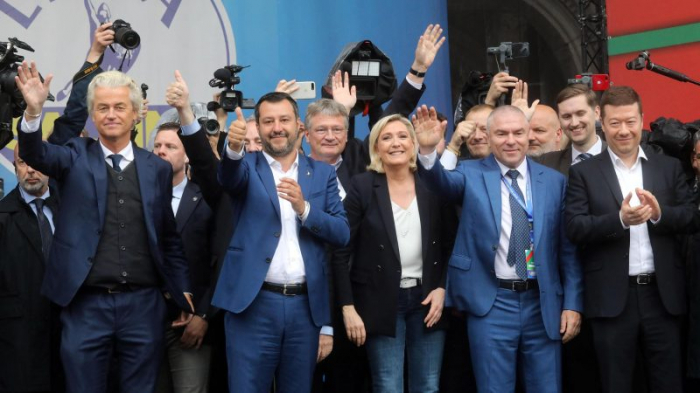
The greatest growth is anticipated for another right-wing conservative faction — Identity and Democracy, which includes the AfD, Marine Le Pen's National Rally, Austria's Freedom Party (FPÖ), and Matteo Salvini's Italian League, aiming for up to 85 parliamentary seats. In their national elections, these parties expect even more significant representation. In France, the National Rally could garner 30% of the vote, while President Macron's Renaissance party is projected to receive only 15%. The far-right program notably opposes the "green agenda," arguing that it is unfeasible amid economic and energy crises. Right-wing conservatives have deep disagreements regarding the conflict in Ukraine and actively support Israel in its fight against terrorism and radicalism.
Recently, voices demanding freedom from the dictates of European bureaucracy have grown louder. The Austrian Freedom Party, for instance, calls for Brussels' power to be limited and key powers to be returned to national states. It also proposes turning Europe into a fortress and stopping the influx of migrants.
Therefore, decades of promoting "liberal" values have failed to change the mentality of the average European, who continues to adhere to the principle "my home is my castle," fraught with unpredictable consequences, especially given the vast numbers of poorly integrated migrants. The ideas of multiculturalism and universal values are once again facing a severe test.
(If you possess specialized knowledge and wish to contribute, please reach out to us at opinions@news.az).


Similar news