Secret schemes and the fall of power figures: The story of a corruption investigation in US - INTERVIEW


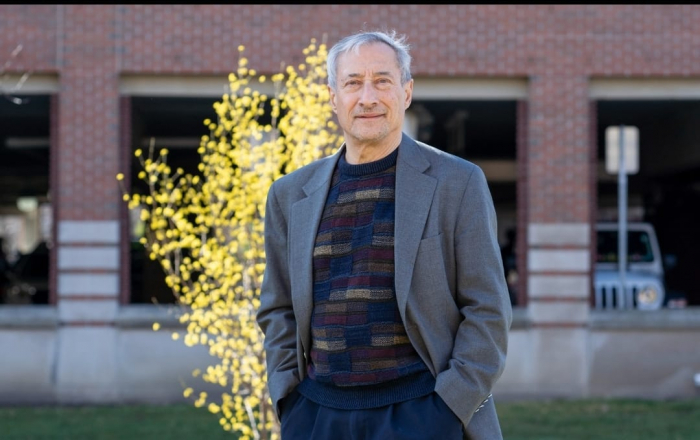
Eric Freedman is a Professor of Journalism and former Associate Dean of International Studies and Programs.
He has a 20-year newspaper career covering public affairs, environmental issues, and legal affairs in New York and Michigan, and won a Pulitzer Prize for exposing legislative corruption. Freedman teaches environmental journalism and directs the Knight Center for Environmental Journalism at Michigan State University (MSU). He also teaches public affairs reporting, international journalism, and feature writing, and oversees the Capital News Service, where students report on state government for various newspapers and online outlets in Michigan.Freedman holds a bachelor's degree in government from Cornell University, a law degree from New York University, and a master's degree in resource development from MSU. He has been a Fulbright scholar in Lithuania, Georgia, and Uzbekistan and has conducted workshops and lectures in multiple countries, including Singapore, Russia, and Japan.
His journalism career includes writing on environmental topics like habitat protection and ecotourism. At MSU, he directed several study abroad programs focusing on media, environment, and tourism. His research interests encompass journalism practices in the former Soviet Union, environmental journalism challenges, and public affairs reporting. Freedman has authored multiple books on topics ranging from environmental management in the Great Lakes Basin to the history of African Americans in Congress.
Freedman began his career as an aide to U.S. Rep. Charles Rangel and later worked as a reporter for the Knickerbocker News and the Detroit News. He joined the MSU faculty full-time in 1996 and continues to contribute to various publications.
- Mr, Freedman, what experience with international journalists and students has been most significant for you, and why?
- Over more than 20 years, it has been a privilege to meet, train, interview, mentor, teach and collaborate with hundreds of international journalists and journalism students. Many of them show great courage in reporting on important environmental and other issues despite the dangers of being arrested, jailed, physically attacked, sued for libel, kidnapped, fired from their jobs, harassed and forced into exile from their home countries, all because they were doing their jobs on behalf of the public.
For me, the most significant aspect has been their continued commitment to the fundamental mission of journalism – to tell true stories in a fair, balanced, accurate and ethical way within the constraints imposed by their country, culture and history.
- What are the main challenges you see in the field of environmental journalism, and how do you help your students cope with them?
- I see three major challengers. One is the unfortunate, growing distrust that many members of the public have about journalists and news outlets. We see this in attacks on the press, an unwillingness to be interviewed and unsupported critiques of the press as biased.
Second is a similar growing distrust in scientists and other experts. That means many people willingly accept misinformation, disinformation and outright lies about such issues as climate change and the COVID-19 pandemic.
Third is the huge increase in online information – accurate and inaccurate. That makes it difficult for readers and audiences to determine which news and web outlets are reliable and which ones are not.
To help our students cope with these challenges, we (journalism instructors and trainers) emphasize the essential need for accuracy and to fact-check and verify what sources tell us – especially on controversial topics. We also emphasize teaching the skills of "translating" complicated scientific, statistical and other technical information into words and concepts that are easy for our audiences and readers to understand.
Fourth, we stress the importance of keeping journalists' personal opinions out of their stories to avoid appearing biased.
Fifth, we encourage them to learn about different ways to use technology to convey accurate information about environmental issues, such as interactive graphics, short videos, use of drones and even TikToks.
- What was your role in covering the legislative corruption scandal for which you received the Pulitzer Prize?
- My newspaper began its investigation after a colleague received an anonymous tip about a state agency official embezzling public money. This was at a time when most government records were not available online, so reporters needed to go personally to government offices to request copies of financial records and documents, including election campaign finance records, court documents, cancelled checks and government contracts. We also interviewed government employees and officials, including some who were involved in the wrongdoing or knew something about it. After our first stories were published, we received additional tips to follow up on. We wrote more than 75 articles in the first year. Ten people were convicted of crimes, including an elected member of the Michigan House of Representatives and the director and deputy director of the agency where the embezzlements and kickbacks took place. The House of Representatives also adopted new rules requiring regular independent financial audits of the agency.
- How do you assess the state of press systems and journalism practices in post-Soviet countries, and how have they changed since the collapse of the Soviet Union?
- It is difficult to generalize because of the wide range of press freedom and constraints across the former USSR. They range from widespread press freedom in Latvia, Lithuania and Estonia to the tightest restrictions in Belarus, Azerbaijan, Tajikistan and – worst of all – Turkmenistan. While the internet makes it more possible for citizens in some former republics to receive relevant news from websites and news outlets located outside their own country, governments still make access difficult by using the latest technologies to block websites. In addition, there is poor internet access in some places, and access can be expensive.
- What contribution do you believe international exchange programs and seminars you have conducted make to the professional development of journalists and the improvement of journalism standards?
- I am a realist, so I know that no individual trainer and no short trainings can create major changes in professional development. I also know there is no "perfect" press system in the world, and I recognize that professional development needs are strongly affected by political, financial, historical and cultural realities in each post-Soviet country. What we as trainers can do, however, is collectively build professional skills over time, provide moral support to journalists, encourage collaboration and provide advice. We can also continue our academic research into how journalists now cover important public issues and examine ways that coverage might improve.
- How has your experience working at newspapers in New York and Michigan influenced your teaching and research activities in journalism?
- The major influences in teaching include an emphasis on meeting deadlines, on the need for diverse news sources, the ability to find and use documents, the usefulness of collaborating with colleagues in covering stories and the interaction between reporters/photographers/videographers and their editors.
In research, the major influence has been the interviewing skills I developed as a newspaper reporter. That is because much of my academic research includes interviews with professional journalists and university journalism instructors.
- What research conducted by you in the field of environmental protection and journalism do you consider most important and why?
- Most important have been my studies of major obstacles faced by environmental journalists, including personal safety, censorship and self-censorship, access to information from government and businesses, access to remote places, public trust and the cost of doing investigative projects.


Similar news