Valeriy Dymov: The initiative in the war is gradually shifting in Ukraine’s favour - INTERVIEW


.png)
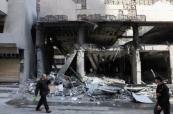
Russia’s latest missile and drone attacks on Ukraine underscore the continuing intensity of the war, but questions remain about their strategic effectiveness. While strikes on cities and critical infrastructure continue, Ukraine has strengthened its air defences and expanded its long-range strike capabilities. At the same time, mounting pressure on Russia’s logistics networks and economy is increasingly influencing the dynamics of the battlefield.
News.Az asked Ukrainian political analyst Valeriy Dymov to assess the latest developments and what they could mean for the future course of the war.
– Mr Dymov, what are the main military and political objectives of Russia’s massive missile and drone attacks on Ukrainian cities?
– Russia’s military and political objectives in this war remain unchanged. The current large-scale missile and drone strikes are a continuation of the strategy that began to take shape after the setbacks suffered by Russian forces near Kyiv, as well as in the Kharkiv and Kherson regions and other sectors of the front.
While these strikes were initially military in nature during the early stages of the full-scale invasion, they later evolved into a targeted campaign aimed at exerting pressure on the civilian population and critical infrastructure. This was particularly evident in attacks on Ukraine’s energy system. The main objective was to create intolerable living conditions and pressure Ukrainian society into forcing the country’s leadership to accept Russia’s terms for ending the war.
However, the result was the exact opposite. Rather than demoralising Ukrainian society, these actions strengthened national unity and contributed to increased international support for Ukraine. The country received additional air-defence and missile-defence capabilities, including Patriot systems and F-16 fighter jets.
Under President Joe Biden’s administration, assistance to Ukraine continued, although it was accompanied by certain political restrictions and conditions. Nevertheless, Washington could not completely abandon support for Kyiv.
With the arrival of Donald Trump, the rhetoric changed. Many Trump supporters viewed Ukraine as a side that was effectively losing the war. Within this logic, providing Kyiv with additional means of resistance was seen as an obstacle to reaching an agreement with Moscow. It was during this period that Russia significantly intensified its attacks on Ukrainian regions, including Zaporizhzhia and Sumy.
Source: KyivPost
From the Kremlin’s perspective, Trump’s statements and actions could create additional opportunities to exert pressure on Ukraine. Russia hoped that limiting American support would weaken Kyiv’s position and push Ukraine towards accepting terms favourable to Moscow.
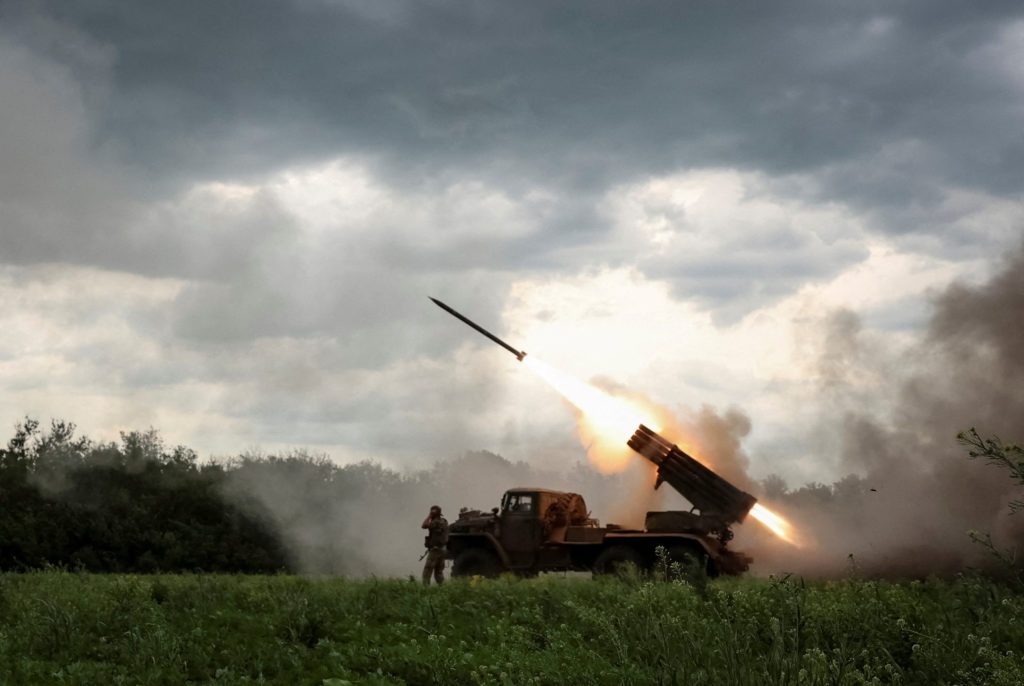
At the same time, Ukraine demonstrated its ability to strike sensitive Russian military targets. A symbolic example was Operation Spiderweb, during which strategic assets of Russia’s long-range aviation were targeted. This significantly reduced Russia’s capacity to carry out large-scale strikes against Ukrainian territory.
It is noteworthy that considerably fewer strategic bombers participate in such attacks today than in the past. Whereas Russia previously could deploy from 16 to 18 aircraft, it now uses no more than four or five. This indicates a decline in its ability to conduct large-scale air operations.
For this reason, the latest strikes should be viewed not so much as a demonstration of strength but rather as a reaction to Russia’s deteriorating strategic position. They reflect the Kremlin’s desire to maintain pressure on Ukraine while simultaneously influencing the position of the United States.
Another important factor is the domestic political situation in the United States. Donald Trump and his supporters are increasingly being asked why the war he promised to end quickly is still continuing. This creates additional political risks for him.
Under these circumstances, Russia is attempting to use military pressure as a tool of influence not only against Ukraine but also against Kyiv’s Western partners. The objective remains unchanged: to secure an agreement on terms as close as possible to Russia’s demands.
In summary, three main forms of Russian pressure can be identified: military operations on the battlefield, large-scale strikes against Ukrainian cities and infrastructure, and efforts to use international negotiations to impose unfavourable conditions on Ukraine.
However, the situation is gradually changing. Russia’s capabilities are becoming increasingly constrained, while the effectiveness of its strategy of forcing Ukraine into capitulation remains extremely limited. That is why the latest large-scale attacks are more indicative of the Kremlin’s attempt to preserve the initiative and project influence than evidence of any fundamentally new military or political capabilities.
– How does the intensification of Russian aerial attacks affect the capabilities of Ukraine’s air defence system, and in which areas does Ukraine currently need the greatest support from its Western partners?
– If we look at the current situation, we are witnessing not only the continuation of Russian strikes but also a significant expansion of Ukraine’s ability to conduct attacks against targets inside Russia. Recent strikes on Ust-Luga, Primorsk and Tuapse, as well as attacks on facilities in the Kronstadt and St Petersburg areas, have demonstrated both Ukraine’s capabilities and the weaknesses of Russia’s air-defence system.
Particularly notable were the strikes against oil infrastructure during the St Petersburg International Economic Forum. These incidents attracted the attention of international guests and served as a demonstration of the true state of Russia’s defensive capabilities.
Overall, the initiative is gradually shifting in Ukraine’s favour. Despite Russia’s continued large-scale attacks, Ukraine’s air-defence system has demonstrated a high degree of effectiveness. There have been periods when Ukrainian forces were able to intercept nearly all Kh-101 and Kalibr cruise missiles. In some cases, the interception rate for Shahed attack drones reached 90–93 per cent.

Source: aljazeera
Nevertheless, the most serious challenge remains countering ballistic missiles. In this area, both practical and political constraints exist.
The first challenge relates to the limited capacity of the Western defence industry. Europe possesses a relatively small number of missile-defence systems. The primary burden of intercepting ballistic threats continues to fall on American Patriot systems and PAC-3 interceptor missiles.
At the same time, Russia continues to expand its production of ballistic missiles. To ensure the reliable interception of a single ballistic target, two PAC-3 missiles are often required, resulting in extremely high ammunition consumption. Even increased missile production in the United States does not fully solve the problem, as demand has risen sharply not only in Europe but also in the Middle East.
The second aspect is political. Part of the American political establishment continues to view the war through the prism of potential negotiations between Moscow and Kyiv. Within this framework, strengthening Ukraine’s military capabilities is sometimes seen as a factor that could complicate efforts to reach a compromise.
At the same time, Russia continues to expand its production of ballistic missiles. To ensure a reliable interception of a single ballistic target, two PAC-3 missiles are often required, resulting in extremely high ammunition consumption. Even the increase in missile production in the United States does not fully solve the problem, as demand has risen sharply not only in Europe but also in the Middle East.
The second aspect is political. Part of the American political establishment continues to view the war through the prism of potential negotiations between Moscow and Kyiv. Within this framework, strengthening Ukraine’s military capabilities is sometimes seen as a factor that could complicate efforts to reach a compromise.
However, developments over recent months have shown that Russia has failed to achieve a decisive breakthrough on the battlefield. Moreover, threats against foreign diplomatic missions in Kyiv have become increasingly frequent, indicating the Kremlin’s attempt to compensate for its lack of major military successes through psychological pressure and intimidation.
At present, Ukraine’s most urgent requirement is additional missile-defence capability. This includes not only new Patriot batteries but also a substantial increase in deliveries of PAC-3 interceptor missiles. This remains critically important for protecting Ukrainian cities from ballistic missile threats.
In addition, Kyiv is interested in expanding defence-industrial cooperation between the United States and its European allies. One possible solution would be to license the production of certain Patriot system components in Europe, which could significantly increase the output of the missiles required for Ukraine’s defence.
Therefore, Ukraine’s key request to its Western partners today is not so much the supply of conventional weapons as the strengthening of a multilayered air and missile-defence system. Only a sufficient number of modern interception systems can ensure the protection of the population and critical infrastructure from ongoing Russian aerial attacks.
– Can Ukraine maintain stability along the front line amid the intensification of Russian attacks, or is Russia beginning to regain the initiative in certain sectors?
– This is an interesting question. Looking at the situation on the battlefield, there are currently no grounds to suggest that Russia is regaining the strategic initiative. On the contrary, a number of indicators point to a gradual shift in momentum in Ukraine’s favour.
First and foremost, this is reflected in the statistics. In May, Russia recorded its slowest rate of territorial advance since 2023 while simultaneously experiencing increasing losses per kilometre of occupied territory. These figures are supported by open-source data and battlefield maps.
A second important indicator is the pattern of combat engagements. Although the overall number of clashes remains high, the share of Russian offensive actions has gradually declined. In some sectors, the balance of combat activity is approaching 50–50, indicating not only Ukrainian defensive operations but also growing offensive activity by Ukrainian forces.
Source: mod.gov.ua
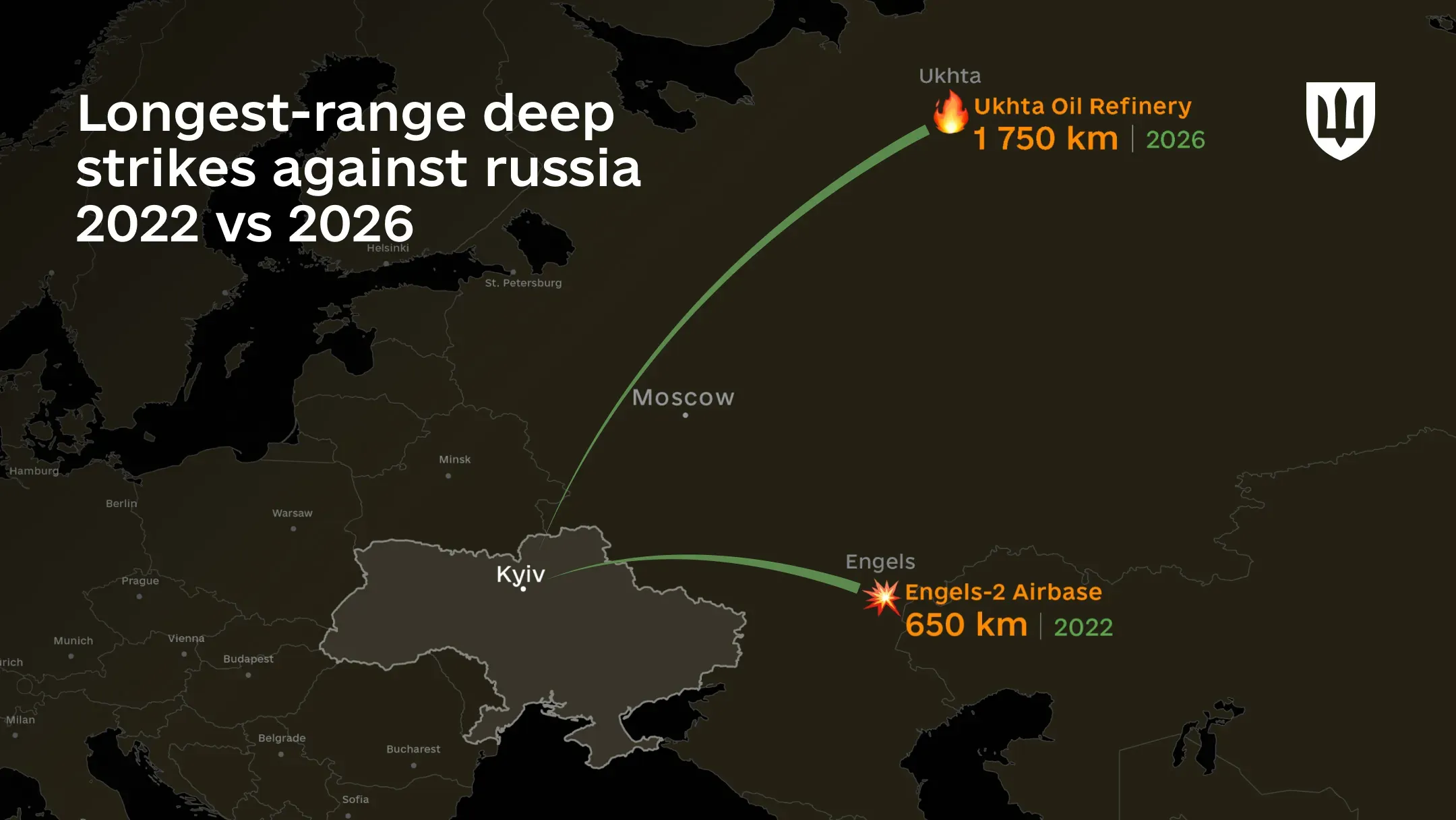
Another important factor is Ukraine’s expanding ability to conduct long-range strikes. Attacks on facilities in Tuapse, Ust-Luga, Primorsk and other strategic locations demonstrate Ukraine’s ability to target Russian logistics, oil infrastructure and military facilities far beyond the front line.
The situation has changed particularly noticeably since Ukraine gained greater freedom in employing its own strike capabilities. Whereas the use of Western-supplied weapons was previously accompanied by numerous restrictions, Ukraine’s ability to strike military infrastructure deep behind enemy lines has expanded significantly.
The short answer is that the front line remains broadly stable. Many predictions regarding the potential collapse of Ukraine’s defences have not materialised. Moreover, several sectors previously considered vulnerable remain under Ukrainian control.
A notable example is the Kupiansk sector. Despite numerous claims about possible Russian advances, the city remains under Ukrainian control. Similar trends can be observed in other areas of the front.
At the same time, pressure on Russian logistics continues to increase. Strikes against ammunition depots, fuel-storage facilities, transport hubs and supply routes are becoming more frequent. This complicates the sustainment of Russian forces and reduces the effectiveness of offensive operations.
The nature of Russian attacks has also evolved. Whereas assaults were previously conducted by larger formations, they are now increasingly carried out by small groups consisting of one or two soldiers. This may indirectly indicate shortages of trained personnel and mounting casualties.
Traditionally, May has been regarded as a key month for the preparation and development of spring-summer offensive campaigns. However, this year’s statistics indicate that many Russian attacks are failing to achieve their objectives. Ukrainian defences have become more organised, while fortifications and target-engagement systems have significantly complicated Russian advances.
As a result, Russia is increasingly facing a situation in which maintaining even its current operational tempo requires ever greater resources. Personnel demands are rising, wartime expenditure is increasing, and pressure on both the economy and the mobilisation system continues to grow.
Therefore, the current situation does not point to a strategic turning point in Russia’s favour. Rather, it reflects the resilience of Ukraine’s defences and the gradual attrition of Russia’s offensive potential.
In conclusion, the front line remains stable. Russia retains the ability to conduct localised offensive operations, but there are no clear signs of a strategic breakthrough. At the same time, Ukraine continues to expand its ability to strike Russian logistics, military infrastructure and support facilities, gradually shifting the balance of initiative in its favour.
– Do the Ukrainian leadership and military view the recent Russian strikes as preparation for a possible summer offensive campaign or a new phase of large-scale combat operations?
– In my view, Russia’s actions should not be seen as isolated episodes but rather as elements of a single military campaign that has been ongoing since the beginning of the full-scale war. The concept of a "spring-summer campaign" is largely linked to the nature of Russia’s current military tactics.
After Russia effectively lost the ability to conduct large-scale manoeuvre operations using armoured formations and full air superiority, its strategy increasingly shifted towards the use of small assault groups and the gradual infiltration of defensive lines. Such tactics traditionally become more effective during the warmer months, when foliage and terrain provide greater concealment for troop movements.

Source: aljazeera
For this reason, May has always been regarded as an important stage in preparations for summer operations. This year, however, the picture has been different. According to available statistics, Russian forces recorded their lowest rate of territorial gains in a prolonged period while simultaneously sustaining a high level of casualties.
In effect, Russia made its smallest territorial gains while suffering some of its highest personnel losses. Moreover, these losses are increasingly exceeding the state's ability to compensate for them through covert mobilisation, prisoner recruitment and financial incentives for new contract soldiers.
This suggests that Russia has failed to achieve the strategic results it had anticipated from the spring offensive period. Instead of major successes on the battlefield, it is facing rising resource expenditure and declining operational effectiveness.
Judging by developments over recent months, Ukraine’s military leadership was prepared for this scenario. This is reflected not only in battlefield statistics but also in tangible results on the ground. Ukraine continues to strengthen its defensive capabilities while expanding the use of advanced technologies, unmanned systems and precision-strike weapons.
Particularly important is Ukraine’s growing ability to target Russian logistics and facilities deep behind the front line. An increasing number of strikes are being directed against ammunition depots, oil infrastructure, transport hubs and supply facilities. This significantly complicates the sustainment of Russian forces and reduces the effectiveness of their offensive operations.
At the same time, Ukraine is emerging as one of the world's leading centres for the development and practical application of modern drone technologies. Many of the systems currently used on the battlefield are tested and refined under real combat conditions, allowing for rapid adaptation to changing operational realities.
International support also remains a critical factor. Russia is increasingly confronting opponents who are not only maintaining their resilience but are also gaining access to additional resources and technologies. This applies both to weapons deliveries and to the development of joint defence programmes with European countries.
For this reason, Ukraine’s leadership is more likely to view Russia’s latest large-scale strikes not as evidence of preparations for a successful major offensive, but as an attempt to compensate for the lack of significant battlefield achievements through pressure on rear areas, critical infrastructure and the civilian population.
In summary, the indicators from May point more towards a crisis in Russia’s offensive model than towards preparations for a strategic breakthrough. Ukraine continues to demonstrate its ability to adapt to changing wartime conditions, maintain a stable defence and gradually expand its capacity to strike Russian military and logistical targets.
That is why the latest Russian attacks are viewed in Kyiv primarily as part of an ongoing pressure campaign and an attempt to compensate for limited battlefield results, rather than as evidence of preparations for a fundamentally new phase of the war.
– Given the events of the past week, what main risks and opportunities do you see for Ukraine in the coming months in the context of the further development of the war?
– If we summarise the latest developments, then, in my view, Russia’s large-scale strikes are no longer achieving the military and political objectives set for them. On the contrary, they are increasingly contributing to the consolidation of Ukrainian society and strengthening support for Ukraine among its international partners.
Aside from the challenge of countering ballistic missiles, Ukraine’s defensive capabilities have improved significantly. While Russia targets civilian infrastructure, hospitals, residential buildings and diplomatic missions, Ukraine focuses on military logistics, oil infrastructure and facilities that enable Russia to sustain its war effort.
One of the key developments in recent months has been growing pressure on the Russian economy. Despite rising global energy prices, Russia has been unable to fully benefit from the situation. Export restrictions and strikes on oil and transport infrastructure have had a significant impact.

Source: reuters
It is also telling that major international events in Russia are increasingly taking place against a backdrop of reports of drone attacks, damaged logistics infrastructure and security concerns. This reflects the changing nature of the war and Ukraine’s growing ability to affect targets deep inside Russia.
Pressure on Russia’s energy sector is becoming another important factor. Restrictions on the export of certain types of fuel, rising wartime expenditure and the need to continuously increase military production are placing an ever greater burden on the Russian economy.
Looking ahead to the coming months, the main risk for Ukraine remains continued missile and drone attacks, as well as the need to maintain a high level of military and financial support from Western allies. The supply of air- and missile-defence systems remains particularly important.
At the same time, Ukraine is gaining new opportunities. These include the development of domestic defence technologies, the expansion of drone production, increased range and effectiveness of strikes against Russian military infrastructure, and the further strengthening of cooperation with European states.
The political situation in the United States remains a separate factor. If Moscow previously calculated that Washington could exert additional pressure on Kyiv through a negotiation process, that strategy is now facing growing limitations both within the United States and among European allies.
In the longer term, much will depend on whether Russia is prepared for genuine negotiations. In theory, the front line could be frozen if the parties were able to reach mutually acceptable terms. However, the positions of the two sides currently remain too far apart, while issues of sovereignty and territorial integrity remain matters of principle for Ukraine.
The main conclusion from recent weeks is that Ukraine has maintained its resilience both on the battlefield and in the diplomatic arena. Russia continues to exert military pressure, but it is increasingly encountering the limits of its own resources. As a result, the initiative is gradually shifting in Ukraine’s favour, while Moscow’s ability to impose its own terms is becoming increasingly constrained.
This is both Ukraine’s greatest opportunity and its key challenge in the coming months: to preserve the resilience it has achieved, continue developing its military potential and prevent international support from weakening amid a protracted conflict.


Similar news