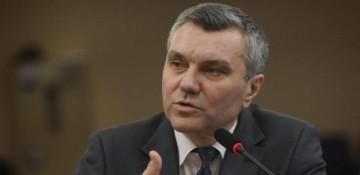
Kirill Krivosheev: Russian pressure only helps Pashinyan – INTERVIEW



Armenia is entering another crucial electoral cycle at a time when the country’s domestic politics, relations with Russia, and the peace process with Azerbaijan remain closely intertwined. The upcoming parliamentary elections are widely viewed not only as a test for Prime Minister Nikol Pashinyan and his ruling Civil Contract party, but also as an indicator of how Armenian society responds to external pressure, opposition narratives and the prospect of long-term regional normalization.
In an interview with News.Az, Russian South Caucasus expert Kirill Krivosheev shared his assessment of the electoral landscape in Armenia, the role of Russia, the weakness of the opposition, and the possible impact of the peace process with Azerbaijan on the outcome of the vote.
- Parliamentary elections will be held in Armenia this Sunday. What are your forecasts?
- I do not think I will be particularly original on this issue. In my view, the real question is what kind of victory incumbent Prime Minister Nikol Pashinyan will secure. Will it be a constitutional majority, or will it simply be an ordinary majority, which, in itself, would also be a good result for him?
Overall, however, almost no one seriously doubts that the ruling Civil Contract party will win. Even opinion polls do not provide any mathematical possibility for other political forces, even if they unite, to form a coalition. Some people make allowances for voter turnout, suggesting that in the event of very high turnout we could see some kind of unexpected result. But this is extremely unlikely.
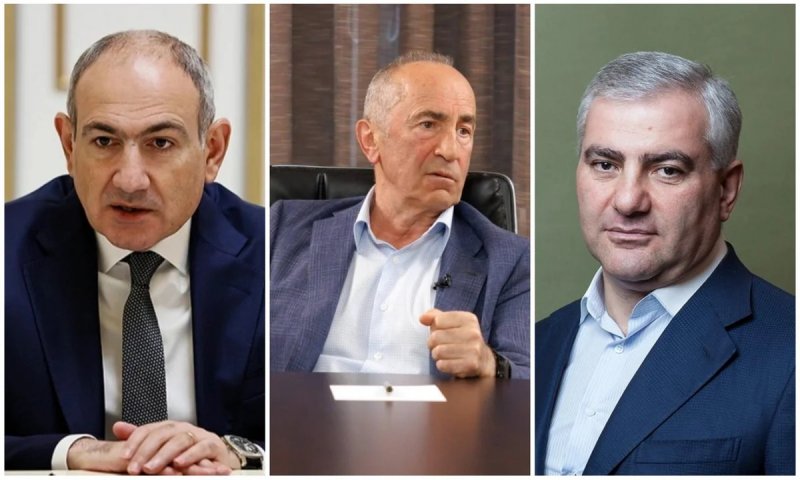
I have serious doubts that people will suddenly come out to vote en masse and that they will all turn out to be supporters of Samvel Karapetyan. I doubt this because the main public mood is apathy — everyone is talking about it. And if a person who previously did not want to vote, or who concealed their real preference, suddenly goes to the polls, it is quite possible that they will vote for one of these tiny parties — something like a “Spider-Man” protest vote against everyone, or someone else of that kind.
And, frankly speaking, in doing so they would actually be helping Pashinyan. The votes cast for parties that fail to enter parliament are redistributed among those that do.
- Why is Russia so actively interested in the outcome of the 2026 elections in Armenia? In your opinion, how effective can Russian pressure — economic embargoes and information campaigns — be in influencing the election result?
- Russia has been in a very weak position since 2022, and that position has not become stronger. You, of all people, understand that Azerbaijan took advantage of precisely this situation to fully restore control over its territories. Since then, Russia has been behaving in exactly this way: raising the stakes, inflaming emotions, and adding pathos to everything.
The message is essentially: “We are about to strike with our fist, so things must be done our way. If they are not done our way, you will face terrible punishment, the sun will rise in the west, the whole world will no longer be the same.” Then events unfold as they unfold, and afterwards everyone simply forgets about it.
You can trace many such moments in Russian propaganda. This is exactly what happened when Armenia ratified the Rome Statute. At the time, Russian presidential spokesman Dmitry Peskov said that it was a hostile decision and that it was unacceptable. Then he said it was a mistake. But if it was a mistake, then mistakes can be forgiven, especially when it concerns someone close. So they forgave it and forgot about it.
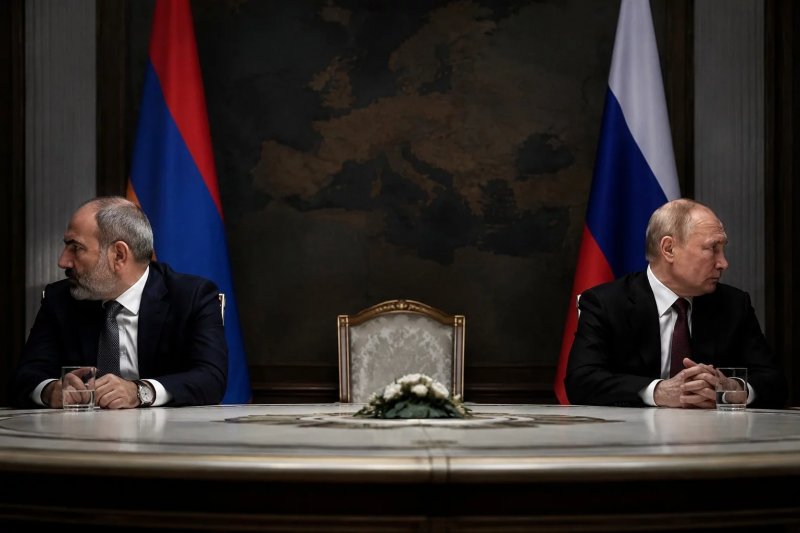
Is anyone talking about the Rome Statute now, after Pashinyan visited Putin in April? It is no longer on the agenda at all. One might think this would be the right moment to raise that topic again, but no — because everyone understands that it is not a serious issue anymore. The same will happen after Pashinyan wins: nothing will happen afterwards.
That is my assessment. And, of course, a trade embargo does not help the Armenian opposition. On the contrary. In fact, even pro-government Russian experts are saying this. For example, Sergey Markedonov has written that this is the wrong approach because Russian pressure only helps Pashinyan.
Such measures are being used because there are simply no other mechanisms left. Economic embargoes and bans are foolish steps that are taken only because there is nothing else to do.
As for information campaigns, I would be cautious in my observations and say that perhaps it is not even the Kremlin acting directly. Could Samvel Karapetyan himself not pay for these fake materials? Why not? Could certain diaspora structures not do this? They certainly could. Moreover, as Armenian colleagues have explained to me, these fake materials are appearing not in the social networks where Armenians themselves are active. Why is that being done? It is not entirely clear.
The fact that this is happening is beyond doubt. But whether the Russian presidential administration itself is directly behind it, or whether it is some satellite structure, is another question. The administration has many different structures subordinate to it. In any case, it cooperates with specific political strategists, as well as with various centers and foundations that develop one thing, another, and a third. So it is impossible to point a finger with absolute certainty. That is how I see it.
- Can Russia recognize the election results in the event of a convincing victory by Nikol Pashinyan?
- Yes, I have little doubt that this is exactly what Russia will do, because it has no other options. Taking the position of the offended party would be even more foolish.
What would they have to say? That Samvel Karapetyan actually won? Has even one poll shown a convincing victory for Samvel Karapetyan? Even if it were the most commissioned poll in the world, I have not seen anything like that. I simply have not seen it.
I have seen posts by certain pro-Russian Armenians who write that Pashinyan cannot win. But, again, there are various public opinion polls, and not one of them gives the opposition any significant advantage. Pashinyan’s own numbers are not exactly brilliant either — let us say around 30-40 percent — but the opposition has less than 10 percent. Even Karapetyan has less than that, not to mention Robert Kocharyan. So what is there to talk about? Really, what is there to discuss? It is quite strange. Simply strange.
It is possible that some political forces will enter parliament only because there is a quota requiring three parties. The Armenian parliament cannot exist with fewer than three parties. It cannot consist of fewer than three parties.
And if the third party does not even pass the electoral threshold, it is still brought in, because that is what the law requires. On the one hand, it is a reasonable law, because there should always be diversity in parliament. On the other hand, it is not much of a victory — it is a victory awarded to you, even though you did not really earn it.
- How does the peace process with Azerbaijan affect the election campaign?
- The peace process with Azerbaijan has a positive effect on Pashinyan’s election campaign. This factor primarily influences an older audience — not young people, but people aged 40-50, and especially those outside Yerevan.
If you look at the American poll, the core of Pashinyan’s support consists of older residents of small towns and villages. Incidentally, it is possible that these are the very residents of the settlements where border delimitation with Azerbaijan took place.
We know that some people protested against the delimitation process. I was there myself and heard different assessments. But what was interesting was that many of those who came to the protests were outsiders, while local residents were not particularly visible at those demonstrations. For the most part, it was an action organized by Bagrat Galstanyan and his supporters, many of whom had come from Yerevan.
- Could an opposition victory lead Armenia back into Russia’s closer orbit? What risks would that carry?
- As we understand, there will be absolutely no opposition victory. But if the opposition prevents Pashinyan from gaining a constitutional majority, and if it is represented more broadly than it is now, this will certainly create a certain impulse.
It would then become possible to stir up the issue of a referendum. It would be possible to persuade citizens to vote against certain changes. It would be possible, in some way, to block the constitutional amendments that, as you know, are being prepared.
One would need to look at which group can organize a referendum, how many MPs are required for that, and how the process would be approved. But overall, of course, a relative success by the opposition could, as Armenian experts say, knock the peace process off its fast track. In that case, the peace process would become longer.
But it will still continue in one form or another, because Robert Kocharyan is not going to become prime minister of Armenia. Armenians themselves absolutely do not want that.
- Are there risks of destabilization in Armenia after the elections, depending on the result?
- In reality, there will certainly be some protests, but I do not think they will be large-scale. We have already seen so many declarations of this kind: “That is it, Pashinyan is finished, this rally will decide Armenia’s fate.” And in the end, 10,000 or 15,000 people attend such a rally.
In other words, the opposition is unable to consolidate. So far, it has not demonstrated the ability to bring together the large groups that are genuinely needed. At the same time, there is a general consensus in people’s minds that Pashinyan really does have a relative majority.
The opposition will definitely organize protests. But this is a normal part of the political process, and there is nothing wrong with it. I have attended protests in Armenia; they are very peaceful, and I would very much like this tradition to continue. Peaceful protest is the foundation of a healthy political society and public debate. Violence, however, is unacceptable under any circumstances.


Similar news