Alawite rebellion? Syria’s uprising sparks fears of a full-scale war


Editor's note: Russian military-political analyst, expert in the field of strategic security, specialist in the Middle East and Africa Vladimir Bekish. The article expresses the personal opinion of the author and may not coincide with the view of News.Az.
Syria is once again in flames. And judging by the situation, tensions are escalating, with events likely unfolding according to the worst-case scenario.
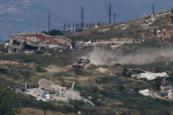
The clashes in question erupted on March 6 in the provinces of Latakia, Tartus, and Homs. The Syrian Ministry of Health reported that on the evening of March 6, six hospitals in rural areas of Latakia and Tartus were attacked by Assad supporters, resulting in multiple casualties. One of the epicenters of the fighting was the city of Jableh, located on the Mediterranean coast, south of Latakia. This region has traditionally been considered a stronghold of the Alawite people, who make up approximately 10-15% of Syria’s total population. The Alawites, to whom the Assad family belongs, have long been the backbone of the previous regime.
Source: La croix international
Unrest in the region flared up after the security forces of the new government attempted to carry out a raid in a village near Jableh, where arms depots allegedly set up by opponents of the new regime were located.
In response, protesters took to the streets of Jableh, Khmeimim, Latakia, Tartus, Homs, and other cities, attacking police stations and military facilities, seizing weapons stored there. According to various sources, some of the rebel leaders are former Syrian army generals from Assad’s time. These same generals had reportedly refused to support Assad during his ouster.
The rebels have even announced the formation of the "Military Council for the Liberation of Syria" under the leadership of former Assad-era General Ghiath al-Dala. They have managed to take control of several areas in Tartus and Khmeimim, and there have been calls for the creation of a "Latakian Republic."
The ongoing violence has already resulted in significant casualties among security forces and military units of the ruling regime. In response, the regime, under the leadership of Hayat Tahrir al-Sham, has attempted to turn the tide. On March 7, additional government forces were deployed to Latakia and Tartus to suppress the uprising. Authorities also announced the launch of a large-scale operation to "cleanse" the region of armed groups. Reports indicate numerous civilian casualties, including accounts of mass executions of local residents.
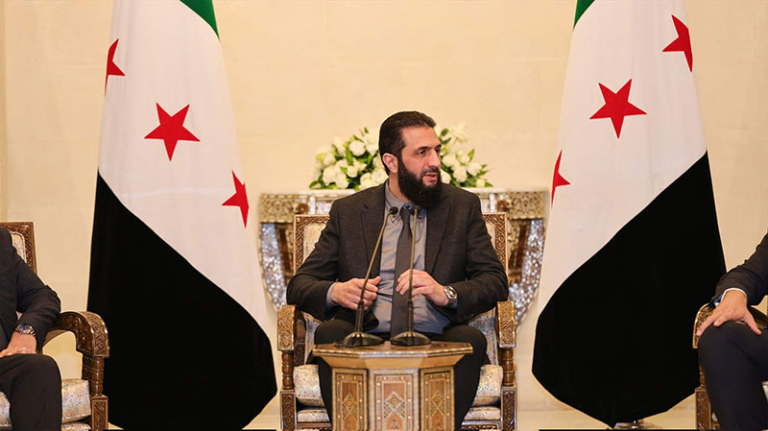
The head of the current Syrian regime, Ash-Sharaa, commented on these executions by stating, "The era of forgiveness is over—now begins the stage of liberation and cleansing." Authorities also claim that Latakia and Tartus are now fully under their control, and they are currently targeting rebel groups in rural and mountainous areas.
Amid these developments, thousands of civilians fleeing the bloodshed by the new Syrian authorities have reportedly arrived at the Russian Khmeimim Air Base.

Source: Reuters
So far, the forces of the new government have not entered the base itself, but the situation remains highly tense. Reports suggest that a Russian An-124 military transport aircraft, which arrived in Syria, was unable to land at Khmeimim and was instead forced to land at Damascus Airport.
Meanwhile, tensions are also rising in southern Syria, home to the Druze community, which enjoys Israeli support, and in the north, controlled by U.S.-backed Kurdish forces. Reports from Druze-populated areas indicate that local self-defense forces are being formed to maintain their region’s autonomy.
Israel has already signaled its readiness to assist the Druze. Israeli Defense Minister Yoav Gallant accused Syria’s new authorities of committing terror against national and religious minorities and assured that Israel would not abandon the Druze.
"We will ensure that southern Syria remains demilitarized and free from threats. We will protect the local Druze population—anyone who harms them will face our response," Gallant wrote on social media platform X.
Experts closely monitoring Syria believe that the uprising appears well-planned and meticulously prepared. The regime's attempt to "cleanse" the Alawite villages around Jableh seems to have provided a convenient pretext for the rebellion to begin.
Meanwhile, reports from Türkiye suggest that Iranian intelligence may be behind these latest attempts to destabilize Syria. And it would be naïve to dismiss such claims outright. The fall of the previous regime in Syria was a major geopolitical loss for Iran, which, like Russia, had invested significant resources in supporting Assad’s Syria.
What comes next? Where is Syria heading now? What is the future of its ruling regime, the Alawites, the Kurds, and the Druze? How will Türkiye, Israel, Russia, and the U.S. respond? And what will the Arab world say?
It is no secret that the current Syrian government has many opponents—both within Syria and abroad. At the same time, this regime still enjoys considerable support—again, both domestically and internationally. And despite being adversaries, even the regime's opponents continue to seek ways to engage with it to safeguard their interests in Syria and the broader region.
Source: Anadolu Agency
This complex web of conflicting interests creates a high degree of uncertainty about Syria’s future. But based on historical precedents—especially in this region—one thing is increasingly clear: Syria is on the brink of a new civil war, one that will likely involve foreign actors.
This could ultimately lead to Syria’s fragmentation into multiple autonomous regions, each backed by different external powers seeking to establish their presence, control key areas, and influence regional dynamics. If not outright dictating policies, these foreign actors will certainly have "strong recommendations" about how Syria should be governed and which alliances it should pursue.
Moreover, a key question looms over Russia’s military presence in Syria. While Moscow has provided sanctuary to Alawites, thereby hindering the Syrian regime’s ability to purge them, this has created tensions with the ruling authorities. An attack on the Russian base—whether provoked or spontaneous—cannot be ruled out. Any such assault would prompt a military response from Russian forces, which would mean direct Russian involvement in the Syrian conflict.
Interestingly, this could actually align with Moscow’s strategic interests, as it would justify Russia’s continued military presence in Syria under the pretext of protecting civilians and preventing further conflict escalation. In this narrative, Russia would position itself as a peacekeeping force in Syria.
Another key player in this unfolding crisis is Iran. Iran is unlikely to limit itself to merely orchestrating the opposition's movements—it will actively supply weapons, advisers, and intelligence support to anti-regime forces. And it is highly likely that Iran’s actions will be coordinated with Russia.
But this will not go unanswered by Türkiye. Ankara sees an opportunity in this crisis—an opening to settle its long-standing conflict with the Kurds. And at this point, Donald Trump may be forced to step in. But how he will react remains anyone’s guess.
As for Israel, it will certainly not stop at protecting the Druze. Tel Aviv will do everything it can to create problems for Iran and counter its influence to prevent pro-Iranian forces from gaining a foothold near its borders.
One thing is certain: in the coming days and weeks, Syria—and the entire region—will see no peace. Unfortunately.
(If you possess specialized knowledge and wish to contribute, please reach out to us at opinions@news.az).


Similar news