Armenia moves toward the EU: How will Moscow respond to the new challenge?


.png)
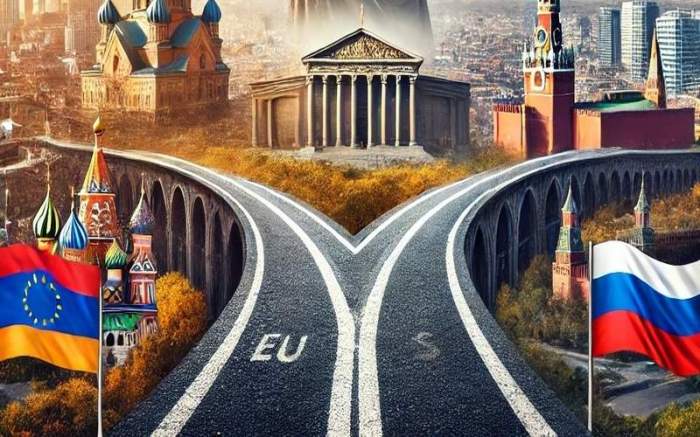
On February 12, 2025, the Armenian Parliament passed the first reading of a bill initiating the country’s process of joining the European Union, with 63 votes in favor and 7 against.
Armenian Prime Minister Nikol Pashinyan cautioned that accession would be a long and complex process, ultimately requiring approval through a national referendum.
This move has sparked skepticism in Russia, a long-time ally of Armenia, raising concerns about potential shifts in economic relations, including the pricing of Russian gas exports to Armenia at European rates.

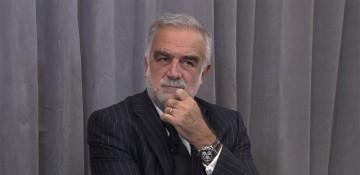
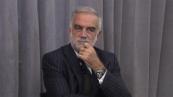
News.Az discussed the implications of Armenia’s pivot toward the EU with Igor Korotchenko, Director General of the Caspian Institute for Strategic Studies.
Korotchenko believes Armenia’s political rapprochement with the EU represents a serious challenge for Russia. "The Kremlin and Russian decision-making centers are currently formulating a response to Pashinyan’s accelerated pivot towards the European Union and the United States," he stated.
According to him, this shift will primarily impact Armenia’s military-political ties with Moscow. "The Pashinyan government is prioritizing maximum distancing from Russia and the Eurasian Economic Union (EAEU) while deepening engagement with Western power centers. As a result, Russia is developing countermeasures, including potential economic measures against Yerevan," he added.
The political analyst also noted that while a concrete response has yet to be finalized, Russia no longer harbors any illusions about Armenia’s trajectory. "Pashinyan’s government is positioning Armenia as the West’s Trojan horse in the South Caucasus, acting as a conduit for European and American interests. Moscow will be compelled to react practically to Yerevan’s unfriendly policies," he emphasized.
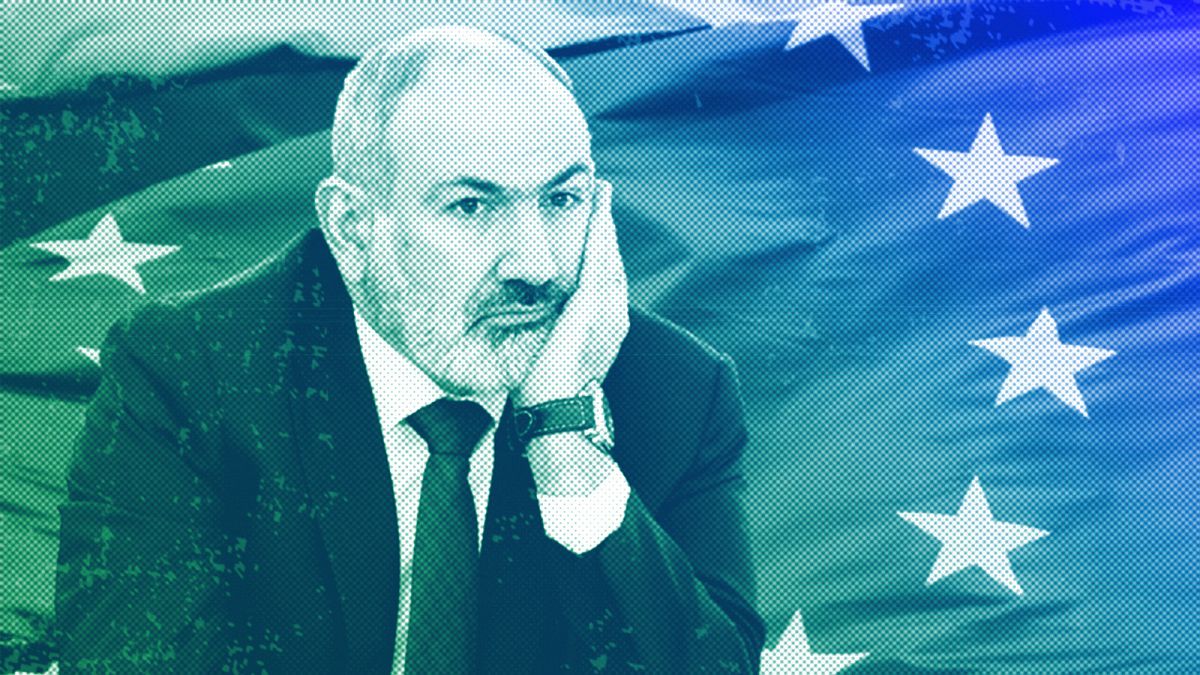
Korotchenko expressed skepticism about Armenia’s prospects for EU membership. "There is a vast gap between declaring intent and achieving actual accession. Turkey has been seeking EU membership for decades without success, and Georgia’s efforts at integration have only resulted in political destabilization," he noted.
He predicted that Armenia would find itself in a similar situation. "Armenia will likely remain in the EU’s waiting room for decades, with no tangible results. From an economic standpoint, Armenia holds little appeal for EU member states. No one in Europe is willing to shoulder the burden of supporting a struggling Armenian economy, especially amid their own financial challenges."
Korotchenko suggested that the EU’s engagement with Armenia is more about geopolitical maneuvering than practical integration. "The illusion of EU membership serves as a carrot to steer Armenia in the desired direction. This is the essence of the manipulations we are witnessing today," he remarked.
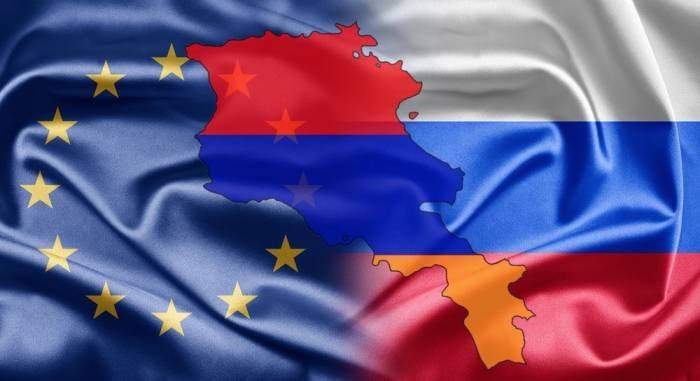
He also underscored the benefits Armenia currently enjoys from its economic ties with Russia and the EAEU. "Trade between Armenia and Russia, as well as with other EAEU members, is experiencing unprecedented growth. However, Armenia is simultaneously leveraging parallel import mechanisms to bypass Western sanctions on Russia, profiting from the very economic ties it seeks to sever," he stated.
Korotchenko described Armenia as a key player in facilitating Western sanctions against Russia. "Oddly enough, Armenia has become a primary beneficiary of anti-Russian sanctions, exploiting parallel import routes to strengthen its economy," he said.
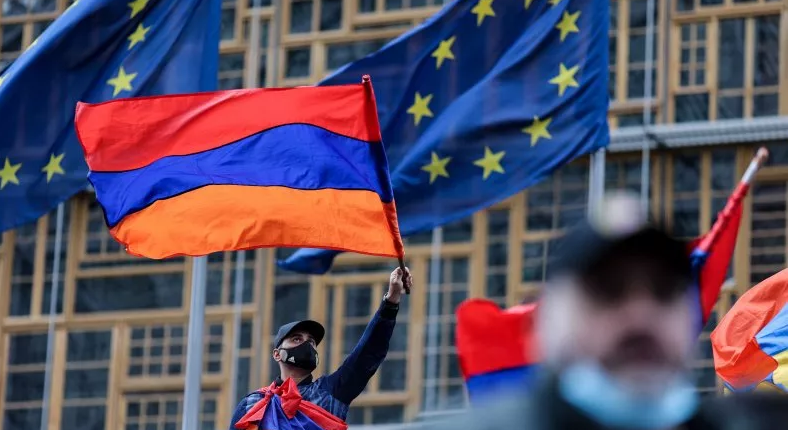
He warned that Armenia's membership in the EAEU is fundamentally incompatible with its aspirations for EU accession. "Sooner or later, Yerevan will be excluded from all economic mechanisms linking it to Russia and the EAEU. If Macron and the EU are eager to sponsor a struggling Armenia, let them. But from Moscow’s perspective, economic sanctions against Yerevan are a likely scenario in the coming years," he predicted.
Korotchenko emphasized that Armenia’s security does not depend on Western powers such as France, the U.S., or the EU, but rather on a comprehensive peace agreement with Azerbaijan.
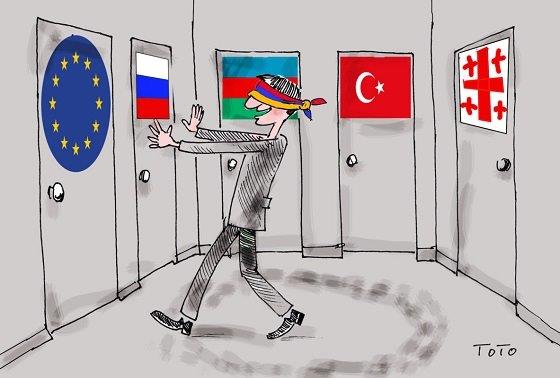
"Are Armenia’s elites ready for such a treaty? So far, we see nothing but delays and political maneuvering. Two key provisions of Baku’s peace proposal remain unaddressed, and Yerevan refuses to amend its constitution, which still contains territorial claims against Azerbaijan," he noted.
According to Korotchenko, this hesitation places Armenia in a precarious position. "Azerbaijan has proposed five fundamental principles for a peace agreement, yet Yerevan remains reluctant to accept them. This deadlock is unsustainable, and the sooner Pashinyan realizes the futility of his approach, the better for everyone," he asserted.
Korotchenko also criticized the EU’s observation mission in Armenia, calling it a front for Western intelligence activities.

"This so-called mission includes career operatives from European intelligence agencies, tasked with spying on Azerbaijan, Russia, and Iran while exerting pressure on Armenian policy," he claimed.
He warned that if Armenia fails to sign a peace treaty with Azerbaijan this year, it risks serious consequences. "Without a legally formalized border agreement, Armenia could face further geopolitical fragmentation or even disappear from the political map," he stated.
"The post-war realities established after the Second Karabakh War and Azerbaijan’s anti-terror measures in Karabakh must be recognized. The sooner Armenian elites acknowledge these realities, the better it will be for Armenia itself," Korotchenko concluded.


Similar news