How Russia is developing a new strategy with Armenia


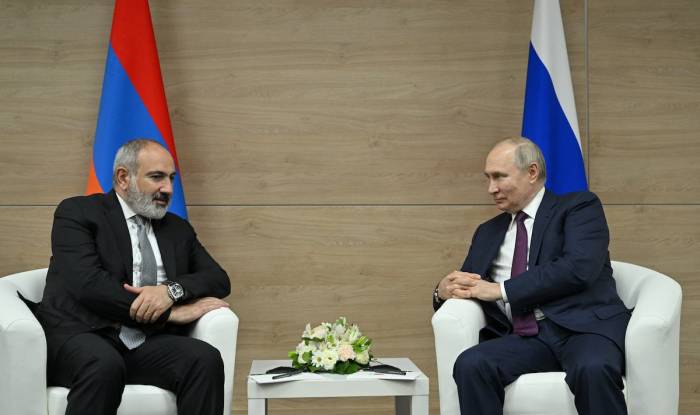
Editor's note: Stanislav Tkachenko, Doctor of Economics, Professor, Head of the Master's Program in "Diplomacy" at St. Petersburg State University; President of the "Post-Communist Systems in International Relations" Section of the International Studies Association. The article expresses the personal opinion of the author and may not coincide with the view of News.Az.
Russia's strategy toward Armenia is shaped by both long-term factors and the evolving situation surrounding the special military operation in Ukraine. These represent two distinct horizons in foreign policy planning: the long-term and the short-term. Currently, some contradictions between them reflect the complexities of international relations and the shifting dynamics of alliances. However, in the future, Russia and Armenia may move closer, and these contradictions could diminish.From Moscow's current strategic perspective, the South Caucasus and its three countries are crucial for Russia’s security and economic development. Once part of a unified state, Russia has long moved past the "phantom pains" of the USSR's collapse. Today, it views Azerbaijan, Armenia, and Georgia as sovereign nations with their own national interests. Throughout the post-Soviet years, Russia has remained Armenia’s key security partner, often overlooking Armenia’s intransigence in the Karabakh conflict and its reluctance to resolve the issue to bring peace and stability to the South Caucasus.
The military resolution of the Karabakh conflict (2020-2023), which ended in Azerbaijan’s victory, seriously strained the alliance between Moscow and Yerevan. Russia accepted the conflict's outcome and actively engaged in restoring order in the region. Meanwhile, Armenia, having lost the war, sought global allies to bolster its diplomatic position and potentially strengthen its military capabilities. A circle of such countries quickly formed: NATO states, Iran, and India.
Russia understands the futility of Yerevan's hopes for revising or even slightly altering the outcomes of the Karabakh conflict, which disrupted what Moscow views as the new—and hopefully final—status quo established in the fall of 2023. Armenia’s rapprochement with countries that Russia diplomatically refers to as "unfriendly"—but which are in fact waging a hybrid war against it (via arms supplies, sanctions, mercenaries, and other hostile actions)—will not be forgotten or forgiven by Moscow. However, such retribution will likely come after the military conflict between Russia and the U.S., along with its allies in Ukraine, concludes.
Russia is closely studying China’s economic success from the 1980s to the 2020s. One of the key elements of China’s model has been pragmatic economic relations with countries, even those with which it had past conflicts. For example, despite the atrocities committed by the Japanese army during World War II, China developed trade and investment ties with Japan in the 1980s. This approach, dubbed “hot economy, cold politics,” allows for the separation of economic and political issues. The Kremlin is now exploring a similar strategy toward various countries, including Armenia, Hungary, Slovakia, Turkey, Argentina, and ASEAN nations, as long as economic ties with these countries do not threaten Russia’s core security.
Armenia, on its part, seems to follow a similar policy—separating its aspirations for Karabakh revenge from the need to revive its national economy, which has been in crisis since 1991.
Russia’s industries—agriculture and services—have demonstrated remarkable resilience amid the sanctions war declared by the West since 2014, which peaked in 2022. Maintaining economic ties with the outside world remains a priority for Russia, and Armenia plays a role in this strategy. This applies not only to mutual trade but also to transit trade, including goods under the "parallel import" category, crucial for ensuring Russia’s security. These goods, though not military equipment, are essential to avoiding inflation, maintaining variety in the market, and preventing consumer dissatisfaction.
Two years ago, Russia ceased publishing detailed foreign trade data, but experts can still access Armenian statistics and reports from international bodies like the UN, World Bank, and WTO. This provides insight into what goods Russia and Armenia trade and at what prices. Before the special military operation, Armenia primarily exported alcoholic beverages, diamonds, fish, tomatoes, and various fruits to Russia. However, since February 2022, the structure and volume of bilateral trade have shifted significantly. Armenia now exports household appliances, phones, ICT equipment, monitors, projectors, iron alloys, and chemicals to Russia. These imports are vital for Russia’s domestic market, and Russian authorities pragmatically assess their importance despite the political instability in Armenia.
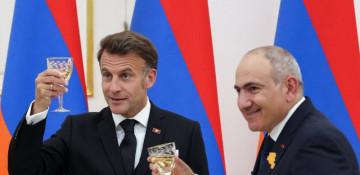
In Moscow, Armenia’s pivot toward support from France, the U.S., and other Western countries is viewed as a strategic mistake. The experiences of Georgia under Saakashvili (2004-2013) and Ukraine after Maidan (2014-2024) point to pessimistic forecasts for Armenia’s reorientation toward Washington, Paris, and Brussels. The interest of these countries in Armenia will last only as long as Armenia serves their interests in confronting Turkey, Azerbaijan, and most importantly, Russia, which is locked in a direct confrontation with the West.
Moscow is prepared for a temporary cooling of relations with Armenia’s current leadership and is willing to wait until the disillusionment following Armenia’s defeat in the Karabakh conflict gives way to a more balanced policy. There is hope in Moscow that it will be possible to restore at least a partnership, if not an alliance, with Yerevan, as has been the case for over two centuries.
(If you possess specialized knowledge and wish to contribute, please reach out to us at opinions@news.az).


Similar news