Ashgabat, Baku and Tashkent launch new transcontinental route


Editor's note: Teymur Atayev is an Azerbaijani publicist, historian, political scientist, and host of the program "Aspects of Foreign Affairs" on the Azerbaijani CBC TV channel (broadcasts in Russian). The article expresses the personal opinion of the author and may not coincide with the view of News.az.
The trilateral meeting of the Chairman of the Halk Maslahaty of Turkmenistan, Gurbanguly Berdimuhamedow, the President of Uzbekistan, Shavkat Mirziyoyev, and the President of Azerbaijan, Ilham Aliyev, attracted considerable interest not only within the region. This is quite understandable, since the parties emphasized the expansion of the transport and logistics dimension of relations, which—amid the global geopolitical collapse—demonstrates the realistic prospects of the region as a connecting link between East and West, North and South.
This point is confirmed by the focus of the documents signed at the meeting, including memoranda of cooperation in the fields of transport and logistics, shipbuilding, and civil aviation. Also important was the adoption of an Agreement on Cooperation between commodity and raw materials exchanges, among others.
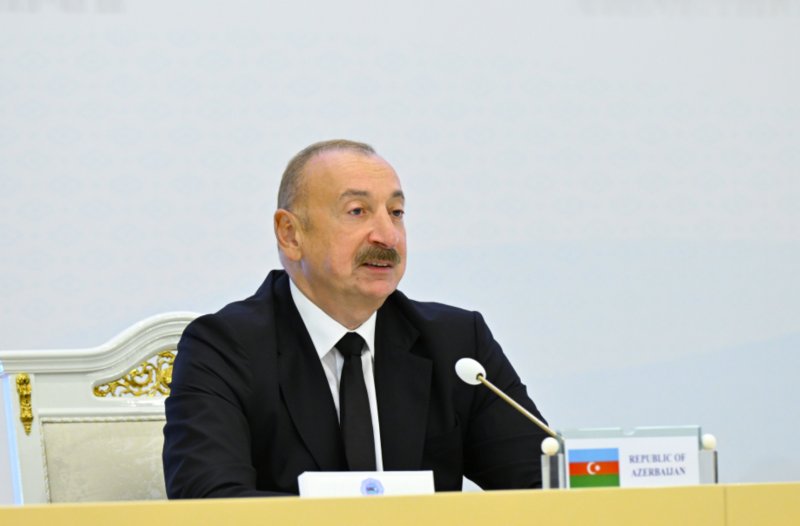
In their Joint Statement, the leaders of the three countries, while stressing reliance on the cultural and historical commonality of their states, underlined their conviction that strengthening peace, stability, security, and sustainable development requires further deepening of relations. They reaffirmed their shared commitment to enhancing cooperation in the political, trade and economic, transport and logistics, energy, environmental, cultural, humanitarian, and other spheres, thereby confirming the unwavering long-term course toward strategic partnership in the spirit of centuries-old friendship, good-neighborliness, and mutual support between their peoples.
At the same time, Ashgabat, Baku, and Tashkent declared the priority of further expanding trade and economic cooperation, including through the creation of favorable conditions for its implementation. In parallel, the Joint Statement emphasized the development of industrial cooperation, with plans to establish joint ventures in the textile, chemical, construction, and other industries.
The document also highlighted the importance of stepping up multimodal transportation along the “Uzbekistan – Turkmenistan – Azerbaijan” route and back (making use of the transit potential of the countries). In this context, the parties welcomed the creation of a Joint Working Group to discuss the development of transport and communication infrastructure, coordinate freight transportation, and simplify organizational conditions.
The cultural and humanitarian sphere was not left without attention, with the statement stressing the importance of contacts not only between relevant state bodies and public organizations, but also between higher educational institutions, the media, and figures of culture and the arts.
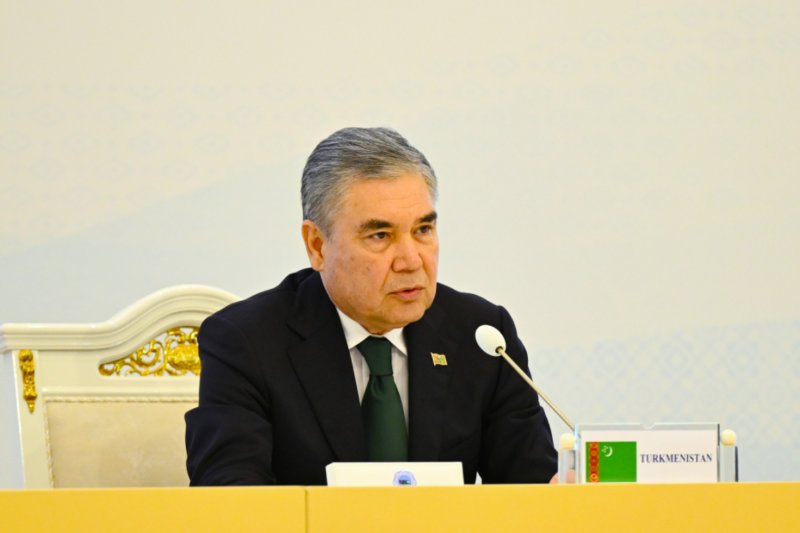
The meeting also discussed Tashkent’s interest in developing its own ferry capacities for transporting goods across the Caspian Sea, as well as prospects for organizing supplies of “green” energy to Europe. The parties expressed their support for developing a joint action plan to achieve these goals, including building sustainable trade and logistics chains, establishing wholesale distribution centers, securing access to major retail networks, and implementing joint electronic platforms, among others.
In other words, the discussion focused on preparing a “roadmap” for all the agreed points—taking into account joint efforts to combat climate change, preserve biodiversity, and promote common environmental programs.
Thus, Tashkent, Ashgabat, and Baku effectively demonstrated their readiness to form a sustainable transcontinental route linking China with South Asia, the Middle East, and Europe. Of particular significance here is the Middle Corridor, also known as the Trans-Caspian International Transport Route (TITR), along with the promising Zangezur Corridor (“Trump Route” – TRIPP). This is further reinforced by the ongoing construction of the China–Uzbekistan railway and the provisions of the recent memorandum on the Trans-Afghan Corridor project. Implementation of these initiatives will ensure that new cargo flows efficiently utilize the infrastructure of all three states.
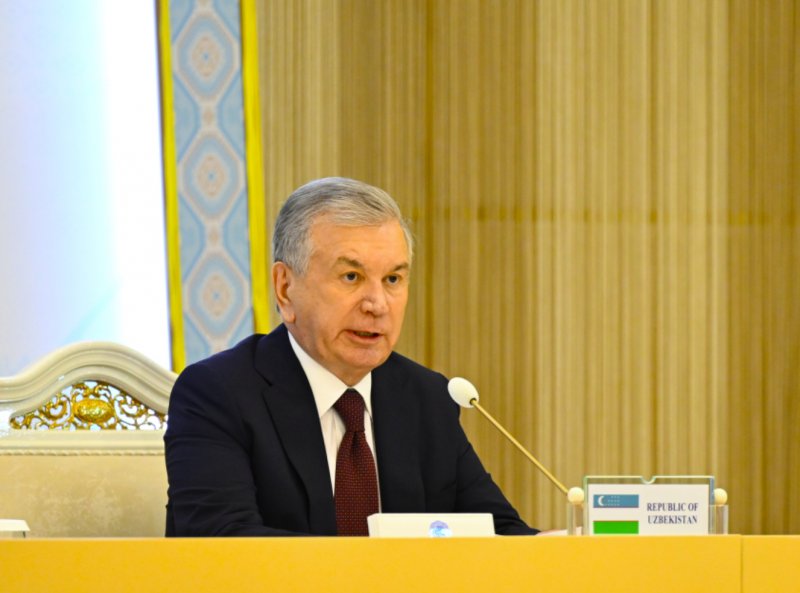
This confirms how, before our very eyes, the geographical space of “Central Asia – South Caucasus” is becoming a unified whole, emerging as one of the key geopolitical hubs of our time.
As President of Azerbaijan Ilham Aliyev summed up, the new trilateral cooperation format will allow all countries to work more effectively for the benefit of the region, since the platform is built on the principles of brotherhood, good-neighborliness, and respect. Its ultimate goal is to ensure stability, security, development, and peace.
(If you possess specialized knowledge and wish to contribute, please reach out to us at opinions@news.az).


Similar news