Central Asia–Azerbaijan–Georgia: The strongest geopolitical link of our time


Editor's note: Teymur Atayev is an Azerbaijani publicist, historian, political scientist, and host of the program "Aspects of Foreign Affairs" on the Azerbaijani CBC TV channel (broadcasts in Russian). The article expresses the personal opinion of the author and may not coincide with the view of News.az.
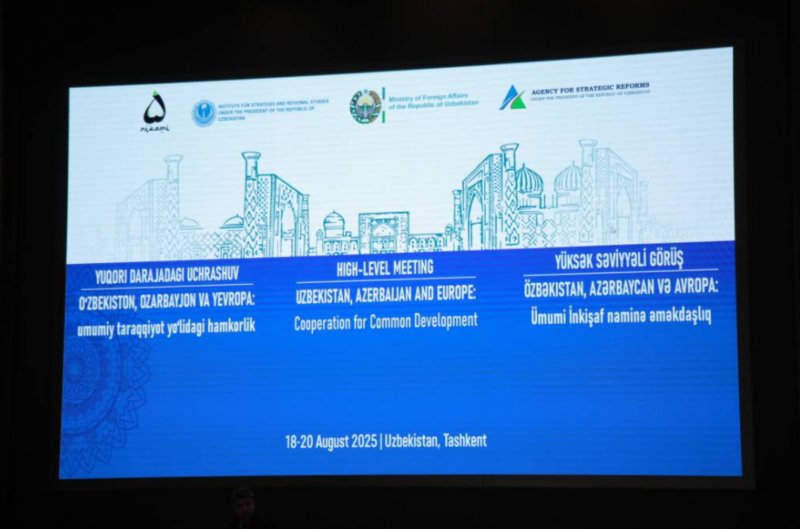
In Tashkent, under the auspices of Uzbek President Shavkat Mirziyoyev, the high-level meeting “Uzbekistan, Azerbaijan and Europe: Cooperation for Common Development” continues. It is quite symbolic that this forum has become the first event organized by the Nizami Ganjavi International Center in Central Asia (together with the Institute for Strategic and Interregional Studies under the President of Uzbekistan).
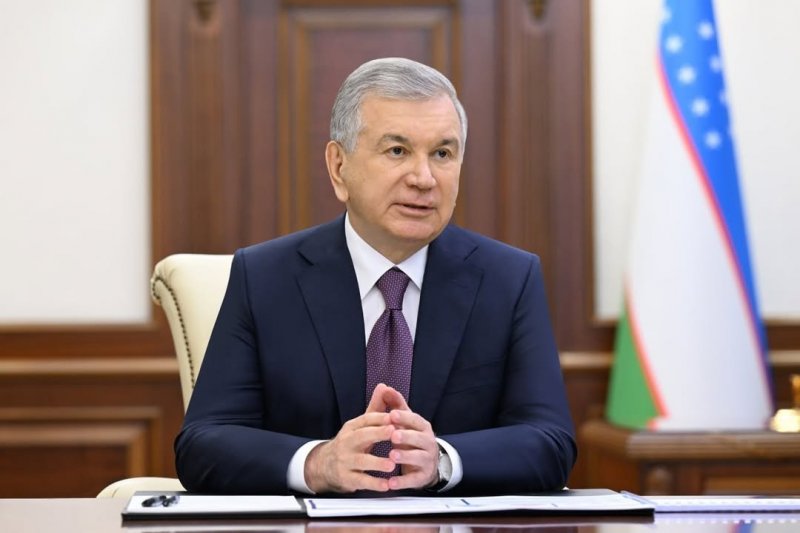
In his address, the head of Uzbekistan emphasized that the main theme of the meeting is connectivity and prospects for partnership between Central Asia (CA) and the South Caucasus, noting the spirit of mutual trust and support in Azerbaijani-Uzbek relations. Here, Azerbaijan acts as a “strategic bridge linking Central Asia and Europe.” Following this, the Uzbek president highlighted the continuation of purposeful work with the European Union and other partners to develop effective transport, logistics, and energy corridors, which would “revive our region’s role as a hub between West and East.” At the same time, Shavkat Mirziyoyev drew attention to Azerbaijan’s readiness to participate in new regional processes by strengthening interaction between CA and the South Caucasus.
Overall, such developments come as no surprise today. Central Asia and the South Caucasus, represented by Azerbaijan and Georgia, have in fact become a single geographical-geopolitical space. As confirmation, on August 14 Kazakhstan and Uzbekistan reviewed the status of the project to create a “Green Energy Corridor” across the Caspian Sea in cooperation with Azerbaijan, a project given practical shape through the establishment of a trilateral joint venture on July 1, 2025. In this context, it was stressed that the “Azerbaijan–CA” energy cable through the Caspian is becoming part of a larger project to build an energy bridge from Central Asia through the Black and Caspian seas to the European continent to transport green energy.
In parallel, Astana and Tashkent discussed regional electricity projects, including the construction of the Kambarata HPP-1, where Kyrgyzstan is acting as a strategic partner of Uzbekistan and Kazakhstan.
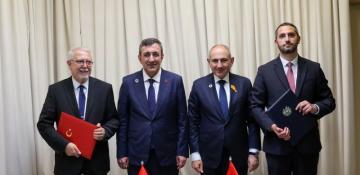
At the same time, Azerbaijani President Ilham Aliyev ratified four agreements between Baku and Tashkent, covering cooperation in environmental protection, science, vocational and higher education, and other fields.
As for bilateral cooperation between Baku and Tashkent, by early summer this year, trade turnover between the two countries had grown by 40%. Admittedly, in numerical terms this is just over $200 million, but a target of $1 billion by 2030 is under discussion. The Uzbek-Azerbaijani investment fund is operating successfully, financing projects worth over $360 million (construction of residential complexes in Tashkent, tourism facilities, logistics hubs, and manufacturing in Kashkadarya). More than 9,000 cars have rolled off the production line in Hajigabul, which has already led to talks about building a second plant. The focus here is not only on exports but also on meeting domestic market demand.
Also noteworthy is the contract signed at the end of last month between Uzbekistan’s Ministry of Energy, SOCAR, and Uzbekneftegaz for the Ustyurt oil and gas-bearing region, under which SOCAR will act as the operator during geological exploration works within the framework of a production-sharing agreement (exploration, development, and extraction on investment blocks in this area). As emphasized in the press release of Uzbekistan’s Ministry of Energy, if commercially viable hydrocarbon reserves are discovered, “the parties will proceed to the stage of development and subsequent production.”
Thus, the Tashkent forum “Uzbekistan, Azerbaijan and Europe: Cooperation for Common Development” is taking place against the backdrop of strengthened mutual understanding between CA countries, Azerbaijan, and Georgia. This highlights the unified area we referred to earlier as one of the most important geopolitical links of our time. This is especially relevant amid global political and economic turbulence, when established connections are collapsing and former partners and allies are turning into antagonists.
Moreover, such mutual understanding is crucial in the context of the world entering an era of transformation (some would say, the formation of a new world order), when the planet needs strong, cohesive alliances (global platforms) capable of advancing an agenda based on ensuring stability and security, at least in certain regions of the world. This nuance becomes a key foundation for dialogue and partnerships.
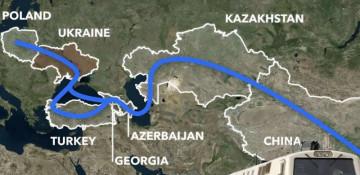
In this regard, particular attention is drawn to the Middle Corridor and the Zangezur Corridor. The latter, incidentally, has recently also been referred to as the “Trump Route” (TRIPP). Thus, at this historic stage, CA and the South Caucasus are confidently positioning themselves as significant geopolitical centers, serving, among other things, as a link between China and Europe. In addition, the countries of this space continue to play an important role in the “North–South” and “West–East” projects. Therefore, the prospects of the CA–South Caucasus line are extremely significant.
(If you possess specialized knowledge and wish to contribute, please reach out to us at opinions@news.az).


Similar news