De-dollarization: a real global trend or a loud political myth?



In recent years, few concepts have generated as much debate in global politics and economics as de-dollarization. From BRICS summits and bilateral trade agreements to official statements by political leaders, the idea that the world is moving away from the U.S. dollar has become a recurring theme. Supporters portray it as evidence of a declining Western-centric order, while skeptics argue that the dollar’s dominance remains largely intact. As global tensions intensify and alternative financial mechanisms gain greater visibility, the central question is whether de-dollarization reflects a structural shift in the global system or is primarily a political narrative amplified by geopolitical rivalry.
At first glance, the arguments in favor of de-dollarization appear persuasive. The share of the U.S. dollar in global foreign exchange reserves has gradually declined over the past two decades, falling from more than 70 percent at the start of the century to just under 60 percent in recent years. At the same time, countries such as China, Russia, India, and several Middle Eastern states have expanded the use of national currencies in bilateral trade. High-profile announcements of energy deals settled in yuan or local currencies are frequently cited as evidence that the dollar’s central role is eroding.
Geopolitics has played a decisive role in driving this agenda. The extensive use of financial sanctions by the United States and its allies has prompted many countries to reassess their exposure to the dollar-based financial system. For states that face sanctions or fear future restrictions, reducing reliance on the dollar is increasingly viewed as a matter of strategic sovereignty rather than economic efficiency. This logic is particularly evident across much of the Global South, where policymakers frame de-dollarization as a means of shielding national interests from external pressure.
The BRICS grouping has emerged as the most visible platform for this discourse. Proposals to expand trade in national currencies, develop alternative payment systems, or even introduce a common settlement unit have attracted considerable attention. These initiatives reflect a genuine desire among emerging economies to gain greater autonomy in international finance. However, the gap between political ambition and practical implementation remains significant. Despite rising volumes of local currency trade, most cross-border transactions, debt instruments, and commodity pricing continue to be denominated in dollars.
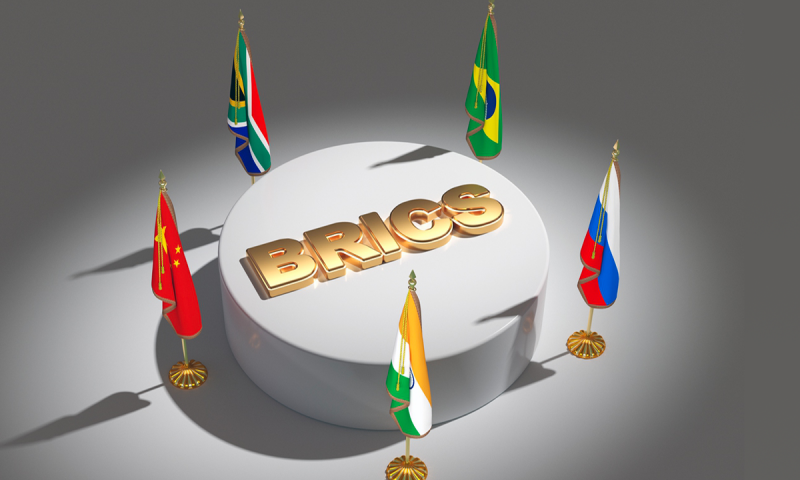 Photo: VCG
The resilience of the U.S. dollar rests on structural foundations that are difficult to replicate. Its dominance is not merely a legacy of past arrangements, but the result of deep and liquid financial markets, legal predictability, and a high degree of institutional trust. U.S. Treasury securities continue to serve as the world’s primary safe haven asset, particularly during periods of crisis. Even governments that publicly promote de-dollarization often maintain substantial dollar holdings in their reserves, reflecting the absence of viable alternatives offering comparable stability and scale.
China’s currency, the yuan, is often presented as the most plausible challenger to the dollar. Beijing has actively promoted its international use through trade settlements, currency swap agreements, and the expansion of offshore clearing centers. Yet structural constraints continue to limit the yuan’s global role. Capital controls, limited convertibility, and concerns about transparency and regulatory predictability reduce its appeal as a reserve currency. As a result, while the yuan’s share of global payments has increased, it remains far behind both the dollar and the euro in overall usage.
The euro, despite being the world’s second most important currency, has also failed to significantly close the gap with the dollar. Internal fragmentation, uneven fiscal integration, and recurring political crises within the European Union have constrained its ability to function as a true global alternative. For many investors and central banks, diversification away from the dollar has therefore meant incremental adjustments rather than a decisive shift toward another dominant currency.
Another important dimension of de-dollarization lies in payment infrastructure rather than currencies themselves. Alternatives to SWIFT, regional clearing mechanisms, and digital payment platforms have gained prominence, particularly among sanctioned states. These systems reduce vulnerability to external control and enhance operational flexibility. However, they largely operate as complements rather than substitutes for the existing global financial architecture. Their reach remains limited, and their effectiveness often depends on continued access to dollar-based liquidity.
Digital currencies and central bank digital currencies are sometimes portrayed as potential disruptors of dollar dominance. While they may reshape domestic financial systems and cross-border payments over time, their impact on global reserve currency hierarchies is likely to be gradual. Trust, legal certainty, and market depth cannot be created overnight through technological innovation alone. In this sense, digitalization may diversify financial channels without fundamentally overturning the existing order.
 Photo: Shutterstock
From a political standpoint, de-dollarization also serves a powerful symbolic function. It allows governments to signal resistance to Western influence and to frame economic policy as an extension of strategic autonomy. In domestic narratives, it is often presented as proof that a multipolar world is emerging. Yet symbolism should not be mistaken for systemic transformation. The global economy remains deeply interconnected, and the dollar continues to function as the primary medium through which that interconnectedness is managed.
Looking ahead, de-dollarization is best understood as an incremental and uneven process rather than a sudden rupture. The dollar’s share of global finance may continue to decline gradually as countries diversify reserves, expand local currency trade, and develop alternative payment channels.
At the same time, no single currency or system currently possesses the capacity to replace the dollar’s central role. Rather than a post-dollar world, the more realistic outcome is a more fragmented monetary landscape in which the dollar remains dominant while facing growing competition at the margins.
The conclusion, therefore, is nuanced. De-dollarization is neither a myth nor an imminent revolution. It is a real trend driven by geopolitical tensions, risk management, and the pursuit of autonomy, but its scale is often overstated in political rhetoric. For the foreseeable future, the U.S. dollar will remain the backbone of the global financial system, even as its dominance is gradually diluted. The global order is evolving through adaptation rather than collapse, and the dollar, for now, remains firmly at the center of that evolution.
By Asif Aydinli


Similar news