BRICS group is expanding: How will the United States respond?


By Tural Heybatov
The BRICS organization has taken a significant step toward reshaping global governance by welcoming new members. Last week, Indonesia officially joined as a full member, marking a major milestone in the group’s expansion. Brazil, which assumed the presidency of BRICS on January 1, issued a statement confirming Indonesia’s membership, which was approved during the Johannesburg summit held in South Africa in August 2023. With its vast population and substantial economic footprint, Indonesia aligns seamlessly with other BRICS nations in advocating for reforms in global governance institutions. Brazil’s Ministry of Foreign Affairs emphasized that Indonesia’s inclusion strengthens cooperation across the Global South, a priority for the organization.
The inclusion of Indonesia is not just symbolic; it reflects the growing influence of BRICS as a platform for emerging economies to assert themselves on the global stage. With its rapidly developing economy and significant geopolitical weight in Southeast Asia, Indonesia adds strategic depth to the organization. Its membership also underscores the group’s focus on inclusivity and representation, providing smaller and emerging nations a voice in global affairs.China has been particularly vocal in welcoming new members to BRICS . During a recent press conference, Guo Jiakun, a spokesperson for China’s Foreign Ministry, expressed enthusiasm about the group’s expansion. Responding to a question from CCTV, he described the BRICS framework as a historical response to the collective rise of emerging and developing countries. He emphasized that the cooperation mechanism aligns with the global community’s aspirations for peace, shared development, and improved governance. Currently, BRICS nations represent nearly half of the world’s population, one-third of global GDP, and over 50% of global economic growth—an impressive testament to the group’s influence and potential.
Guo Jiakun also reiterated China’s commitment to working with BRICS countries in a spirit of openness, inclusivity, and mutual benefit. He underscored the shared vision of promoting a multipolar and inclusive global economic system, noting that this approach contributes to the creation of a community with a shared future for humanity. China’s optimism regarding BRICS’ future reflects the broader belief among its members that the organization can serve as a counterweight to existing Western-dominated institutions.
In December 2023, Thailand also joined BRICS as a partner country. Thailand’s engagement with the group began in 2017 through the BRICS+ format, which allows countries outside the core membership to participate in its initiatives. The inclusion of Thailand demonstrates the organization’s commitment to expanding its outreach and fostering regional cooperation in Asia.
Additionally, the United Arab Emirates (UAE) has solidified its position within BRICS. The UAE’s Ministry of Foreign Affairs announced on social media platform X that the country would become a full member of BRICS starting January 1, 2024. It joins alongside Egypt, Iran, and Ethiopia, marking a significant expansion for the group. The UAE’s statement highlighted its dedication to fostering economic prosperity and building strategic partnerships, further solidifying its status as a trusted multilateral partner and key global hub.
The expansion of BRICS has not been without controversy, particularly from Western nations. The group’s ability to attract new members without imposing strict conditionalities or mandatory obligations sets it apart from organizations like the European Union. This flexibility has been a significant draw for countries seeking alternatives to Western-led global governance structures. Slovak MEP Ľuboš Blaha recently described BRICS as the future of the global economy, particularly noting its initiative to create alternatives to the dominance of the U.S. dollar in global trade.

The dominance of the dollar has been a central topic for BRICS. During the BRICS finance ministers’ and central bank governors’ meeting in February 2023 in São Paulo, discussions focused on transitioning from the dollar to national currencies for trade. Reports have also suggested the development of a multilateral digital settlement platform called BRICS Bridge. This initiative aims to streamline transactions and reduce dependence on the dollar, signaling a bold step toward financial independence for member states.
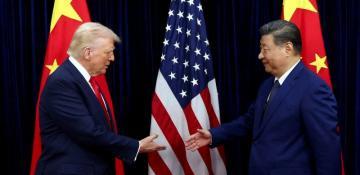
However, this move has faced resistance. Former U.S. President Donald Trump, re-elected in October, issued a stark warning to BRICS nations via Truth Social. He threatened to impose 100% tariffs if the group moved to create a BRICS currency or adopt alternatives to the dollar. Trump also hinted at potential trade restrictions with the United States, further intensifying tensions.
The Kremlin responded calmly to Trump’s statements. Dmitry Peskov, a spokesperson for the Kremlin, noted that such pressure from the U.S. could accelerate the shift toward national currencies within BRICS. He described the process as a gradual erosion of the dollar’s appeal as a reserve currency, emphasizing that the momentum for this shift is already underway.
Despite these developments, the dollar remains resilient. The dollar index recently rose above 110 points for the first time since November 2022, reflecting its continued global strength. Analysts attribute this to strong U.S. economic indicators and speculation about Trump’s potential return to the White House. The dollar’s performance underscores the challenges BRICS faces in creating a viable alternative currency system.
While the U.S. dollar’s dominance persists, the expansion of BRICS marks a significant development in the global economic order. With the inclusion of countries like Indonesia, Thailand, and the UAE, BRICS is evolving into a more inclusive and influential platform. Comprising some of the world’s largest economies, the group presents a formidable counterweight to U.S. influence, assuming it can withstand the pressures arising from its ambitious initiatives.
The ability of BRICS to endure and succeed will depend on several factors, including the political cohesion of its members, the practical implementation of its financial strategies, and its capacity to address internal differences. If BRICS can navigate these challenges, it could signal a transformative shift in global governance, ushering in a new era of multipolarity and collaboration among emerging economies.


Similar news