Europe, are you ready? Zelensky calls for peacekeepers in Ukraine


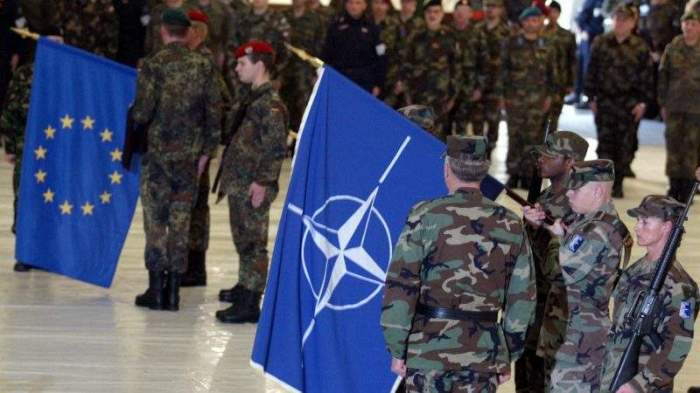
Photo: EPA
Ukrainian President Volodymyr Zelensky has called for the deployment of a European peacekeeping contingent to help secure the country amid the ongoing conflict with Russia. Speaking on the topic, Zelensky emphasized the scale of such an operation:
"If a peacekeeping military contingent is deployed in Ukraine as part of security, it should number at least 200,000 people." When questioned whether this figure might be too ambitious, Zelensky doubled down: "200,000 is the minimum. Otherwise, it's nothing. It's something like what we had with the OSCE — no one knew what they could do. They just had offices, and that was it."The proposal, however, has sparked considerable debate over its feasibility and implications. News.Az sought insights from political experts in Ukraine and Russia to evaluate the realism of this ambitious approach.
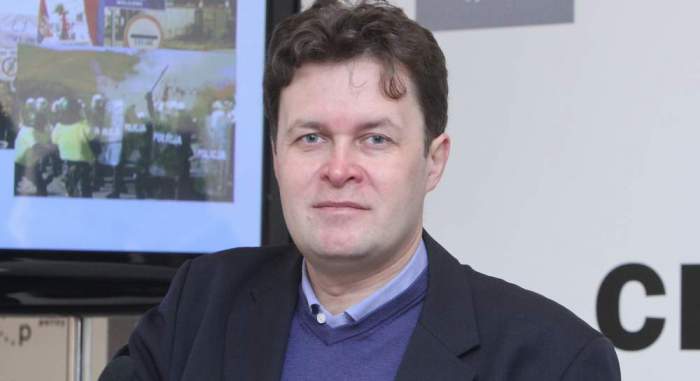
Yevhen Magda, a Ukrainian political scientist and director of the Institute of World Politics, expressed skepticism about the practicality of Zelensky’s vision. Magda underscored that deploying peacekeepers requires a United Nations Security Council mandate—a step likely to face resistance from Russia, a permanent member of the council.
"Peacekeepers in the modern world can only be deployed to a region with a mandate from the UN Security Council. Since Russia is a permanent member of the Security Council, we can assume its complete disinterest in sending peacekeepers to the conflict zone," Magda explained.
Magda also highlighted that the proposed 200,000-strong contingent reflects the scale of the conflict, with the current front line stretching over 1,000 kilometers.
"To effectively ensure the cessation of hostilities, a significant number of personnel would be required," he noted. However, the logistical and political challenges of assembling such a force are daunting.
"The largest European armies, such as France’s with around 200,000 personnel, and Poland’s at approximately 180,000, are not equipped to spare such numbers for a peacekeeping mission," he added.
"Mobilizing reserves or involving private military companies could be considered, but such actions would carry enormous political risks for any European nation."
Magda further pointed out that Russia’s approval would be a critical hurdle. "Many of these countries are NATO members. Will Russia agree to their presence near its borders? This is highly unlikely.
Russia actively portrays the conflict as a fight against NATO, so European peacekeepers would be politically unacceptable," he said.
In conclusion, Magda deemed the proposal appealing on paper but virtually impossible in practice. "For Ukraine, a more realistic discussion might center on long-term strategies to weaken Russia's position rather than relying on international peacekeeping forces," he stated.

Russian political scientist Daria Grevtsova offered a different interpretation of Zelensky’s proposal, suggesting it was more of a political maneuver than a practical plan. "Zelensky is trying to rally European leaders around him. By proposing a NATO-led peacekeeping force, he seeks to strengthen European support. But for Russia, the deployment of NATO troops in Ukraine is entirely unacceptable," Grevtsova remarked.
She argued that Russia’s military objectives in Ukraine are fundamentally incompatible with the presence of NATO peacekeepers. "The official position of the Russian leadership is clear: any foreign military personnel from NATO on Ukrainian soil would be treated as legitimate targets," she warned.
However, Grevtsova suggested that the idea of peacekeepers from neutral countries, such as Brazil or Indonesia, might be explored. "Russia might be open to discussions about peacekeepers from neutral states, but only under very specific conditions," she added. Territories currently under Russian jurisdiction, however, remain entirely off-limits for such deployments.
"The placement of peacekeepers in territories Russia considers its own is non-negotiable," she stressed. "Statements about peacekeepers at this stage are largely rhetorical. Neither side has shown any willingness to cease hostilities or engage in meaningful negotiations. For now, this remains a distant possibility."
Both Ukrainian and Russian experts agree that Zelensky’s proposal faces significant obstacles, from logistical challenges to insurmountable political barriers. While the idea of peacekeepers might resonate as a symbol of hope, its realization appears highly unlikely in the current geopolitical climate.
As the war grinds on, it remains to be seen whether such bold proposals will spark the necessary dialogue for a peaceful resolution—or remain aspirational calls for international support.


Similar news