Gabala Summit: A new strategic phase for Turkic cooperation


.png)

Editor’s note: Faig Mahmudov is a journalist based in Azerbaijan. The views expressed are the author’s own and do not necessarily reflect those of News.Az.
Founded in 2009 in the city of Nakhchivan, the Organization of Turkic States (OTS) has, over the past 15 years, gradually transformed from a cooperation platform into a strategic center of power in the political, economic, transport-communication, and security spheres. The 12th OTS Summit, held on October 6–7, 2025 in Gabala, Azerbaijan, represented a landmark moment in this evolution, formally confirming the organization’s entry into a new strategic phase. Convened under the motto “Regional Peace and Security,” the summit gathered heads of state and government from OTS member and observer countries, including Türkiye, Kazakhstan, Uzbekistan, Kyrgyzstan, Azerbaijan, Turkmenistan (as an observer), and the Turkish Republic of Northern Cyprus. High-level delegations from partner and interested states, as well as representatives of international organizations, also attended, underscoring the summit’s broad geopolitical resonance.
The Gabala Summit took place at a time of growing international tensions and shifting geopolitical dynamics, which amplified its strategic importance. Over two days, the leaders adopted a comprehensive declaration outlining the organization’s future priorities in the areas of security, defense, economic integration, connectivity, digital transformation, energy transition, and cultural cooperation. A series of bilateral and multilateral meetings were also held on the sidelines of the summit, focusing on strengthening political coordination, launching new infrastructure initiatives, and aligning positions on regional and international issues.
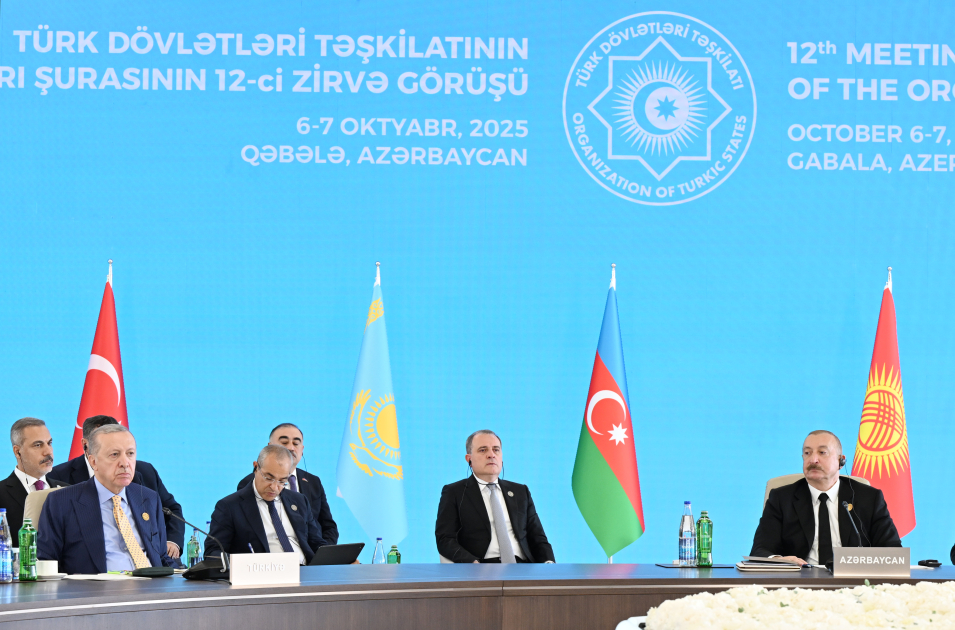
Source: Azertag
During the summit, President Ilham Aliyev and Foreign Minister Jeyhun Bayramov emphasized the necessity of a systematic approach to security issues, underlining that deepening military and defense integration among member states is a strategic imperative. President Aliyev’s statements – “it is crucial for the Turkic states to act as a united center of power,” “without security, sustainable development is impossible,” and “in today’s world, military strength is the main guarantor of independence and territorial integrity” – outlined the political framework for the OTS’s future direction.
Against this backdrop, one of the most notable initiatives to emerge from the summit was the creation of a mechanism for joint military exercises among Turkic states. This initiative envisions joint tactical and operational drills between the armed forces of member states, the alignment of defense systems, increased interoperability, and the institutionalization of military experience exchanges. It is regarded as a key step toward strengthening collective defense capabilities within the OTS and enhancing its strategic weight in the region. Future plans include holding these exercises on a rotational basis in different member countries and complementing them with joint defense industry projects.

Source: APA
Kazakhstan’s position is particularly significant in this regard. Although Astana remains a member of the Collective Security Treaty Organization with Russia, it recognizes the Kremlin as a potential source of regional instability following its aggression against Ukraine. As a result, Kazakhstan’s growing military-strategic partnership with Türkiye and Azerbaijan is both a vital component of its national security policy and a contribution to consolidating the defense architecture of the Turkic world.
Another key pillar of the Gabala Summit was the development of a new transport and communication architecture across Eurasia. The Trans-Caspian International Transport Corridor (Middle Corridor) has significantly enhanced the weight of the Turkic states as a strategic artery linking Europe and Asia. Through Azerbaijan’s initiatives, including the Baku–Tbilisi–Kars railway, the Alat International Sea Trade Port, and the modernization of the Caspian Sea’s largest commercial fleet, the corridor has effectively become the main transit artery of the region. Since 2022, freight volumes along the Middle Corridor have grown by nearly 90%, while transit times have been dramatically reduced – clear evidence of its practical efficiency.

Source: APA
Within this framework, the Zangezur Corridor holds exceptional strategic importance. By connecting Azerbaijan’s western regions with Nakhchivan and Türkiye and further on to Central Asia, this route will become the physical link transforming the Turkic world’s geopolitical and economic unity into reality. As a complementary component of the Middle Corridor, the Zangezur Corridor provides an alternative and safer trade route between Europe and Asia and effectively reshapes the region’s geoeconomic architecture. Both Washington and Brussels support the project, recognizing its potential to diversify Eurasian trade networks and strengthen transport security.
The international community’s stance toward the OTS is shaped along two main lines. The United States and the European Union view the organization as a constructive force for regional stability and economic integration, supporting its strategic initiatives. Their engagement with Central Asian countries through the 5+1 format is part of this approach, offering these states alternatives to dependence on Russia and China. Conversely, Russia, China, and Iran perceive the deepening integration among Turkic states as a potential challenge to their geopolitical interests. Although this concern is not publicly articulated, Moscow, Beijing, and Tehran are uneasy about the emergence of the Turkic world as a new power center. However, the OTS’s integration agenda is not directed against any state or bloc; its core aim is to promote the sovereign development of member states and strengthen regional stability.

Source: Azertag
An important dimension of Turkic cooperation discussed during and around the summit concerns reconstruction and development initiatives in Karabakh. President Ilham Aliyev’s strategic vision has brought OTS member and observer states together around shared objectives in the region, fostering coordinated efforts in reconstruction and development. Karabakh has emerged as a symbol of solidarity, political coordination, and strategic cooperation among Turkic states, with Türkiye and Azerbaijan playing a central role.
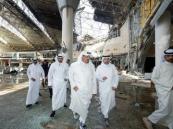
Immediately after the end of hostilities in the region, Türkiye took a leading role in reconstruction, with the building of Fuzuli International Airport becoming a key milestone. Completed in just eight months, the airport has been viewed as a turning point in post-conflict redevelopment. Turkish companies have also been active in restoring road, water, and energy infrastructure in Zangilan, Shusha, Lachin, and other districts.
Other Turkic states have also participated in reconstruction efforts. In 2023, Uzbekistan built the Mirzo Ulugbek School in Fuzuli, while in 2024, Kazakhstan inaugurated the Kurmangazy Children’s Creativity Center in the same city. Kyrgyzstan built a school for 528 students in Khidirli village of Agdam, and Hungary, an OTS observer state, is contributing to the reconstruction of Soltanli village in Jabrayil. During the Gabala Summit, it was announced that Turkmenistan would build a mosque in Fuzuli, with the groundbreaking ceremony held online.

Source: Azertag
These projects reflect how Turkic cooperation in Karabakh has evolved from political declarations into concrete, coordinated initiatives, reinforcing shared strategic interests and contributing to regional development and stability.
The participation of Ersin Tatar, President of the Turkish Republic of Northern Cyprus, was another important signal, reflecting growing political coordination within the Turkic world. Discussions on granting full membership status to Northern Cyprus continued during the summit. In addition, countries such as Ukraine, Mongolia, South Korea, and Tajikistan expressed interest in joining the OTS as observers, indicating the organization’s transformation from a regional alliance into a broader platform for international cooperation.
The Gabala Summit confirmed that the Turkic world is moving along a unified strategic trajectory in security, economic, and diplomatic domains. As the host country, Azerbaijan played a pivotal role in shaping the summit’s agenda and priorities, reaffirming its leadership within the organization. The event demonstrated that integration among Turkic states has become a political necessity that no external force can reverse. In the context of evolving geopolitical realities, the strengthening of the OTS stands out as a decisive factor for regional stability, connectivity, and collective security.
(If you possess specialized knowledge and wish to contribute, please reach out to us at opinions@news.az).


Similar news