Germany enters an era of militarization: Political analyst on Berlin's strategic plans


By Samir Muradov
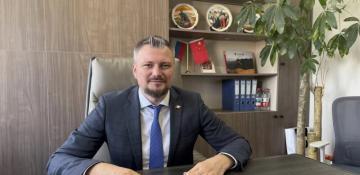
News.Az spoke with prominent German political scientist and former advisor to the German government Alexander Rahr. In this interview, he discusses Germany’s growing militarization, the future of European defense infrastructure, and the transformation of public consciousness under the influence of the conflict with Russia.

Source: IFAIR | Alexander Rahr
– Would it be accurate to say that Germany has entered a phase of systemic militarization? How far is the current government prepared to go in embracing a “war-readiness” ideology as a state doctrine?
- Germany’s government currently has three key objectives in the area of militarization.
First, it seeks to preserve the European security architecture established after the Cold War and, under no circumstances, allow Ukraine to return to Russia’s sphere of influence or be absorbed by it.
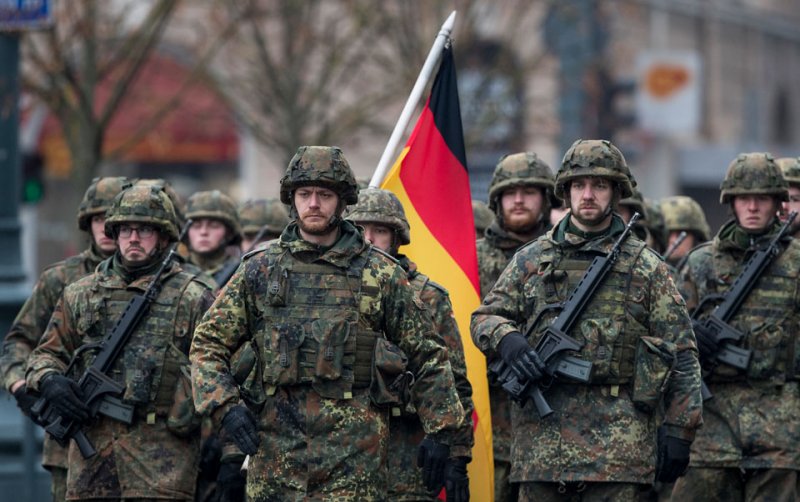
Second, Germany aims to build its own European army and military-industrial complex—largely to reduce dependence on the United States, which may eventually withdraw from NATO. This also serves as preparation for a potential military confrontation with "imperial" Russia.
Third, militarization of the economy is viewed as a tool to reignite economic growth across the European Union.

Source: Politico.eu
– How ambitious are Germany’s plans to create an integrated defense infrastructure and strengthen the Bundeswehr, including the de facto revival of the General Staff? Are these plans supported by the public and backed by economic capacity?
- I believe Germany will find the financial resources. Although only about 60% of the population supports militarization, Berlin is prepared to invest in it as a way to strengthen its leadership role in Europe. Most other EU countries lack such capacity—either because they are burdened by debt or do not see themselves as military leaders.
– The return of elements of compulsory military service, the deployment of officers to schools, and the focus on dual-use technologies—do these represent a transformation of civil society or simply an ideological and personnel boost for the military? How dangerous is this for liberal democracy?
-There are certainly risks to democracy. Militarization of the economy, industry, and education can affect civil liberties. However, the German government is using the image of “aggressive Russia” to tighten control over society and instill discipline in the population. This strategy may work: the generation that remembers the horrors of World War II is gone, and young Germans today are less afraid of war. In fact, many increasingly believe that Europe’s liberal values are worth defending by force.
Source: Reuters
Could Berlin’s new strategy lead to a revision of the European security framework and spark conflicts of interest with other key actors—such as the U.S., France, or Eastern European countries?
- So far, there’s no visible divergence of interests within the West. On the contrary, European bureaucrats in Brussels are working to consolidate all EU governments around the goal of confronting “imperial Russia.” Russia should prepare for the reality that most European countries will support a policy of military containment. And if Washington one day steps back from this path, Berlin, Paris, and London are likely to take the lead.
– What are the root causes of today’s confrontation between Russia and the West?
- The core of the conflict is crystal clear. Russia will never accept being surrounded by Western military bases and infrastructure. The West, in turn, will never recognize Russia’s right to a sphere of influence. This is a fundamental dividing line—one that, unfortunately, cannot be overcome through diplomacy.


Similar news