Global politics through the lens of sheep: Armenia's Foreign Ministry surprises


By News.Az
As the world faces new challenges and international relations become increasingly complex, foreign ministers around the globe rush to their duties, trying to resolve conflicts, build connections, and protect the interests of their countries. Meanwhile, in Armenia, the Ministry of Foreign Affairs has decided to reassess its priorities and tackle an issue that, in the view of its leadership, truly deserves attention. And this issue, as it turns out, is not about global diplomacy or international treaties but rather about livestock breeding.At a recent government meeting, Armenia’s Foreign Minister Ararat Mirzoyan seemingly realized that all the efforts of his department to establish international connections might be insignificant compared to the opportunities that agriculture could offer. Instead of boring diplomatic protocols and discussions of sanctions and peace initiatives, why not discuss goats and sheep? Indeed, what could be more important for a foreign minister than supporting farmers in their difficult work?
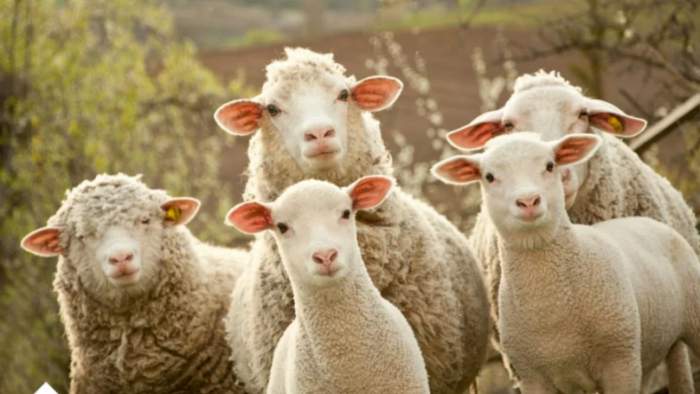 Mirzoyan's proposal to subsidize the purchase of breeding livestock might have seemed quite appropriate at a Ministry of Agriculture meeting, but it was voiced in the context of the country's foreign policy. The minister suggested that the state purchase the necessary breeds of sheep and goats and then sell them to villagers at half the price. Perhaps there is a profound strategic plan behind this, one that is not yet fully understood by the general public. After all, if Armenian farmers start breeding the best goats in the world, this could become a new trump card for Armenia on the international stage. Imagine: instead of discussing sanctions at the UN, an Armenian diplomat offers colleagues a batch of elite goats. This could undoubtedly change the course of negotiations.
However, Prime Minister Nikol Pashinyan may not have fully realized the potential of this strategy. Taking Mirzoyan's proposal seriously, Pashinyan attempted to clarify where all this livestock would be kept and who exactly would be responsible for it. In response, Mirzoyan stated that, of course, the Ministry of Foreign Affairs would take on this responsible mission. After all, breeding livestock is not just tedious work; it may be the foundation of a new diplomatic strategy for Armenia. But Pashinyan, failing to appreciate such a subtle diplomatic move, suggested that the minister focus on what is probably the main task of his department—foreign policy.
Nevertheless, this situation raises questions about the true priorities of Armenian diplomacy. Perhaps Mirzoyan has indeed identified a new vector for the country's foreign policy? In an era when diplomacy is becoming increasingly convoluted and uncertain, the idea of focusing on something more tangible and understandable, like goats and sheep, even seems appealing. After all, while other countries argue about sanctions, trade wars, and territorial conflicts, Armenia could put forward its unique agenda—the agenda of livestock breeding.
Imagine the international news headlines: "Armenia Launches Initiative to Breed Elite Goats as Part of Peace Talks." Or: "Armenian Foreign Minister Proposes Livestock Exchange as an Alternative to Sanctions." This could undoubtedly draw attention to the country and showcase its unconventional approach to solving global problems. But the problem is that goats, unlike chickens, do not lay golden eggs, and international relations require a slightly different approach.
Now, imagine the entire Armenian diplomatic corps heading to farms to oversee the process of breeding livestock. Consuls and ambassadors, instead of negotiating and promoting the country's interests abroad, will be busy developing a strategy for increasing the sheep population. The Ministry of Foreign Affairs will issue regular reports on how many goats were born this quarter and how much their productivity has improved. And, of course, all these achievements will be reflected in diplomatic negotiations.
Instead of complex negotiations and maneuvers on the world stage, Armenian diplomacy will turn to simple and understandable matters—good livestock care. Perhaps even international summits will take on a new format—instead of discussing global issues, delegates will compete in who knows more about breeding goats. Then, indeed, we could talk about a new era in world politics, an era where diplomacy is determined not by words but by deeds—for example, livestock care.
But while this utopia has not yet become a reality, it's worth returning to the present and understanding that the Ministry of Foreign Affairs probably still needs to focus on its direct responsibilities. In a world where every word and action of diplomats can influence the future of a country, being distracted by livestock breeding is, at the very least, irrational. Unless, of course, Armenia decides to surprise everyone and become a world leader in this field, setting new standards in diplomacy and agriculture.
Pashinyan might have realized that goats and sheep are great, but only not in the context of international politics. Mirzoyan, on the other hand, might have become so carried away with new ideas that he forgot why the Ministry of Foreign Affairs even exists. In any case, this episode makes one think about how often priorities in politics can suddenly change, leading to entirely unpredictable consequences. And who knows, maybe this goat incident will become the starting point for something truly new and unusual in the history of Armenian diplomacy.


Similar news