Georgia’s Anaklia choice could redefine its future with the West


Editor’s note: Zaur Nurmamedov is a journalist and a graduate of the Faculty of Political Science at the Academy of Public Administration under the President of the Republic of Azerbaijan (1993–1999). He previously served as first deputy editor-in-chief of the Vesti.Az news portal (2009–2023). The views expressed in this article are his own and do not necessarily reflect the position of News.Az.
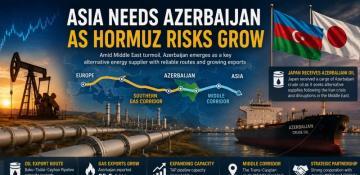
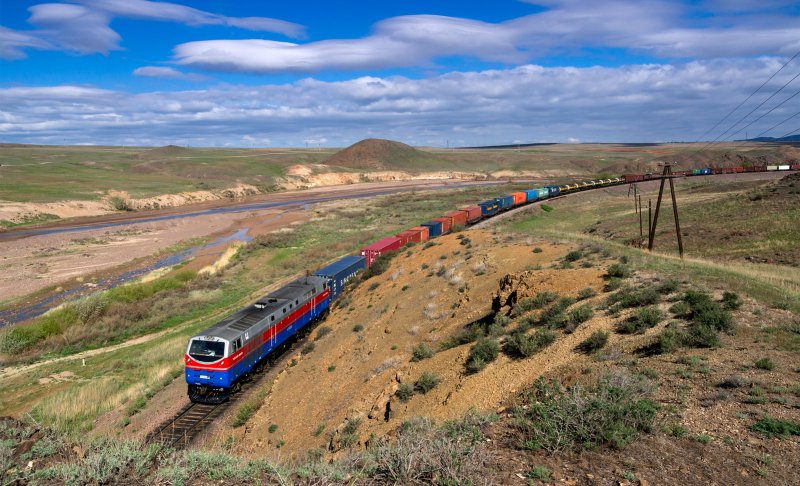
Georgia’s strategic location — south of Russia and north of Iran — combined with its role as an energy corridor makes it vital to US regional interests. Georgia is a key link in the Middle Corridor, a transit route connecting Central Asia with Europe. Without it, the West’s access to Central Asia would weaken, undermining both Europe’s energy security and the resilience of NATO’s south-eastern flank.
Against the backdrop of China’s advance through its Belt and Road Initiative and Russia’s promotion of north–south routes together with Iran, Georgia’s role as a foothold in the Middle Corridor is one of the few ways for the United States to establish an economic presence in Eurasia without assuming additional military commitments.
RECOMMENDED STORIES
For many years, the United States has consistently supported Georgia as a transit hub for pipelines enabling the export of Caspian hydrocarbons while bypassing Russia. The priority for the US and the EU is to create transparent and secure transport routes that meet sanctions-compliance standards, diversify supplies away from Russia, and are integrated into Euro-Atlantic standards.
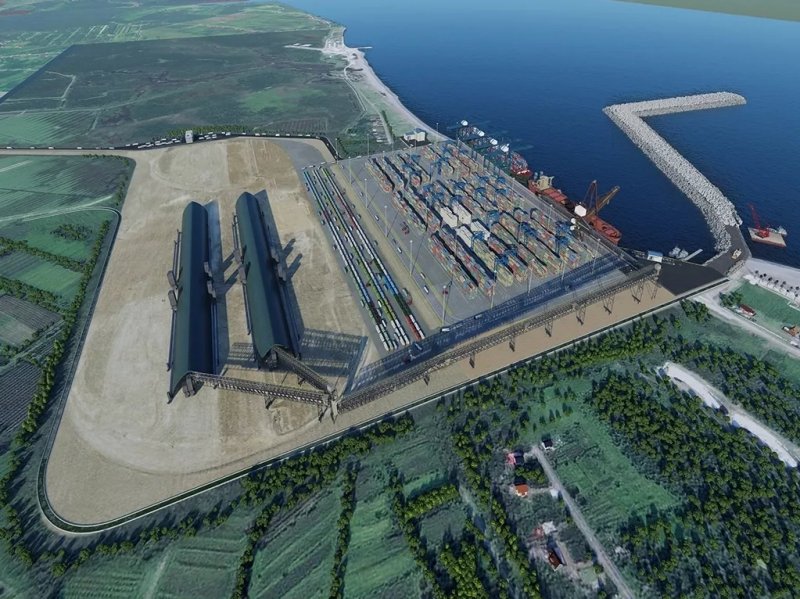
A key symbol of this rivalry has become the Anaklia deep-sea port, located on Georgia’s Black Sea coast, which could turn into an important logistics and trade hub linking the South Caucasus with international maritime routes. The port is intended to become a key node of the Middle Corridor — a trade route between China and Europe that bypasses Russia.
Without a deep-sea port, Georgia and the Middle Corridor will be unable to compete as global trade routes. In other words, for Georgia, this is not merely an economic project; it is a bid for the role of the main transit hub between East and West. The Anaklia port represents direct competition to Russia’s Novorossiysk, Moscow’s main Black Sea hub.
Political observers broadly agree that the choice of the winning bidder for Anaklia is a barometer of the direction in which Georgia is moving. That is why a port that has not even been built yet has become one of the main symbols of the rift between Tbilisi and Washington.
The issue is that 10 years ago, in 2016, a joint consortium of TBC Holding and the American company Conti International was awarded the right to build the port. However, the consortium ran into a number of problems, including money-laundering charges brought against TBC Bank founder Mamuka Khazaradze. After prosecutors filed these charges, Conti International announced its withdrawal from the consortium. The Georgian government then terminated the $2.5 billion contract.
In May 2024, the government announced that the winner of the new tender was a Chinese-Singaporean consortium led by the state-owned China Communications Construction Company (CCCC) and its subsidiary China Harbour Investment. Under the terms of the deal, 51% of the port’s shares remain with the Georgian state, while 49% go to the consortium.
The outcome of the new tender drew criticism because of CCCC’s reputation and possible corruption risks. In 2011, the World Bank barred China Communications Construction Company from participating in its projects over fraud. In 2020, the US Department of Commerce blacklisted 24 companies, including CCCC subsidiaries, over the construction of military artificial islands in the South China Sea. Since June 2021, CCCC has been subject to restrictions by the US Treasury Department’s Office of Foreign Assets Control (OFAC) due to its links with China’s military-industrial complex. Thus, the involvement of Chinese companies in a strategic facility turned the Anaklia port project into a source of tension between Tbilisi and Washington.
At the same time, Western analysts draw parallels with the Hambantota port in Sri Lanka, where unexpectedly low profitability led to debt restructuring and the transfer of the port to China on a 99-year lease. Analysts believe Georgia risks facing a similar loss of sovereignty if the port fails to reach the planned cargo turnover volumes.
In their view, Beijing is using the situation in Georgia to establish strategic partnerships and secure geostrategic and geoeconomic positions in the South Caucasus through roads, ports and infrastructure.
Against this backdrop, relations between the United States and Georgia have deteriorated sharply. The US imposed targeted visa bans and reduced military cooperation. The main instrument of US pressure on Georgia became the MEGOBARI Act. The Georgian parliament officially condemned the adoption of this document, calling it “deeply hostile toward the Georgian state, the Georgian people, and the elected authorities.”
In 2024, the administration of President Joe Biden suspended the strategic partnership with Tbilisi following the adoption of the foreign agents law and disagreements over democracy and foreign policy. Washington introduced visa restrictions and sanctions against a number of Georgian officials, and also reduced or froze funding for government programmes.
Georgia’s attempts to normalise relations with the United States after Donald Trump returned to the White House in 2025 proved unsuccessful. The ruling Georgian Dream party expected that its conservative rhetoric would resonate with Trump. Tbilisi refrained from anti-American statements, while Prime Minister Irakli Kobakhidze wrote a letter to Trump, calling Georgia a “loyal strategic partner.”
However, Tbilisi’s hopes quickly ran into reality. Attempts to reset relations failed. Tbilisi was forced to present separate contacts with US officials as signs of warming ties. Georgian President Mikheil Kavelashvili, for example, tried to portray a brief conversation with Vice President JD Vance at an international event in Milan as full-fledged negotiations. The White House did not mention these “negotiations” at all.
The March 2025 meeting was also telling: Foreign Minister Maka Bochorishvili and US Ambassador Robin Dunnigan did not shake hands during the protocol photo session. The US Embassy issued an extremely brief statement saying that the ambassador had outlined “steps Georgia can take to demonstrate the seriousness of its intentions” in improving relations.
However, the turning point came with a phone call in late March this year. The conversation between Kobakhidze and Secretary of State Marco Rubio became the clearest signal that the freeze in Georgia–US relations may begin to thaw. Then, on 7 May, Kobakhidze met in Tbilisi with US Deputy Assistant Secretary of State Sonata Coulter.
The Georgian side declared its readiness to “reset bilateral relations and renew the strategic partnership from a clean slate” on the basis of a “specific roadmap”. Bochorishvili added that a second US delegation is expected to visit before the end of May — a signal that this is no longer merely diplomatic talk “about nothing”. Whether this process will move in a positive direction will be shown by further developments.
Despite the existing tensions, Georgia remains objectively important to the United States. First and foremost, it is important as a problem rather than as an asset: Tbilisi’s geopolitical drift threatens to allow forces hostile to US interests to fill the strategic vacuum in the South Caucasus. Washington fears a full rapprochement between Tbilisi, Moscow and Beijing.
Based on this, Georgia today finds itself in a paradoxical situation. The country is attractive as a transit hub, yet it risks missing its opportunity because of political crises, delays in the construction of Anaklia, and a geopolitical drift that is pushing away Western investors. This is why the Middle Corridor has become Tbilisi’s trump card in the current negotiations with Washington on resetting relations.
It is noteworthy that Peter Andreoli, a representative of the US State Department’s Bureau of European and Eurasian Affairs, who visited Georgia in March, toured the construction site of the Anaklia deep-sea port. Nevertheless, the United States is still merely “testing” the situation without making any promises. One indication of this is the fact that after Robin Dunnigan completed her diplomatic mission in Georgia, the United States has still not appointed a new ambassador to Tbilisi.
(If you possess specialized knowledge and wish to contribute, please reach out to us at opinions@news.az).


Similar news