Iğdır-Nakhchivan gas pipeline: A strategic leap in Türkiye-Azerbaijan partnership – INTERVIEW


News.Az presents an interview with Elnur Hasan Mikail, the Head of the Department of Political Science and International Relations at the Faculty of Economics and Administrative Sciences, Kars Kafkas University.

- How would you summarize the outcomes of the meeting between Ilham Aliyev and Recep Tayyip Erdoğan in the context of the opening of the Iğdır-Nakhchivan gas pipeline and the strengthening of the strategic partnership between Türkiye and Azerbaijan?
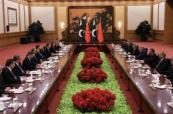
- The opening of the Iğdır-Nakhchivan gas pipeline was a historic step that further solidified the strategic partnership between Türkiye and Azerbaijan. The outcomes of the meeting between Presidents Ilham Aliyev and Recep Tayyip Erdoğan can be summarized as follows.
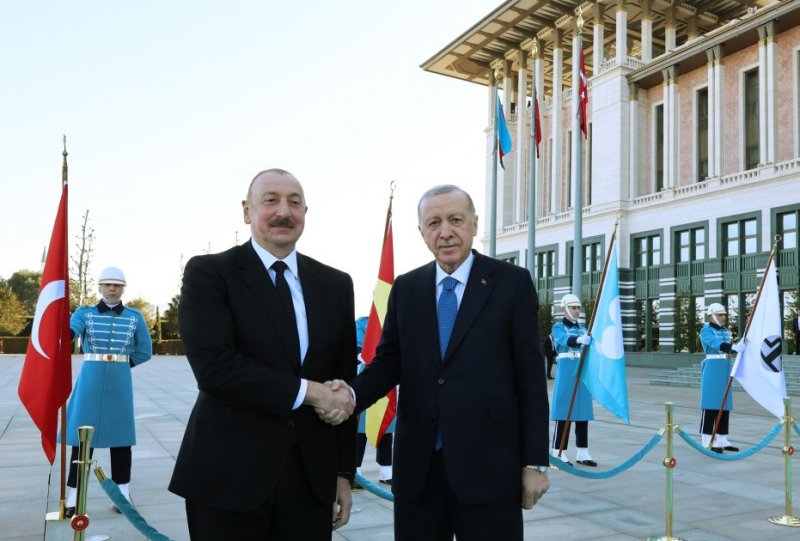
Photo credit: Azertac
Firstly, an important step was taken to meet Nakhchivan's energy needs and enhance the access of Azerbaijani gas to Europe via Türkiye. This project contributes to both energy security and regional development.
Secondly, new opportunities for increasing trade turnover and economic integration between Türkiye and Azerbaijan were discussed. The leaders reaffirmed their commitment to supporting joint projects.
Thirdly, the significance of the Zangezur Corridor for connecting Nakhchivan with the mainland of Azerbaijan was emphasized, and a decision was made to accelerate joint efforts to develop the region's logistics infrastructure.
Fourthly, Türkiye and Azerbaijan once again confirmed their commitment to strengthening peace and stability in the region, highlighting that their cooperation would also benefit third parties.
This meeting once again proved that the concept of "One Nation – Two States" is backed by concrete projects and that the strategic interests of both countries are advancing.
- What strategic role does the Iğdır-Nakhchivan gas pipeline play in ensuring Nakhchivan's energy security and strengthening ties between Türkiye and Azerbaijan?
- The Iğdır-Nakhchivan gas pipeline is of critical importance both for ensuring Nakhchivan's energy security and for strengthening the strategic ties between Türkiye and Azerbaijan. This project brings several strategic benefits.
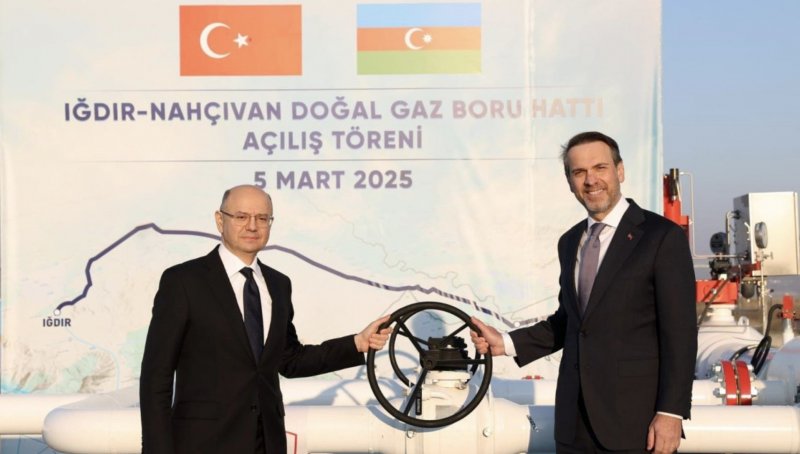
Photo credit: dhapress.com
First of all, Nakhchivan previously received gas through Iran. The new pipeline will provide direct access to Azerbaijani energy resources, reducing dependence on external supplies and enhancing the security of energy deliveries.
Moreover, deep integration in the energy sector will strengthen the positions of Türkiye and Azerbaijan in both regional and global energy markets. Türkiye will move closer to its goal of becoming an energy hub, while Azerbaijan will expand its gas exports to Europe.
Additionally, the pipeline lays the foundation for further development of transport and trade corridors, enhancing energy integration between the countries of the Turkic world.
Finally, this project contributes to the stabilization and development of the South Caucasus, strengthening cooperation in the energy sector and creating prerequisites for long-term strategic partnership.
Thus, the Iğdır-Nakhchivan gas pipeline is not just an energy project but a strategic initiative that supports integration and sustainable development in the region.
- What benefits does the opening of the Iğdır-Nakhchivan gas pipeline bring to the energy map of Eurasia, and how does it affect the export of Azerbaijani gas to Türkiye and Europe?
- The opening of the Iğdır-Nakhchivan gas pipeline is a strategic step capable of reshaping the energy balance in Eurasia. This project opens new opportunities for the export of Azerbaijani gas to Türkiye and Europe and strengthens regional energy security.
Firstly, the pipeline strengthens the integration of the gas transportation systems of Türkiye and Azerbaijan, contributes to the expansion of the Southern Gas Corridor, and enhances the security of energy supplies.
Secondly, the project creates additional routes for the export of Azerbaijani gas and lays the groundwork for expanding energy infrastructure through the Zangezur Corridor. This helps diversify supplies and reduce the region's dependence on Iran.
Thirdly, the pipeline contributes to Türkiye's goal of becoming an energy hub, enhancing its role as a transit country. This not only strengthens Türkiye's position but also expands Azerbaijan's opportunities for gas exports to Europe, reducing European countries' dependence on Russian gas.
Finally, the pipeline promotes energy diplomacy and creates prerequisites for long-term cooperation in the region.
Thus, the project not only strengthens the strategic partnership between Türkiye and Azerbaijan but also transforms the energy map of Eurasia, providing more reliable and diversified gas supplies to Europe. This contributes to the strengthening of energy security and the stabilization of the region.


Similar news