Israel and the New Middle East




Editor's note: Moses Becker is a special commentator on political issues for News.Az, a PhD in political science and an expert on interethnic and interreligious relations. The article expresses the personal opinion of the author and may not coincide with the view of News.Az.
On February 28, 2025, during a meeting at the White House with Ukrainian President Volodymyr Zelensky, the President of the United States made it clear that the focus of the U.S. administration had shifted from Eastern Europe to the Middle East and Asia-Pacific. It was no coincidence that Donald Trump’s first overseas visit included Saudi Arabia, the UAE, and Qatar. This is the region where history is being written today—where a new configuration is emerging that will reshape the global balance of power.
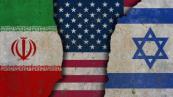
In this context, particular attention is being paid to the State of Israel, regarded as a leading technological and military power. The strategic objective is to neutralize the influence of ideologically hostile Iran and other contenders for regional leadership in this energy-critical part of the world. The ongoing war with Hamas, now lasting a year and eight months, has dramatically altered the dynamics across the Middle East. The United States has unambiguously supported Israel in this conflict, and Israel’s actions have significantly weakened the influence of the ayatollah regime on neighboring countries. The only major asset Iran still possesses is its nuclear program.
This is the longest war Israel has ever fought. Even the War of Independence lasted just 14 months—from May 1948 to July 1949. The main obstacles to final victory over the radical factions in Gaza are the hostages still held by Hamas and opposition from certain international actors. A complete defeat of the Islamists and the subsequent strengthening of Israel would not serve the interests of those who profit from the conflict through various UN and international aid programs.

Source: SBS
One of the key aims of Israel's adversaries is to sow division within the Jewish people, provoke a new wave of antisemitism—especially in parts of the European Union—and undermine Israel’s economy. Yet, despite the prolonged conflict, Israel’s economic indicators have not only remained stable but have demonstrated notable resilience. According to OECD forecasts, Israel’s GDP growth, which stood at 2.3% in 2023, is expected to slow to 1.5% in 2024, before rebounding to 4.5% in 2025. For comparison, Globes reported that the Bank of Israel had projected GDP growth of 2% for both 2023 and 2024.
The OECD estimated that Israel's budget deficit would reach 3.1% of GDP by the end of 2023 and expand to 5.2% in 2024. The Bank of Israel originally forecast a 3.7% deficit, but it ultimately rose to 5% of GDP. The year 2024 was a difficult one, as the country remained at war on multiple fronts. Nevertheless, the core sectors of the Israeli economy outperformed both 2022 and 2023. For example, the flagship TA-125 index outpaced the S&P 500 with a total return exceeding 28% (over 26% in USD versus 24% for the S&P 500). Foreign investment returned to Israel, particularly in high-tech, real estate, and securities, signaling strong global confidence in the economy. The shekel strengthened. International ratings agencies, which downgraded Israel in 2024, now cautiously anticipate a return to growth in 2025–2026. In Q3 2024 alone, GDP expanded by 3.8% year-on-year. Foreign exchange reserves reached $215 billion—about 42% of GDP. The banking sector remained stable and profitable. High-tech investment rose by 35% over the first nine months of 2024.
Throughout the war, Israel’s defense industry demonstrated exceptional performance. On June 4, 2025, Israel’s Ministry of Defense reported that Director General Major General Amir Baram and Head of the Defense Export Directorate Brigadier General Yair Koles presented a summary to Defense Minister Israel Katz: Israel’s defense companies signed new export contracts totaling $14.795 billion in 2024. Since the beginning of Operation “Iron Swords” (October 2023), the industry has been operating under emergency protocols. These extraordinary achievements have sparked global demand for Israeli military technology.
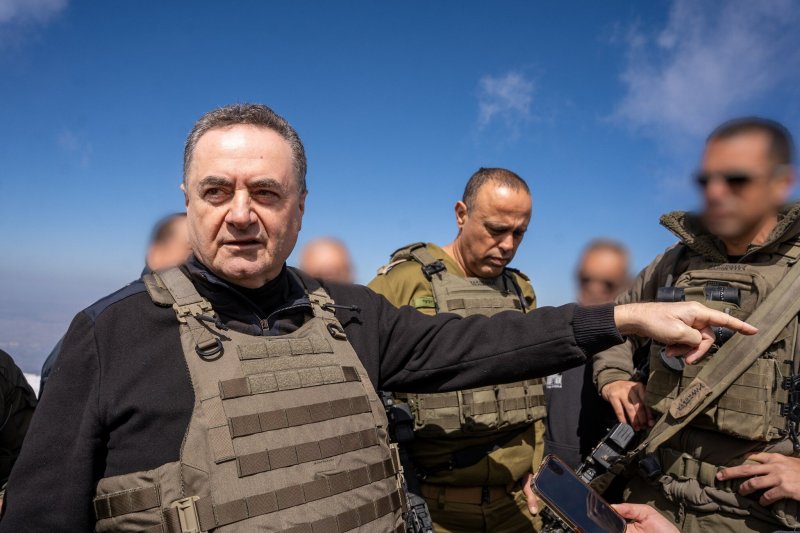 Defense Minister Israel Katz (left) and IDF Deputy Chief of Staff Maj. Gen, Tamir Yadai (right) in the Mount Hermon area in southern Syria, March 11, 2025. (Emanuel Fabian/Times of Israel)
Defense Minister Israel Katz stated:
“In a difficult and challenging year of war, Israel broke records with $15 billion in defense exports. This is a remarkable achievement, a direct result of the IDF’s success and our defense industry’s effectiveness in fighting Hamas in Gaza, Hezbollah in Lebanon, the Houthis in Yemen, the ayatollah regime in Iran, and on other fronts where we are engaged. The world sees Israel’s strength and wants to be our partner. We will continue to strengthen the IDF and the Israeli economy through defense innovation that ensures our clear superiority over any threat—anywhere and anytime.”
Israel has now set defense export records for the fourth consecutive year. Over the past five years, total defense exports have more than doubled. In the confrontation with Hezbollah, Israel for the first time deployed its new laser defense system, Iron Beam, to intercept enemy drones. The cost of a single Iron Beam shot is estimated at $5–10, compared to tens of thousands for an Iron Dome missile. According to developers at Rafael Advanced Defense Systems, Iron Beam and related systems are considered the most advanced lasers of their kind globally. Key advantages of directed-energy weapons over traditional missile defense systems include drastically reduced per-shot costs, virtually unlimited firing capacity, lower maintenance needs, and smaller personnel requirements.
Thus, the war that was intended to weaken and isolate Israel has instead become a catalyst for the expansion of its defense manufacturing base and export potential. Israel has demonstrated that its economy can withstand—and even thrive—under extreme conditions. This resilience sends a clear message to the regime in Tehran, which continues to threaten Jerusalem with total destruction.
(If you possess specialized knowledge and wish to contribute, please reach out to us at opinions@news.az).


Similar news