Neshat Gündoğdu: If the war becomes unbearable, Ukraine will have to seek a compromise - INTERVIEW


Amid the growing geopolitical tensions and economic rivalry between the world's leading powers, the recent meeting between Donald Trump and Volodymyr Zelensky has added a new layer of complexity to the unfolding crisis. What was expected to be a routine agreement quickly escalated into a public confrontation, exposing deeper divisions and strategic interests. At the heart of this dispute lies the control of rare earth elements—critical resources essential for high-tech industries and military capabilities. In an exclusive interview with News.Az, economist and investigative journalist Neshat Gündoğdu sheds light on the dramatic developments during the Trump-Zelensky meeting, exploring the hidden motives and implications of their discussions. Gündoğdu delves into the intricate web of interests surrounding rare earth elements, the escalating confrontation between the United States and China, and the shifting dynamics of Europe’s role in the crisis. From the quadrilateral peace process proposal involving Russia, Europe, the United States, and Ukraine to the hidden agendas behind Trump’s strategy, this interview provides a comprehensive analysis of the economic and political maneuvers shaping the global arena today.

Source: US Today
-Everyone expected the United States and Ukraine to sign an agreement, yet the meeting between Donald Trump and Volodymyr Zelensky unexpectedly turned into a public debate in front of the entire world. What exactly happened, and what triggered this conflict?
-First of all, we do not know the exact contents of the agreement proposed to Zelensky. Trump made a rather radical statement, almost in an imperial manner, demanding rare earth elements mentioned in the agreement's clauses. Later, it emerged that Ukraine had reached some informal agreement with Trump, and Zelensky was supposed to visit Washington to confirm it. Trump's strategy was to offer something to Ukraine in exchange for strategic resources like minerals. This indicated that Trump was continuing his policy of keeping Ukraine on his side.
However, two separate processes were at play. Before visiting Washington, Zelensky held a series of meetings during which the text of the agreement was prepared. It seemed that it had already been approved. But after his arrival in Washington, there were likely attempts to introduce additional conditions. This is where Zelensky's reaction came to light. Initially, there was a closed-door meeting in the Oval Office, followed by a joint press conference. It appears that something was demanded from Zelensky, or an offer was made, putting him in a situation where he was pressured to accept these terms. Zelensky's behavior suggested that something was being imposed on him at the last moment, and he was trying to resist.
Trump's behavior was also notable. He attempted to close the discussion, as if fearing that Zelensky might say something unplanned. Trump's body language implied: "I'm doing you a favor." It is likely that something highly unpleasant was demanded from Zelensky, possibly even involving threats. There might have been some compromising information or a past mistake by Zelensky that could cast doubt on his presidency. There are many scenarios, but one thing is clear: Zelensky was visibly concerned. After all, a head of state would not engage in an open argument with the U.S. President in the Oval Office unless something truly serious had occurred.
Therefore, attention should be paid to the previous closed-door meeting. Was Zelensky given any promise, or was there a threat? We do not know. But Trump's remark was telling: "You should say thank you, but we didn’t hear any gratitude from you." Following the meeting, Zelensky posted on Twitter, thanking the U.S. President and the American people, which seemed like an attempt to defuse the situation without harming his country.

Source: Reuters
-So, was Zelensky's behavior justified under the circumstances?
-Yes, it was. Zelensky's country is being torn apart, and something was being imposed on him. But the most significant aspect was Zelensky's open reaction and Trump's response. There were two key points:
- Regarding Trump, who is often labeled as "crazy" or "unpredictable," there was a clear display of disrespect, almost an attack on his reputation. This dealt a severe blow to Trump and was likely the beginning of his troubles. After this, Trump might have realized that he was nearing the end of his presidency.
- The second important point was the complete support for Zelensky from Europe. European leaders, one after another, declared their solidarity with him, expressing dissatisfaction with Trump’s actions and his attempts to split the Western bloc. This also severely damaged Trump’s image.
Now Trump has two options:
- To find a compromise with Zelensky and convince him that the U.S. President truly protects Ukraine's interests.
- To adopt a tougher stance and show even greater resolve.
However, Trump has little time and resources to execute these plans. Ahead lie budget negotiations and the need to raise the debt ceiling again, which only complicates his position.
-Zelensky also spoke on Fox News after the White House meeting, clarifying that Ukraine had received a total of $183 billion, of which $100 billion was allocated in the past three years. Out of this amount, $67 billion was in controlled arms deliveries, while $31.5 billion was provided as direct financial support to Ukraine's budget. These figures have raised many questions and doubts in society. How do you assess such financial policies and the distribution of funds?
-Considering U.S. interests, it is essential to look not only at arms supplies to Ukraine but also at the commercial losses of American companies and the consequences of sanctions against Russia. In fact, the war brought certain benefits to the U.S.: Europe stopped buying gas from Russia and became dependent on more expensive American gas. However, this was not enough for America—it needs more.
Moreover, Europe remains the only source of funds for the U.S. Thus, America is interested in prolonging the conflict, at least for a while. Meanwhile, the Alternative for Germany (AfD) party, advocating for restoring relations with Russia and restarting Nord Stream, is gaining popularity in Germany. This is categorically unacceptable for the U.S.
-What steps do you think the U.S. might take in this situation?
-Washington must find a way to continue gas supplies to Europe, satisfy Putin, and simultaneously reduce the American military presence in the region. However, it will not be easy for Trump to achieve this, despite his continued attempts to strike new deals.
Zelensky emphasized that the threat to Ukraine has not disappeared and needs to be addressed. Now, three options remain: either to satisfy Russia, try to divide it, or intimidate it. But none of these options has worked so far.
-So, what options remain in this situation?
-The only option left is to try to "reward" Russia and sway it to their side—something Trump is essentially attempting to do. This is a complex but probably the only real strategy.

Source: BBC
-During his appearance on Fox News, Zelensky also stated that the peace process can only be resolved in a quadrilateral format involving Russia, Europe, the United States, and Ukraine. Do you think this is an effective solution?
-Since Zelensky receives unconditional support from Europe, he cannot afford to leave it out of the negotiation process. Europe directly feels the threat from Russia and is therefore Ukraine's most crucial ally in its standoff with Moscow. This is quite logical. The other parties are already global powers and participants in the conflict, so their presence at the negotiation table is also necessary.
In this context, I support Zelensky's proposal for the format of peace talks, as it aligns with Europe's demands. At present, the United States is signaling: "I no longer intend to provide support, the war must end." But who is then insisting on the continuation of arms supplies and support for Ukraine? It is the European countries. Their demands are also clear: if a peace table is organized, Russia, Ukraine, Europe, and the United States must all be seated at it.
In fact, Zelensky conveyed to the United States the demands of those countries that support the continuation of the war. Does he truly want peace? Yes, but he wants peace on the best terms for Ukraine.
The warring sides have now become radicalized. Nationalism has reached its peak. At this stage, it is impossible to find a solution along the lines of "give it up and forget it." A significant portion of Ukrainian society has emigrated, and much of the country has been scattered across different states. The remaining population is largely inclined towards nationalist views. This nationalist sentiment cannot be halted by a policy of "let's abandon Donetsk and Crimea." Otherwise, it would lead to organized resistance, potentially sparking new conflicts with Russia in the future.
Thus, a negotiation agreement must be put on the table that satisfies the Ukrainian people. According to my analysis of the situation in Ukraine, the main conditions for such an agreement could be:
- Renouncing claims to regain Crimea.
- Withdrawal of troops from Kharkiv.
- Expanded autonomy for the Donetsk region (which already has partial autonomy but could be expanded).
- Donetsk should not join Russia, but neither should it be fully under Ukraine's control (it could be granted a level of autonomy that formally keeps the region as part of Ukraine but with a more independent status).
The Ukrainian people might agree to such conditions. However, any other scenario would be unacceptable to Ukrainian society. As long as Europe continues to support Ukraine, Kyiv will not back down from its position. Ukraine's leadership also follows the sentiments of its people.
But if Europe declares: "We no longer support the war; we want peace," and the war becomes unbearable for Ukraine, then society will understand this as well. In that case, Ukraine's leadership will also be forced to change its stance and start seeking a compromise.
![Latest on Russia's war on Ukraine [What Think Tanks are thinking] | Epthinktank | European Parliament](https://i0.wp.com/epthinktank.eu/wp-content/uploads/2022/11/EPRS_BRIE_TT_733632_War_Ukraine_six_months_on_final.png?fit=820%2C546&ssl=1)
Source: Reuters
-Ukraine's current strategy is to continue military actions while avoiding provocations against Trump, and at the same time, to maintain its place at the negotiation table, aiming to secure maximum concessions on favorable terms. President Zelensky said that the agreement on rare earth minerals is part of the peace settlement. What is your take on this?
-In reality, Trump had raised this issue before. However, at that time, Zelensky categorically rejected the idea, stating: "This is one thing, and that is another." He emphasized that the agreement on rare earth minerals does not imply giving up the fight for the occupied territories. Zelensky pointed out that the cause of the war is the occupied territories and the need to liberate them.
This turn of events was not unexpected. Trump's attempt to impose this condition was not surprising, nor was Zelensky's refusal to accept it. The logic here is simple: if Ukraine agrees to such an agreement and recognizes the occupied territories as Russian, what happens if three days later, America announces financial difficulties and withdraws its investments in Ukraine? Then the country would become a hostage to an agreement signed by one person, which does not have the support of the people. This is neither logical nor reasonable.
Here, it is essential to consider not only Zelensky's position but also the sentiments within the Ukrainian army. If Ukraine were to agree to such an unfavorable deal, it could result in a military coup against Zelensky. The military command would not accept such a sharp retreat from the country's interests.
Thus, the situation requires a very delicate balance. Zelensky cannot ignore the demands of either the people or the army. And as long as the conditions for changing these demands have not been created, Trump will continue trying to extract something for himself. But there is also the European reality, which stands in opposition to this.
Under the current circumstances, Trump has only one path left — to put pressure on Putin. Europe and Ukraine are not ready for concessions. Therefore, to restore his standing in the eyes of the West, Trump must somehow persuade Putin to compromise.
If Putin truly understands that the economic sanctions are causing significant damage to his country and the internal situation is becoming critical, he should try to find a compromise with Trump. Putin is an experienced leader who knows when and how to act. If he sees an opportunity to get out of the situation with minimal losses, now would be the best time for him.
However, if Putin believes that the economy can endure and the war can continue, he will try to prolong the process and force Trump to pay an ever-greater price for supporting Ukraine. But if he sees that he can end this conflict to his advantage, he may present himself as a great leader, declaring: "I made the decision." This would allow him to save face before his people and present himself as a victor.
Putin has already emphasized that peace talks must be dignified and respectful to avoid undermining his authority in the eyes of the Russian people.
Thus, the next three to five days or even a week could prove decisive. If Putin makes a move, it will become clear that the process is unfolding in a scenario favorable to Russia. If he does nothing, it will be the first sign that Trump is beginning to lose ground. After that, Europe will act even more decisively against Trump.
-What hidden motives and interests were behind the agreement on rare earth elements?
-From the moment the possibility of Trump's re-election became real again, he started labeling Zelensky as a "dictator," accusing him of being unwilling to hold elections and hinting that Ukraine is also responsible for prolonging the war. This forced Kyiv to reconsider its strategy and devise a new game plan. Zelensky, in turn, skillfully took advantage of the situation and began acting more strategically.
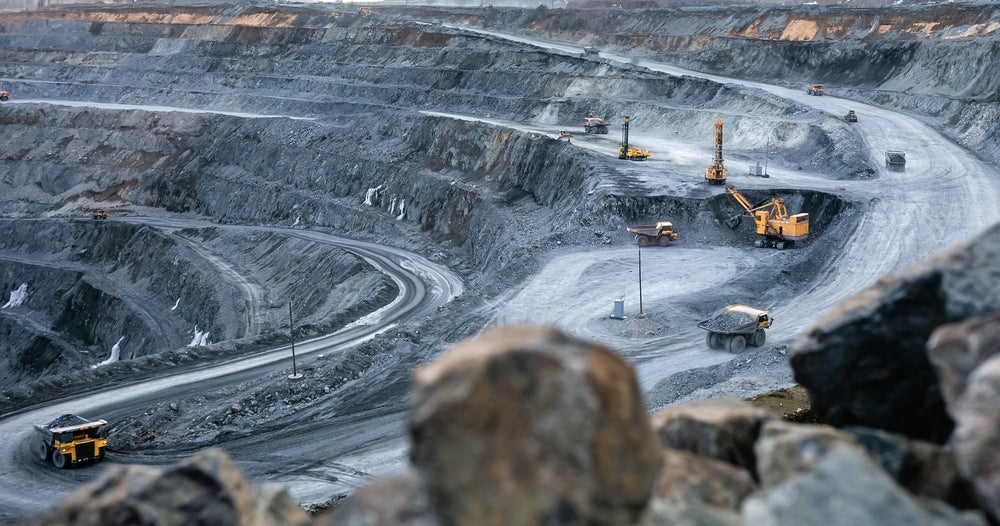
If we look at the draft agreement that is currently being worked on but has not yet been signed, we can see that the existing deposits of minerals, natural gas, and oil are excluded from its terms. Instead, it talks about creating a fund with the participation of American partners for the development and exploitation of deposits that have already been explored, have preliminary reports, or have not yet been discovered. It is important to note that this fund does not imply the direct transfer of control over resources to the United States.
Ukraine, under the current conditions, does not have sufficient economic power to independently exploit its resources. Russian attacks have severely damaged the country's energy infrastructure, and Ukraine's recovery, as reported, will require about $700 billion. This estimate was relevant a year ago, but now the sum likely exceeds $1 trillion. Obviously, Ukraine does not have such funds, and it is unlikely that any state is ready to cover these costs.
Therefore, Ukraine needs to become attractive for investments. However, due to its geographical position and the ongoing threat from Russia, it still does not appear to be a reliable country for foreign investors. Thus, Ukraine needs a long-term investment program.
Source: Kyiv Post
-What exactly are rare earth elements, and why are they so crucial for modern industry and technology?
-Rare earth elements are key components for modern high-tech products. In particular, they are critically important for chip production. We are talking about more than 100 different minerals that possess unique properties such as conductivity, the ability to form alloys, and the enhancement of data transmission speed and technological efficiency. They are used in the manufacturing of processors, microchips, and many other high-tech products.
In addition, rare earth elements play a vital role in the aerospace industry. Their significance in the global market and their economic impact are constantly growing.
Climate change has also influenced global trade routes. Until recently, the main routes were the Atlantic Ocean, the Suez Canal, and the Panama Canal. However, due to the melting of ice in the Arctic, this region has also started to turn into a new trade corridor. In recent months, China has successfully dispatched icebreakers and tankers there, making the Arctic route an alternative maritime path.
The United States has traditionally based its global influence on dominance over maritime routes. This is why it builds military bases at strategically important points and controls ports. In this context, China, with its Belt and Road Initiative and attempts to bypass maritime routes through rail corridors, poses a serious threat to American maritime hegemony.
-Why do rare earth elements hold such strategic importance for Trump and the United States, and what interests lie behind their control?
-Trump aims to isolate China on the international stage and weaken its influence, including through cooperation with Russia. A case in point is the negotiations on Ukraine in Saudi Arabia, followed by a phone conversation between Putin and Xi Jinping. Despite Putin’s statements that current relations would not change, the international reality suggests otherwise.
Russia has been severely affected by international sanctions and is trying to use countries like Türkiye to maintain trade. Türkiye has become a key player in Russia's foreign trade. The question is whether relations between Russia and China will change after the resolution of the Ukrainian crisis. The answer: yes, it is quite possible.
France is also actively seeking to regain its lost positions in international politics. After being effectively pushed out of Africa by the joint efforts of Türkiye, Russia, and China, Paris is trying to restore its influence in Europe. France's involvement in the issue of rare earth elements in Ukraine and the proposal to send French troops to the region are attempts to restore its reputation and leadership within the EU.
France's economic model, mainly based on tourism, has proven insufficient. Therefore, Paris is looking for new ways to strengthen its positions, including through participation in energy projects and control over strategically important resources.
The main problem for the United States in its confrontation with China is not military or technological superiority but economic sustainability. While in China, a person needs about $350 per month to survive, in the U.S. this amount exceeds $2,000. Such a difference makes economic competition nearly impossible.
The U.S. needs to focus on developing high technology and maintaining its influence over global standards. However, given internal economic problems and the need to raise the debt ceiling, Trump is forced to look for new resources and ways to exert pressure on both China and Europe.
Rare earth elements have become just one of the tools in this global game. In a situation where China controls more than 70% of the world's reserves of these elements, the United States will have to make serious efforts to maintain its positions on the global stage.


Similar news