Russia’s resilience: How sanctions and trade wars have hardened the economy – INTERVIEW


At a time when global oil prices are edging dangerously close to production cost levels and financial markets are roiled by the escalating U.S.–China trade war, questions abound about how resilient the Russian economy truly is in the face of mounting external shocks. To assess the depth of these risks—and whether Russia’s fiscal and industrial architecture is genuinely as robust as some claim—News.Az spoke with Stanislav Tkachenko, Doctor of Economics and Professor at Saint Petersburg State University.
.jpg)
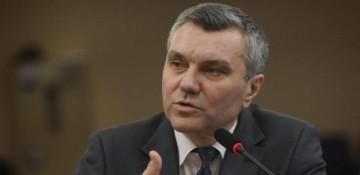
Source: ResearchGate | Stanislav Tkachenko, Doctor of Economics and Professor at Saint Petersburg State University
In this wide-ranging interview, Professor Tkachenko evaluates the implications of Andrey Kostin’s recent comments on Russia’s economic stability, the potential ripple effects of global trade tensions, and the prospects for energy markets in the coming months. He also offers a sober analysis of Russia’s evolving global position and explains why, despite persistent Western sanctions and volatile commodity prices, Moscow’s economic posture may be more durable than many expect.
– VTB Chairman Andrey Kostin has stated that the Russian economy will withstand falling oil prices and a declining stock market. How justified is this optimism, given that current oil prices are approaching the cost levels at certain fields?
Andrey Kostin’s optimism regarding the resilience of the Russian economy in the face of declining oil prices and stock market indices is well-founded. It is based on a deep understanding of Russia’s economic model and on the lessons of past crises.
For the past two decades, Russia has been steadily working to reduce its dependence on oil and gas exports. Rising domestic demand allows a substantial portion of oil production to be redirected to the internal market, stimulating domestic manufacturing and improving the standard of living.
It is also important to note that the current price level—around $60 per barrel—while presenting some challenges for the state budget, does not threaten oil production or the development of oil refining, which serves both domestic and international markets. Russia has weathered far more severe downturns in the past: in 1998, oil fell below $10 per barrel, and in spring 2020, it dropped below $30.
As for production costs, the average cost of oil extraction in Russia is around $20 per barrel, which is comparable to the global average. Higher figures of $40–50 per barrel typically apply only to newly commissioned fields or marginal Arctic wells, which do not yet produce oil at industrial scale. These should not be considered representative of the industry as a whole.
Regarding the stock market, seasoned analysts do not view every fluctuation as apocalyptic or as a sign of systemic collapse. The most important indicator here is GDP growth, which exceeded 4% annually in 2023–2024—its highest level in the past 15 years. Stock markets are inherently cyclical: declines are followed by recoveries. From March 19 to April 10, 2025, Russian equities experienced a noticeable drop. However, since April 10, the market has been on the rebound and has already recovered over one-third of the losses. Drawing sweeping conclusions based on short-term fluctuations is therefore premature.

Source: Reuters
– Although the “mutual tariffs” between the U.S. and China have not directly affected Russia, the Russian market reacted negatively. How deep might this reaction be in the long run, especially amid global volatility?
Indeed, Russia was not directly affected by the mutual tariffs, primarily because trade volumes between Russia and the United States remain minimal. For over a decade, Russia has operated under conditions of economic warfare with the West—and not only adapted but proven resilient.
The initial market reaction in early April 2025 reflected concerns about a potential global recession and the escalating U.S.–China trade war. A further intensification of this conflict could lead to direct confrontation between the two global superpowers, threatening global economic stability.
However, the decline in Russian stock indices was significantly milder than those observed in most countries across East and Southeast Asia, as well as in Europe. Given Russia’s insulation from direct tariff pressure and its accumulated experience in handling external shocks, it is too early to speak of serious long-term consequences for its economy.
Source: BBC
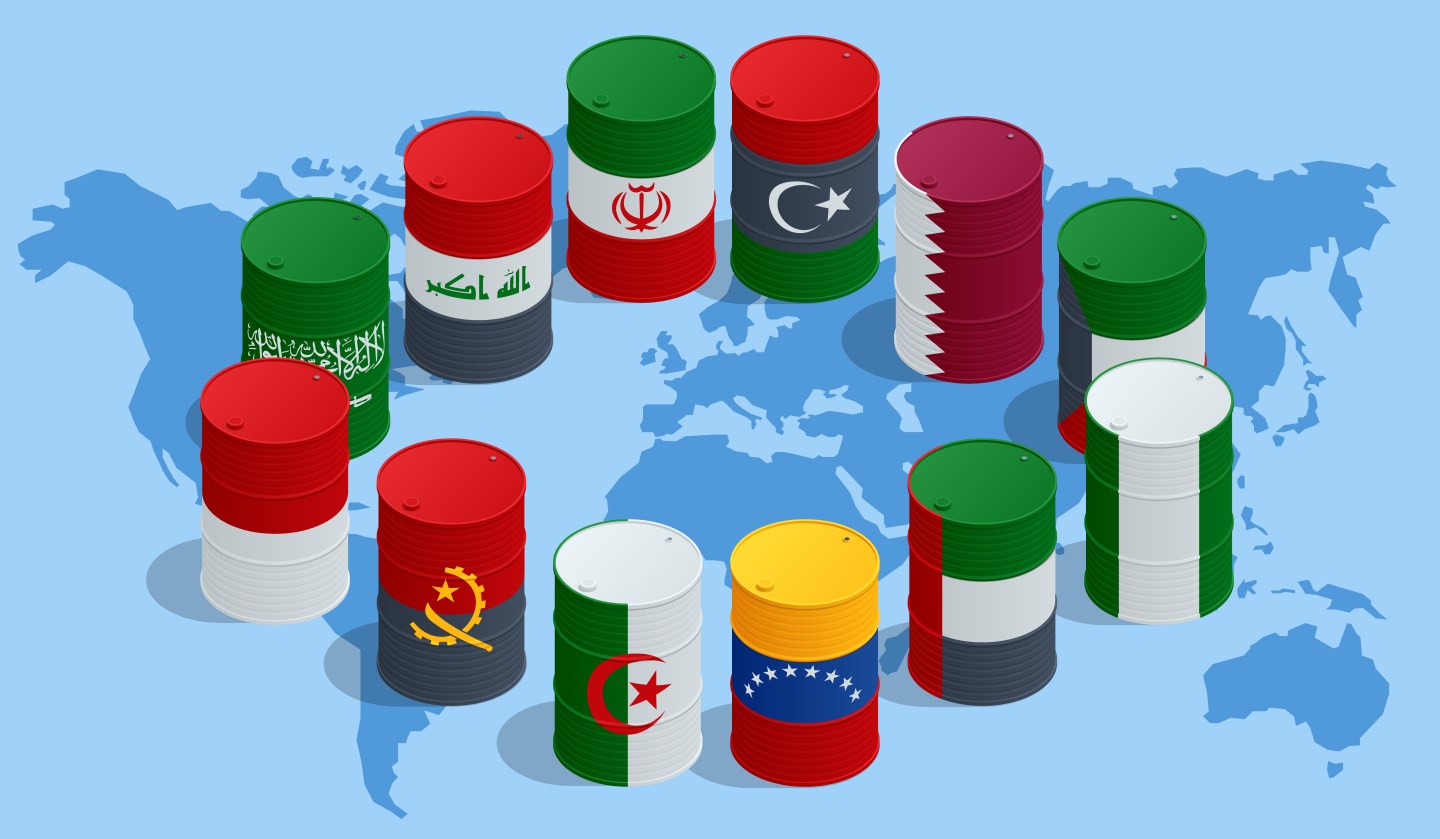
– Could a sharp increase in oil production by OPEC+ countries, combined with trade wars, lead to a sustained drop in energy prices? How would the Russian budget adapt in that case?
It is too soon to describe the recent increase in OPEC+ oil production as "sharp." Nevertheless, even a moderate increase in supply may trigger short-term price declines. In the long term, the outlook is less clear and depends on multiple factors.
OPEC+ raised its production quotas for objective reasons: the continued growth of the global economy and demand for oil, the ongoing crisis in renewable energy projects, and potential disruptions to supply chains caused by trade wars. Another destabilizing factor, geopolitical in nature, is the threat of a large-scale war between the United States and Israel on one side and Iran on the other. If such a conflict erupts, oil prices could skyrocket to record levels.
One should also consider former President Donald Trump’s efforts to pressure the U.S. Federal Reserve to cut interest rates. Should that happen, the U.S. dollar would weaken, causing oil prices—denominated in dollars—to rise accordingly.
If revenues from oil exports decline, the Russian budget can adjust through spending reallocation and greater reliance on the National Welfare Fund. Russia has managed similar scenarios in the past.

Source: Insider
– What do these developments mean for Russia’s global position? Is its image as an “economically resilient power” being reinforced, or are emerging crises undermining its external economic standing, particularly in relations with China and the EU?
Russia’s economic resilience has been evident since the early 2000s. According to IMF data, based on purchasing power parity (PPP), Russia now ranks as the fourth-largest economy in the world—behind only China, the United States, and India, and ahead of all European nations.
Since the launch of the Special Military Operation in Ukraine, the entire world has witnessed the ability of the Russian economy to withstand even the most hostile external attacks. Neither the so-called “sanctions from hell,” nor Russia’s disconnection from the SWIFT payment system, nor the imposition of sweeping sectoral sanctions have succeeded in destabilizing the economy.
Both China and the European Union are grappling with economic and political challenges comparable in magnitude to those facing Russia. China is already entrenched in a trade war with the United States. Unlike Russia, which has minimal trade or investment ties with the U.S., China’s economic interdependence with America is vast, which makes potential losses from the ongoing conflict exponentially greater.
As for the European Union, it is suffering from industrial decline, stagnation, and falling competitiveness. Experts estimate that anti-Russian sanctions imposed by Brussels have been, on average, three times more damaging to European companies and economies than to Russia’s.
In this context, Russia’s standing as a resilient economic power not only remains intact but is arguably strengthening as its main global counterparts face mounting difficulties of their own.


Similar news