The distinctiveness of Azerbaijan–Uzbekistan relations lies in their allied status, formalized in 2024, which reflects a high level of trust and strategic alignment. Unlike Uzbekistan’s partnerships with most Central Asian states, its ties with Baku extend to energy, transport, and industrial cooperation. Bilateral trade has expanded rapidly, supported by a joint investment fund and joint projects in logistics and hydrocarbons. Within the framework of the Organization of Turkic States and the Middle Corridor, both countries prioritize geo-economic integration and the diversification of export routes.
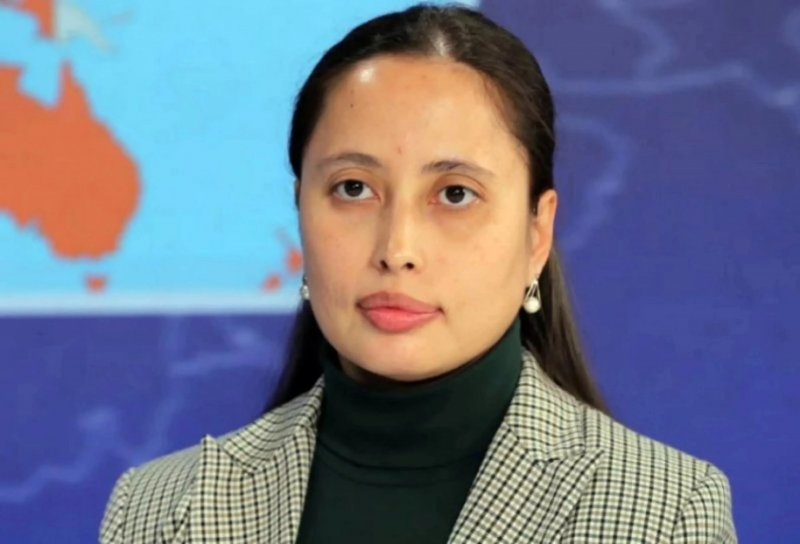
The News.Az analytical portal spoke with Nargiza Umarova, Head of the Center for Strategic Connectivity at the Institute for Advanced International Studies at the University of World Economy and Diplomacy in Uzbekistan.
– In your view, what defines the specificity and distinctive nature of relations between Azerbaijan and Uzbekistan, and how do they differ from Uzbekistan’s ties with other Central Asian countries?
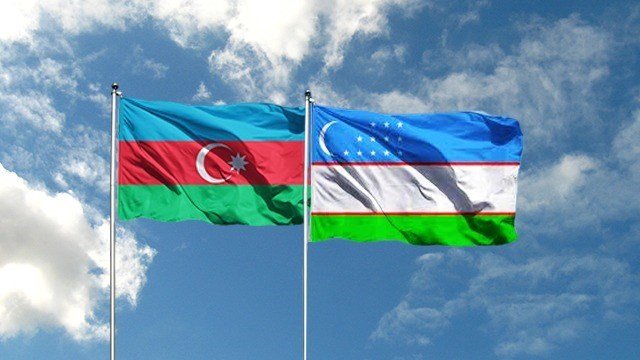
– In my opinion, the defining feature of our bilateral relations is the allied status achieved in August 2024, when the parties signed a treaty on allied relations. Uzbekistan ratified this document in May 2025. I would note that among the Central Asian countries – that is, Uzbekistan’s immediate neighbors – only two states, namely Kazakhstan and Tajikistan, have allied relations with Uzbekistan. With other regional neighbors, cooperation is based on strategic partnership frameworks.
Within the broader post-Soviet space, Azerbaijan became the third country to attain allied status with Uzbekistan. This reflects the fully trust-based nature of bilateral relations and opens broad prospects for accelerated development and deeper cooperation in areas of mutual interest, including the military sphere, which we are currently witnessing.
Source: Trend
The specificity of these relations, in my view, also stems from the particularities of Uzbekistan’s foreign policy. In 2017, Uzbekistan experienced a political transition, and since then the overarching priority of its foreign policy has been the pursuit of geo-economic objectives.
Uzbekistan is rapidly developing its economy and is focused on exporting its products to promising markets. This requires diversification of export destinations – in other words, expanding access to new markets. Naturally, this also entails the creation of reliable and efficient trade routes.
In this context, Azerbaijan can offer a number of significant opportunities for Uzbekistan.
– Which sectors are the most promising for deepening cooperation between Baku and Tashkent and for laying the groundwork for future joint initiatives and projects?
– First and foremost, I would highlight trade, because, as already noted, the primary priority of Uzbekistan’s foreign policy is the achievement of geo-economic goals. Uzbekistan attaches great importance to developing trade and economic ties with external partners, and Azerbaijan is no exception.
Although Azerbaijan is not yet among Uzbekistan’s top 20 trading partners, recent years clearly demonstrate a strong growth trend and a shared ambition to expand further. Over the past eight years, up to 2024, mutual trade increased 7.8-fold, reaching $253 million by the end of 2024. I do not yet have complete data for 2025, but in the first nine months of last year mutual trade had already exceeded $300 million.
This indicates that the parties are striving to intensify bilateral trade. There is also a mutual interest in investing in each other’s economies – modest in scale but tangible – particularly from Azerbaijan. Azerbaijan has already invested around $200 million in Uzbekistan’s economy. A significant milestone was the establishment in 2023 of a joint investment fund with total capital of $500 million.
While this amount is not large, it is quite sufficient at the initial stage. It has been announced that these funds will finance joint projects in energy, petrochemicals, the food industry, and agriculture. There are already visible examples of expanding industrial cooperation between our countries.
This instrument is especially important for Uzbekistan. For example, plans have been announced to create a textile cluster, a sector in which Uzbekistan has strong expertise. The assembly of Uzbek cars has been launched in Hajigabul, and a garment factory has opened in Khankendi. This activity is gradually expanding. I also believe that particular emphasis should be placed on energy as one of the most promising areas of cooperation.
Last year, SOCAR and Uzbekneftegaz began geological exploration of an oil field in the Ustyurt region of Uzbekistan, suggesting prospects for joint oil and gas production and transportation. In terms of transport infrastructure, important groundwork is also being laid. Last year, a meeting was held in Turkmenistan between the leaders of Turkmenistan, Azerbaijan, and Uzbekistan, largely devoted to developing transport infrastructure for the future transit of Central Asian energy resources through the South Caucasus to Europe.
Overall, the prospects for cooperation are broad. Another sector that deserves special attention is transport logistics. In this regard, it is important to highlight the Middle Corridor project, which unites our countries and is currently in an active phase of development.
– How do you assess the prospects for further cooperation between Azerbaijan and the countries of Central Asia within the framework of the Organization of Turkic States (OTS)?
– Uzbekistan joined the OTS in 2019, again driven by Tashkent’s intention to effectively implement its economic objectives. If we examine the initiatives proposed at high-level OTS summits and within sectoral formats such as meetings of relevant ministries and agencies, the overwhelming majority focus on strengthening trade, economic cooperation, and transport connectivity.
Regarding transport logistics, I would elaborate further. Alongside its participation in the OTS, Uzbekistan in 2019 began developing a transport project affecting the interests of other OTS member and observer states – the multimodal route CASCA+ (Central Asia – South Caucasus – Anatolia+).
In 2019, the heads of railway agencies from Uzbekistan, Kyrgyzstan, Turkmenistan, Azerbaijan, and Georgia met in Tashkent to establish the CASCA+ route. In 2021, Türkiye joined the project, forming a full-fledged corridor. The “plus” sign indicates potential expansion to additional countries and regions. In recent years, China has shown active interest in the route, seeking alternative East–West transport corridors to ensure efficient delivery of goods to Europe.
Last year, the Eurasian Transport Corridors Association was created on the CASCA+ platform. Not all participating countries have joined – Turkmenistan, for example, is not currently a member – but efforts are underway to broaden its geographic scope.
These examples demonstrate that Uzbekistan’s interaction with Azerbaijan, both bilaterally and multilaterally within the OTS, is based on a pragmatic approach. Other areas of cooperation within the OTS include military coordination and military-technical cooperation. However, in my view, for Uzbekistan, military ties or cultural-humanitarian cooperation are less significant than the trade and economic dimension. For Tashkent, the economy and trade take precedence.
– How relevant is the Middle Corridor for Uzbekistan in the long term? Which Central Asian country prioritizes it?
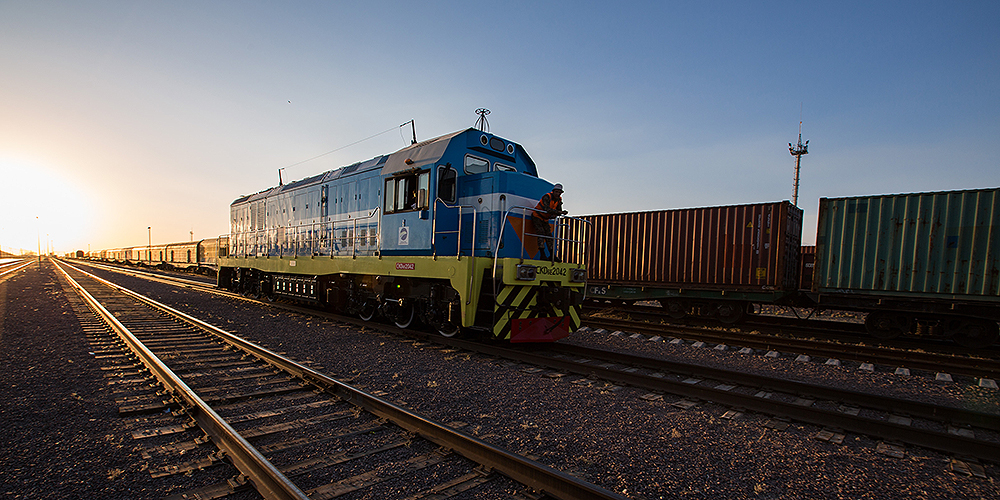
– The Trans-Caspian International Transport Route includes Kazakhstan, Azerbaijan, Georgia, and Türkiye. It is currently being developed as a transit corridor for East–West cargo flows between China and the European Union. Uzbekistan participates as a user of the route for export and import operations, including trade with Azerbaijan.
The Middle Corridor does not carry equal priority for all Central Asian countries, primarily due to geographic factors. Only Kazakhstan and Turkmenistan have direct access to the Caspian Sea. Kazakhstan has the ports of Aktau and Kuryk, while Turkmenistan has the port of Turkmenbashi.
Source: adb
Uzbekistan, Kyrgyzstan, and Tajikistan lack direct access to the Caspian but can utilize the infrastructure of neighboring states, including their ports, for Trans-Caspian transport. CASCA+ is oriented toward Turkmenistan’s infrastructure, making Turkmenistan a key link between Central Asia and the South Caucasus.
Uzbekistan is also participating in the construction of the China–Kyrgyzstan–Uzbekistan railway, which began in April 2025. It is expected to extend toward Afghanistan and connect with the Trans-Afghan railway corridor, another priority project for Uzbekistan, as well as link to the southern corridor via Iran and potentially reach the Caspian through Turkmenistan.
The projected capacity of the China–Kyrgyzstan–Uzbekistan railway is up to 15 million tons annually. Experts believe that cargo flows are unlikely to shift away from Kazakhstan’s more competitive transit route. Kazakhstan is expected to remain the leader in Trans-Caspian transport due to its border with China, multiple crossings, and favorable terrain.
For Uzbekistan, Tajikistan, and Kyrgyzstan, the Middle Corridor represents an additional route to diversify trade with the South Caucasus, Türkiye, the European Union, and North America.
The World Bank forecasts that cargo volumes along the Middle Corridor could reach 11 million tons by 2030, with 40 percent comprising transcontinental trade, including 1.3 million tons of potential Uzbek transit cargo to Europe.
– Uzbekistan is promoting the Trans-Afghan railway initiative to access South Asia. How feasible is this initiative given instability around Afghanistan?
– The Trans-Afghan railway corridor, proposed in 2018, is one of Tashkent’s two strategic priority projects, alongside the China–Kyrgyzstan–Uzbekistan railway. It is intended to connect Uzbekistan, Afghanistan, and Pakistan, providing access to Pakistani ports such as Karachi and Gwadar, and potentially onward to India.
Currently, Uzbekistan operates the Hairatan–Mazar-i-Sharif railway, which opened in 2011. The new corridor would extend from Mazar-i-Sharif to Pakistan via Naibabad – Maidan Shahr – Logar – Kharlachi.
Strategically, the corridor addresses the lack of rail connectivity between Central and South Asia. It is designed as a transit route linking major economic centers – South Asia, including India; Russia and Belarus via Central Asia; the European Union; and China. It would position Central Asia as a key node in North–South transit flows.
In July 2025, Uzbekistan, Afghanistan, and Pakistan signed a trilateral intergovernmental framework agreement to prepare the project’s feasibility study. A project office was opened in Tashkent in 2023, with branches in Kabul and Islamabad.
Security concerns remain, including Afghan–Pakistani and Indo–Pakistani tensions. However, despite these complex relations, Pakistan and Afghanistan have signed several agreements under the project, demonstrating a willingness to ensure the corridor’s security. In the long term, mutual economic interests are expected to help mitigate conflict risks.
News.Az