South Caucasus crossroads: Georgia’s new president, Azerbaijan ties, and Moscow’s ambitions – INTERVIEW


By Asif Aydinly
Amid the escalating political situation in Georgia, the recent visit of newly elected President Mikheil Kavelashvili to Azerbaijan, and discussions surrounding the potential restoration of diplomatic ties between Tbilisi and Moscow, News.Az spoke with prominent Georgian political analyst Gia Kuchava. In this interview, he offers his assessment of key foreign policy visits, reveals the hidden motives behind recent statements by Russian diplomats, and shares his views on the internal divisions within Georgian society and the ongoing protests in Tbilisi.
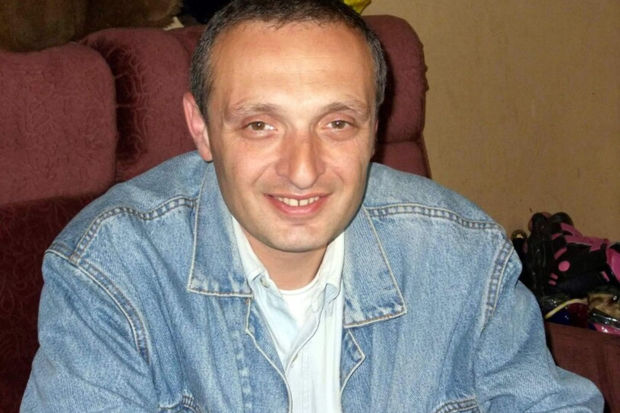
- How do you assess President Mikheil Kavelashvili’s visit to Azerbaijan? What were the underlying motives behind this visit?
- First, it's important to emphasize that under Georgia’s Constitution, the president is the head of state, commander-in-chief of the armed forces, and the guarantor of independence. While the president represents the country in foreign affairs, their activities in this domain must be coordinated with the government.
This visit marked Kavelashvili’s first trip abroad as president, and it was likely aimed at establishing personal ties with President Ilham Aliyev, Speaker of the Milli Majlis Sahiba Gafarova, and Prime Minister Ali Asadov. Notably, prior to this, Georgian Prime Minister Irakli Kobakhidze had also visited Azerbaijan.
President Aliyev highlighted that both Prime Minister Kobakhidze and President Kavelashvili chose Azerbaijan for their first foreign visits—a gesture that Baku interprets as a sign of particular respect and a symbol of strategic partnership, with both symbolic and political significance.

Source: Trend
It’s worth recalling that the results of last year’s elections in Georgia remain contested by the radical opposition and parts of society. The ruling Georgian Dream party has repeatedly accused foreign powers—primarily Western countries—of interfering in Georgia’s internal affairs and applying double standards. President Kavelashvili echoed this view during his visit to Baku.
President Aliyev remains the only foreign leader to have stated directly, on April 9, that “the European Union treats Georgia like a colony” and “interferes in its internal affairs.” He has also frequently criticized international NGOs for attempting to influence domestic affairs in both Azerbaijan and Georgia.
Today’s Georgian-Azerbaijani relations are not only deeply rooted in shared history but also aligned in terms of strategic interests. External actors such as the United States, Russia, and increasingly China are competing for influence in the South Caucasus, seeking to strengthen their positions in the region economically, diplomatically, and militarily. Their ambitions extend not only to the South Caucasus but also to Iran and Türkiye.
This interest stems from the fact that the South Caucasus serves as a strategic corridor for transporting energy resources from Azerbaijan and Central Asia to global markets. It also forms the shortest route to the Middle East and Central Asia. These geopolitical realities have made the region a battleground for numerous conflicts—from the war over Karabakh between Armenia and Azerbaijan to Russia’s occupation of Abkhazia and the Tskhinvali region, referred to as “South Ossetia.”
For Azerbaijan, Georgia remains a reliable transit partner. Much of this can be credited to the historical roles of former presidents Heydar Aliyev and Eduard Shevardnadze. Kazakhstan has also joined the energy corridor through the South Caucasus, while Azerbaijan plays a crucial role in ensuring Georgia’s energy security.
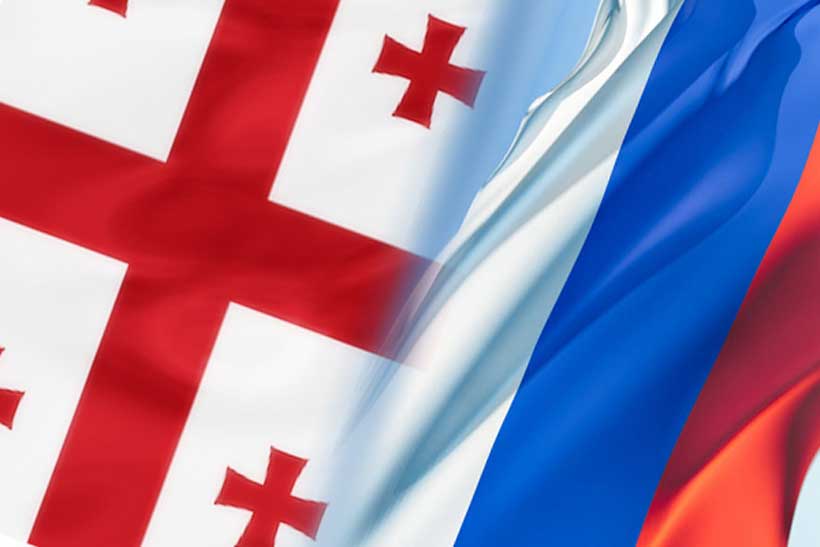
Source: TASS
- Recently, Russian Deputy Foreign Minister Mikhail Galuzin stated that Moscow is ready to restore diplomatic relations with Tbilisi. What do you believe is behind this statement?
- Last week, Georgia was in the spotlight across Russian media—from press secretary Dmitry Peskov and ideologue Alexander Dugin to prominent propagandists like Margarita Simonyan and Vladimir Solovyov. In unison, they began speaking about "normalizing relations" and expressed nostalgia for the Soviet Union.
It all began with Galuzin’s interview with Izvestia on April 14, where he stated that Moscow is ready to re-establish diplomatic ties with Tbilisi. He emphasized that this issue should not be linked to Russia’s recognition of the independence of Abkhazia and South Ossetia.
Galuzin spoke of a supposed “shared history, faith, and cultural and humanitarian ties” between Russia and Georgia, declaring Moscow’s willingness to deepen relations to the extent that Georgia is prepared to do so.
Georgian Parliament Speaker Shalva Papuashvili responded that the sole obstacle to restoring diplomatic relations is Russia’s occupation of Georgian territories—an issue only Russia can resolve.
Since 2016, Moscow has periodically floated the idea of renewed ties. But in light of Russia’s international isolation following its full-scale invasion of Ukraine in 2022, it is clear that the Kremlin needs this normalization far more than Tbilisi does.
As for the so-called "shared history and faith," this is, in fact, a history of occupation, suppression, and betrayal. Since 1801, Georgia has endured:
– The annexation of the Kingdoms of Kartli-Kakheti and Imereti
– The brutal suppression of multiple uprisings in the 19th century
– Bolshevik aggression in 1921
– The shooting of peaceful protesters in 1956 and 1989
– A civil war orchestrated by the Kremlin
– Wars in Abkhazia and the Tskhinvali region
– Occupation and the creation of puppet enclaves following the 2008 war
Moreover, in 1811, Russia abolished the autocephaly of the Georgian Orthodox Church, which had existed since the 5th century, subsuming it into the Russian Orthodox Church. Russian exarchs defaced frescoes, desecrated sacred sites, sold ancient icons as Byzantine artifacts, and banned the Georgian language in worship. Autocephaly was only restored in 1917.
Therefore, talk of "friendship and shared history" cannot withstand serious scrutiny. Since 1801, Georgia has been in a near-constant state of conflict with Russia.

Source: Caucasus Watch
-According to an investigation into the 2008 war, the order to initiate hostilities was given by Mikheil Saakashvili. How has this been received by the public?
-The parliamentary commission wasn’t established primarily to uncover the truth, but rather to leverage public dissatisfaction with the former government. It also serves to associate segments of the opposition—especially the political faction of Giorgi Gakharia—with the former ruling party, the United National Movement.
Georgian society remains deeply divided. The radical opposition reacts painfully to any criticism, even when it is objective. Another portion of society views the commission, headed by Tea Tsulukiani, in a more favorable light. There is also a third group—still relatively small—that supports neither the government nor the opposition. This emerging segment offers alternative perspectives, but in a political culture where "you are either with us or against us," it finds little space to exist.
-Since November 2024, the opposition has held daily protests on Rustaveli Avenue. Do you believe the protest movement is losing momentum?
-It is too early to speak of a decline. On the contrary, recent statements by Prime Minister Kobakhidze and several MPs have only heightened tensions. The prime minister's recent comment that the death of 2008 war hero Giorgi Antsukhelidze was in vain sparked a strong public reaction—even among supporters of the ruling Georgian Dream party.


Similar news