The country that has it all — Except stability: Inside Venezuela’s collapse


Photo source: iiss.org
Editor's note: Russian military-political analyst, expert in the field of strategic security, specialist in the Middle East and Africa Vladimir Bekish. The article expresses the personal opinion of the author and may not coincide with the view of News.Az.
Everyone knows there is a place on planet Earth called America. Not only the United States of America, but also Central America and Latin America. And within Latin America lies the state of Venezuela.
Every country in the world is unique in its own way. Some are very unique. Some are moderately so. In this sense, Venezuela stands out: it is peculiar, unique, and undeniably attractive — thanks to its natural beauty, pleasant climate, and vibrant people. Yet what is surprising is that, despite all its natural gifts, Venezuela does not rank among the world’s best countries in terms of quality of life, economic development, or public safety. And this really is surprising.
We all know that for many countries, having mineral resources — especially crude oil — is a major source of prosperity and development. Countries like Russia, the United States, Saudi Arabia, the United Arab Emirates, Kuwait, and Iraq have built significant wealth around their oil reserves. Venezuela, too, has oil — and oil production is one of the country's main sources of income and a symbol of hope for the future.
But here’s the surprising fact: if we compare all the “oil countries” of the world by proven reserves, it’s not Russia, the U.S., or Saudi Arabia that ranks first. It’s Venezuela. Venezuela holds the world's largest proven oil reserves.
Yet, despite this, Venezuela lags far behind oil-rich countries like Saudi Arabia, Norway, Australia, Qatar, and Oman when it comes to economic development and standard of living.
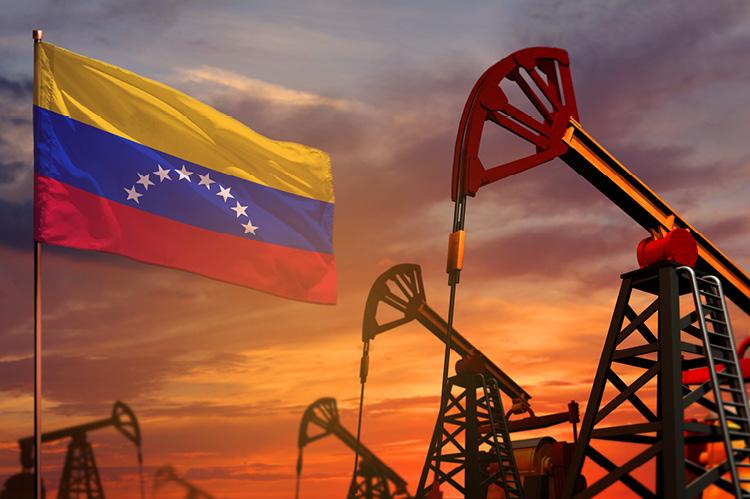 Photo source: Shutterstock
Moreover, oil is not the only resource Venezuela possesses. The country is rich in gold, aluminum, and precious stones — especially diamonds. I have personally visited areas where diamonds are mined, particularly around the town of Santa Elena, where most miners work independently and manually. My experiences there were unforgettable, and I am ready to share them.
There are other facts essential to understanding Venezuela’s place in the global and regional landscape.
Venezuela not only leads the world in proven oil reserves. Sadly, its capital, Caracas, also ranks first globally for violent crime. I have been to Caracas, and I can confirm — the city has earned that unfortunate title.
On a brighter note, Venezuela has been a consistent leader in the Miss World beauty pageant. Venezuelan women have won more Miss World titles than any other country, and not due to formal or political considerations — they are genuinely among the most beautiful in the world. Having visited Venezuela many times, I can attest to this beauty firsthand.
In fact, beauty contests are deeply ingrained in Venezuelan culture. Beauty pageants are organized even at the school level, starting from fourth grade. Beauty is seen not only as a source of pride but also as an opportunity — a chance to achieve success and even contribute to the country's progress, if wisely leveraged.
Venezuelan lifestyles offer further insights. In Latin America, countries like Brazil, Colombia, Argentina, and Chile have world-famous football (soccer) teams, brimming with success. These countries are Venezuela’s neighbors, sharing similar languages and cultures. And yet — have you ever heard of the Venezuelan national football team achieving notable success? Probably not.
This reflects a different attitude among Venezuelan men: "Why chase a ball under the hot sun when you can relax under a palm tree?" In short, Venezuelans often approach life in a relaxed, unconventional way.
At this point, it is important to recall who traditionally plays the role of "supervisor" in the Western Hemisphere: the United States. Given that leadership, one might expect strong relations between Venezuela and the U.S. Yet, for a long time, the relationship has been strained and, at times, hostile.
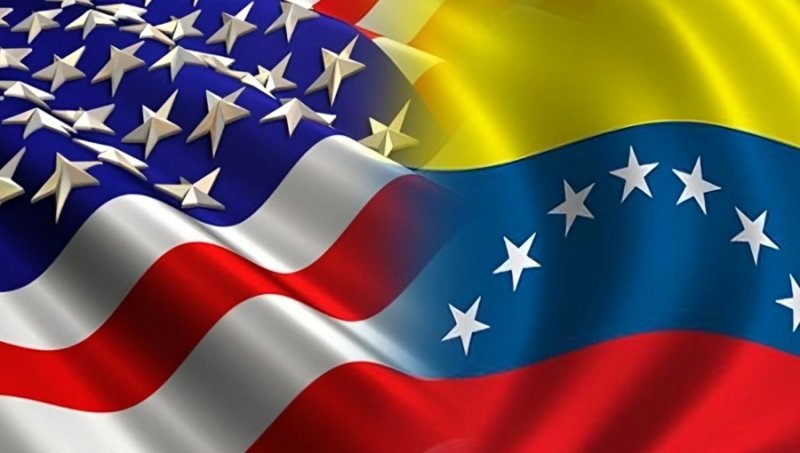
Photo source: bne Intellinews
Venezuela maintained close ties with the U.S. through much of the 20th century, during the democratic governments of Carlos Andrés Pérez and Rafael Caldera. But everything changed when Hugo Chávez came to power in 1999. Declaring himself a socialist and an "anti-imperialist" — meaning an opponent of U.S. influence — Chávez set the two countries on a path of escalating tensions. Relations worsened significantly after Venezuela accused the George W. Bush administration of supporting a 2002 coup attempt against Chávez.
Today, Venezuela remains under heavy U.S. sanctions, which include bans on American oil companies doing business there and restrictions on financial transactions through the global banking system. Venezuela’s Central Bank is effectively cut off from the dollar-based financial world.
The consequences have been devastating. In October 2023, Venezuela's annual inflation rate stood at 317%. And while that is shockingly high, it pales compared to the hyperinflation of 2018, when inflation reached 1,370,000%.
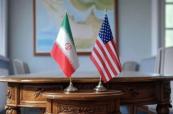
In light of the proverb "The enemy of my enemy is my friend," Venezuela has increasingly drawn closer to Iran. Like Venezuela, Iran faces crippling U.S. sanctions and isolation. Both are major oil producers, and both now cooperate against a common adversary.
One major area of cooperation is crude oil. Iran exports Venezuelan oil using its own tankers, while supplying Venezuela with refined oil products, as Venezuela’s domestic refineries are in poor condition. Iran is also involved in exporting Venezuelan gold, reportedly with Russia’s involvement.
But the cooperation does not stop at trade. Recent reports suggest that Iran has established military bases and defense manufacturing operations in Venezuela. Iranian military cargo flights to Venezuela have been frequently recorded. Furthermore, large tracts of Venezuelan land have reportedly been given to Iran — not for agricultural purposes, but allegedly for the deployment of missile launchers and production facilities for missiles and drones.
If true, this development could have profound consequences for U.S. national security. Missile systems based in Venezuela could threaten the southern United States directly, thus altering U.S. strategic calculations in the Middle East and beyond. Iran's presence in Venezuela, even without nuclear weapons, would give Tehran a new lever against Washington.
Where is Venezuela heading?
In my view, it is heading down a path similar to Iran’s — a path of isolation, sanctions, and economic hardship. Unlike Iran, Venezuela does not have the means to develop nuclear weapons, nor does it have strong neighbors like Russia or China nearby. Venezuela is geographically close to the United States, and eventually, it will likely have to comply — or continue to endure astronomical inflation, instability, and poverty.
And finally — despite all this — if you ever find yourself in Venezuela, know this: the beef steaks are extraordinary, and the freshly caught tuna is simply unforgettable!
(If you possess specialized knowledge and wish to contribute, please reach out to us at opinions@news.az).


Similar news