Trump’s opposition to Maduro puts China–Venezuela oil trade at risk


.png)
Editor's note: Faig Mahmudov is an Azerbaijan-based journalist. The article expresses the author's personal opinion and may not coincide with the view of News.Az.
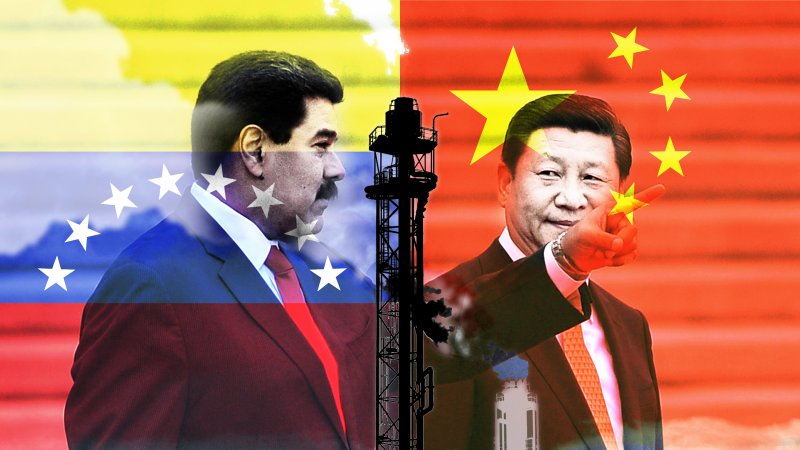
China and Venezuela’s economic ties are increasingly seen as a textbook case of asymmetric interdependence. At the heart of this relationship lies crude oil. Venezuela, which holds the world’s largest proven reserves at around 303 billion barrels, has paradoxically struggled for decades with economic collapse, hyperinflation, and currency shortages. Against this backdrop, ties with Beijing have provided lifelines, but also raised questions about sustainability.
In 2024, bilateral trade reached USD 6.4 billion, with USD 4.8 billion coming from Chinese exports to Venezuela and only USD 1.6 billion from Venezuelan sales to China. This left Caracas with a negative trade balance of USD 3.2 billion. For perspective, trade topped USD 18 billion in 2010, dropped to USD 13 billion by 2015, and plunged to USD 3.6 billion in 2020 amid sanctions and the COVID-19 crisis. While trade has partially recovered, the rebound has been modest, underscoring the fragility of Venezuela’s economic engagement with China.
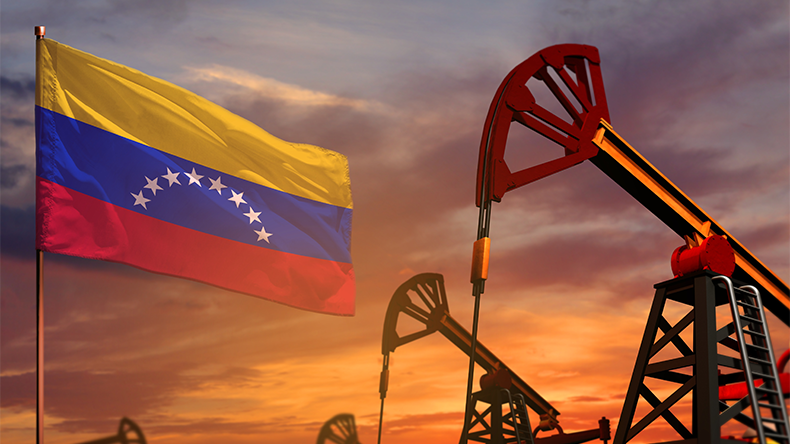
Source: Reuters
Oil dominates Venezuela’s export profile, accounting for more than 90% of shipments. Between 2023 and 2025, Beijing absorbed as much as 70% of the country’s oil exports, effectively becoming its primary strategic buyer. In 2024, Venezuela pumped an average of 952,000 barrels per day (bpd), exporting 805,000 bpd. By 2025, exports stabilized between 0.8 and 1 million bpd. This represents a dramatic fall from 1998, when production stood at 3.5 million bpd before collapsing under political turmoil, sanctions, and aging infrastructure.
China’s role extends beyond being a customer. Through Petrolera Sinovensa, a joint venture between CNPC and PDVSA, it co-operates fields in the Orinoco Belt with a capacity of 100,000 bpd. Fresh agreements involving Chinese private capital could add another 60,000 bpd in the coming years, cementing Beijing’s role as a stakeholder in Venezuelan production itself.
On the other side of the ledger, Chinese exports to Venezuela highlight stark contrasts. In 2024, 35% of imports from China were machinery and equipment, 25% vehicles and parts, and 20% electronics and telecommunications. The remainder comprised a wide range of consumer goods. Much of Venezuela’s public sector and even parts of its energy infrastructure now run on Chinese technology, raising concerns about technological dependence.
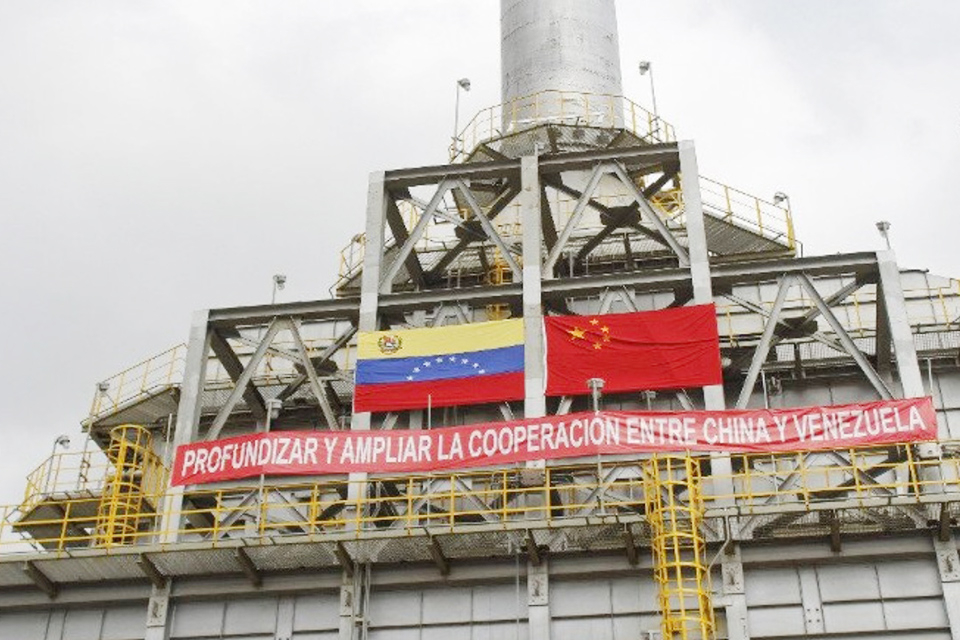
Source: Talcualdigital
Financially, the partnership has long been shaped by the “oil-for-loans” model. From 2007 to 2015, China extended about USD 50 billion in credit, repaid with oil shipments. Today, Venezuela still owes roughly USD 10 billion. Servicing that debt often requires selling crude to China at discounted prices, reducing Caracas’s already strained revenues and deepening its liquidity crunch.
Donald Trump’s presidency added another layer to this story. His administration pursued a “maximum pressure” strategy against Nicolás Maduro’s government, imposing sweeping sanctions on Venezuela’s oil sector and financial system. Washington openly backed opposition leader Juan Guaidó, calling Maduro’s rule illegitimate. While the U.S. aimed to weaken Maduro and curb Venezuela’s access to global markets, these sanctions inadvertently pushed Caracas further into Beijing’s orbit. With Western financing cut off, Venezuela leaned more heavily on China for both credit and market access. Trump’s hardline approach thus accelerated the very dynamic it sought to prevent—deepening Venezuela’s reliance on China and reinforcing Beijing’s role as the country’s economic backer of last resort.

Source: Global Trade Review
The bigger picture is clear: this is not a balanced partnership but one defined by resource dependency. For China, Venezuela provides cheap, reliable energy—a useful hedge in its broader energy security strategy. For Venezuela, China is both a crucial market and a financial lifeline. Yet the structure is far from sustainable. With a mono-export economy, growing import reliance, and heavy debt obligations, Caracas risks reinforcing long-term dependency instead of building resilience.
Ultimately, while mutually beneficial in the short term, China–Venezuela economic ties remain more compensatory than complementary. For China, the partnership enhances energy security and trade outreach. For Venezuela, it provides critical support to prevent further economic collapse. However, tensions with Washington are adding another layer of complexity. Donald Trump has been outspoken in his opposition to Nicolás Maduro’s government, with some sources suggesting that the U.S. is considering plans to overthrow Maduro to gain control over Venezuela’s vast oil reserves. Maduro himself has publicly stated that the primary goal of the United States is to seize Venezuela’s oil. Reflecting this escalation, the U.S. has reportedly deployed its destroyers to Venezuelan shores.
If Washington were to succeed in taking control of Venezuela’s oil resources, it would not only weaken Maduro’s regime but also seriously undermine China’s long-term energy strategy and its trade partnership with Caracas. Given that over 90% of Venezuela’s exports to China consist of crude oil, any U.S. intervention could disrupt these flows, depriving Beijing of a key energy supplier and destabilizing one of its strategic footholds in Latin America. Without reforms, diversification, and new strategies beyond oil, Venezuela risks remaining trapped in a cycle of dependency — one paradoxically reinforced by Washington’s sanctions policy and geopolitical maneuvers under Trump.
(If you possess specialized knowledge and wish to contribute, please reach out to us at opinions@news.az).


Similar news