Turkic military bloc: Challenges and prospects for Central Asia


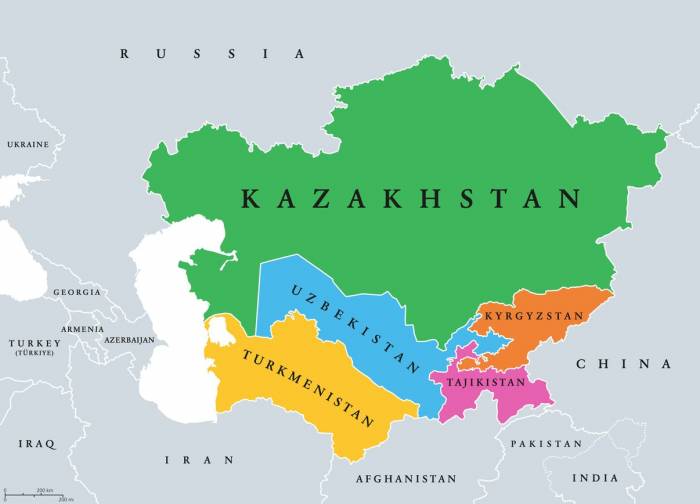
Map of Central Asia
Editor's note: Mars Sariyev is a Kyrgyz political scientist and regional security expert. The article expresses the personal opinion of the author and may not coincide with the view of News.Az.
The idea of forming a military bloc within the Organization of Turkic States (OTS) has sparked significant interest in Kyrgyzstan and other Central Asian nations. Amid global challenges and geopolitical shifts, Turkic-speaking countries, including Kyrgyzstan, view military cooperation as a potential tool for strengthening regional security and unity. However, the realization of this vision faces substantial obstacles requiring thorough analysis.Currently, the notion of creating a unified military bloc remains more of a strategic aspiration than a realistic scenario. The membership of Kyrgyzstan and Kazakhstan in the Collective Security Treaty Organization (CSTO) and Türkiye's affiliation with NATO present evident barriers to forming such an alliance. The CSTO and NATO are fundamentally opposing military-political entities, and their inherent contradictions make such a union premature. For this concept to materialize, Kyrgyzstan and Kazakhstan would need to reconsider their commitments to the CSTO—a scenario that seems unlikely under current circumstances.
Moreover, there are concerns that such shifts could provoke dissatisfaction from Russia, which has historically played a pivotal role in the region. Russia is unlikely to remain indifferent to the withdrawal of Central Asian states from the CSTO, especially at a time when its influence faces growing competition from other powers, including China and Türkiye. This further complicates the process of reconfiguring regional alliances.
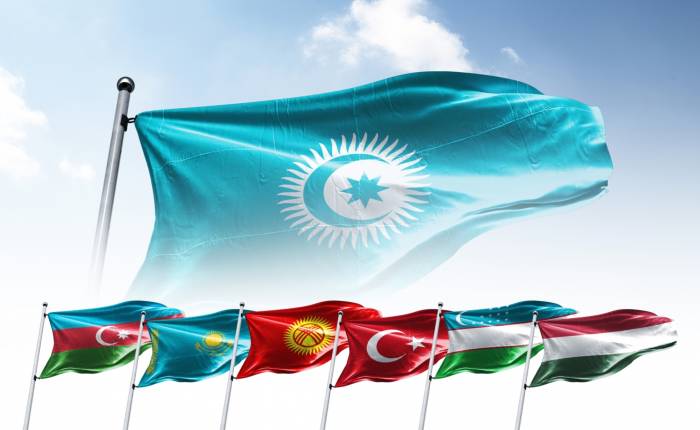
Despite these challenges, bilateral cooperation among Turkic-speaking countries is already deepening. For instance, Kyrgyzstan, Uzbekistan, Azerbaijan, Türkiye, and Kazakhstan actively collaborate within the OTS framework, fostering stronger political, economic, and cultural ties. Developments in the Middle East and Türkiye's increasing prominence in the region could serve as catalysts for closer cooperation in the future. While the establishment of a military bloc is not an immediate priority, it remains a prospect for the long term.
Türkiye’s role as a strategic partner
Amid discussions of military cooperation, Türkiye's role as a strategic partner for Kyrgyzstan in Central Asia warrants particular attention. Türkiye is undoubtedly a driving force behind Turkic unity, playing a pivotal role in the activities of the OTS. Its initiatives significantly strengthen cultural and economic bonds among Turkic nations.
A notable example of Türkiye's active engagement is the visit of Turkish Foreign Minister Hakan Fidan to Tajikistan, which contributed to resolving border disputes between Kyrgyzstan and Tajikistan. This demonstrated Türkiye's readiness to act as a mediator in complex regional conflicts, fostering trust among nations. Such efforts enhance Ankara’s prestige and bolster its position as a peacebuilder on the international stage.
Source: shutterstock.com/Efasein
Additionally, Türkiye actively supports cultural initiatives aimed at preserving and promoting the shared Turkic heritage. These include educational programs, cultural exchanges, and the development of Turkic languages. For Kyrgyzstan, which seeks to strengthen its national identity, such a partnership is of significant importance.
These actions underline Türkiye's genuine commitment to the development and prosperity of the Turkic world. Ankara’s successes in diplomacy and economic collaboration reinforce its role as a key player in the region.
Transport corridors as a basis for unity
Another crucial area of collaboration is the development of transport corridors, such as the Middle Corridor under the "Belt and Road Initiative." Türkiye is actively supporting the construction of railway infrastructure connecting China, Kyrgyzstan, Uzbekistan, and Türkiye with access to European ports.
These projects not only enhance economic cooperation but also solidify Turkic unity, with Türkiye acting as a driving force. For instance, the construction of the China-Kyrgyzstan-Uzbekistan railway could become a game-changer, unlocking new trade opportunities for the entire Central Asian region. For Kyrgyzstan, this represents a chance to improve its logistics infrastructure, reduce transportation costs, and enhance its role in international trade.
Furthermore, such corridors carry strategic significance in the context of global competition. They diversify trade routes, reducing dependence on traditional pathways through Russia. This is particularly vital for Kyrgyzstan as it strives to expand its economic independence.
Turkish investments: A growth opportunity
Türkiye is also actively investing in Kyrgyzstan’s economy, demonstrating its readiness to support strategically important sectors such as energy, agriculture, and digital transformation. A recent visit by President Recep Tayyip Erdoğan to Kyrgyzstan marked a significant milestone, including the cancellation of $50 million in debt, strengthening bilateral relations.
As ties among Turkic countries deepen, Turkish investments are expected to grow, providing additional incentives for economic development and integration. Strategic sectors, in particular, could serve as the foundation for sustainable economic growth.
Investments in energy can help Kyrgyzstan address its energy deficit, while agricultural development will bolster the country’s food security. Digital transformation, in turn, opens new opportunities for modernizing the economy—an essential step amid increasing regional competition.
In the current geopolitical landscape, the idea of a Turkic military bloc, while ambitious, requires time and careful planning. Nonetheless, the deepening cooperation among Turkic-speaking countries, particularly with Türkiye's active participation, is already yielding tangible results. The question of forming a military bloc remains open, but the very discussion of this topic underscores the region’s aspiration for greater cohesion and independence.
(If you possess specialized knowledge and wish to contribute, please reach out to us at opinions@news.az).


Similar news