Turkish expert: Military operation against Iran may begin soon – INTERVIEW


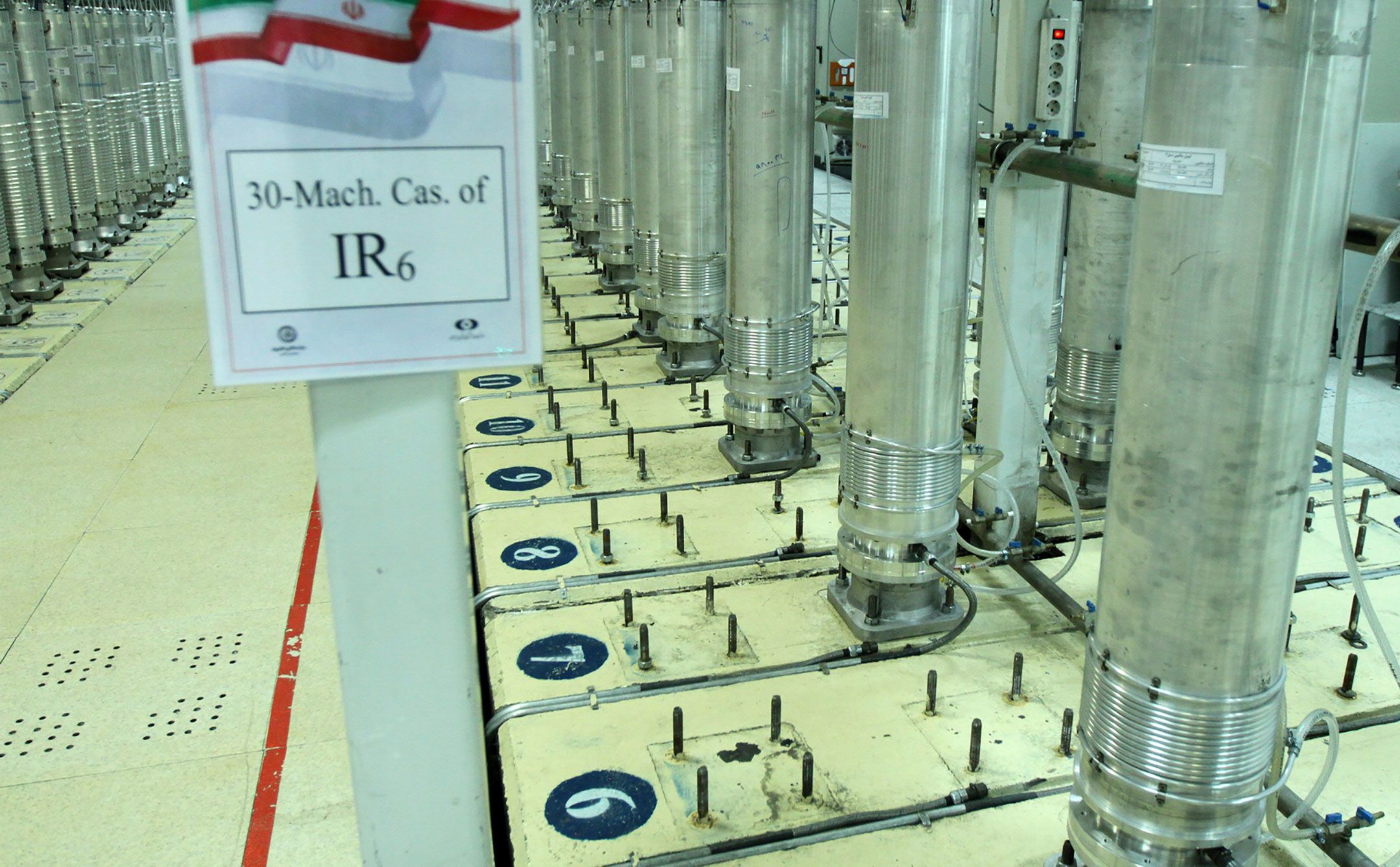
As tensions escalate in the Middle East, concerns over Iran’s nuclear ambitions have returned to the forefront of international security discussions. A confidential IAEA report obtained by Reuters reveals that Tehran may now possess enough enriched uranium to build nine nuclear warheads, raising alarm across the region.
In an exclusive interview with News.Az, Turkish security and foreign policy expert Engin Özer shares his analysis on what this development means for the broader geopolitical landscape. He warns that a military operation against Iran may be imminent and discusses the potential consequences for neighboring countries, including Azerbaijan.

Source: Reuters
– According to a confidential IAEA report obtained by Reuters on Saturday, Iran has enriched enough uranium to build nine nuclear warheads. Tehran reportedly conducted secret nuclear activities using undeclared materials, which were not disclosed to the UN nuclear watchdog. What could be the implications for regional and global security if Iran indeed possesses enough material to develop nine nuclear warheads?
– First, we should ask a fundamental question: who actually controls the IAEA? In reality, it is an institution heavily influenced by the United States. The recent negotiations between the U.S. and Iran, including those during the Trump administration, failed to yield any concrete results in favor of Washington.
Today, the Trump administration is applying all available levers of pressure on Iran. Increasingly, official statements are emerging, claiming that Iran possesses the capability to produce nuclear weapons. This narrative is becoming one of the main arguments the U.S. uses to justify its stance against Tehran.
If Iran agrees to the terms imposed by the United States—terms that essentially determine the country’s future—then this threat may be temporarily removed from the agenda. However, if Tehran refuses to comply, an air operation against Iran is very likely to begin soon.
This will destabilize the entire region and directly affect Azerbaijan’s security as well. The potential consequences could be catastrophic, extending across the entire Caucasus. There is a strong likelihood that any military campaign would focus specifically on Iran’s nuclear facilities and related infrastructure. Unfortunately, everything now points to the fact that the question is no longer “if,” but “when.”
Source: Reuters
– Why is the IAEA only now revealing evidence of Iran’s secret nuclear activity and undeclared materials? What does this suggest about the effectiveness of international oversight?
– Let me remind you of the war in Iraq. Back then, there were also claims that Saddam Hussein possessed nuclear or other weapons of mass destruction. It was based on such claims that the military operation against Iraq began. What we are seeing now is practically the same scenario being replayed.
Everything happening today is a repetition of a well-known pattern.
And why now? As I’ve already mentioned, it is directly linked to the ongoing negotiations between Iran and the United States.
To speak of the independence or effectiveness of international organizations in this context is, frankly, laughable. In practice, they have long lost their true autonomy and operate in the interests of certain major powers.

Source: Reuters
– What actions might the international community take in response to this new information about Iran’s covert nuclear program? Should we expect tougher sanctions or a return to diplomacy?
– Sanctions against Iran have achieved nothing over the past four decades—and they continue to be ineffective. We’ve been observing this for nearly 40 years. Despite all external pressure, Iran has remained on its chosen course.
Most likely, the U.S. is now finalizing its military and aerial preparations, and the operation against Iran could begin at any moment.
Unfortunately, the policy of isolating Iran has proven neither effective nor pragmatic. What we are witnessing today is simply the result of a failed strategy. The situation has reached a deadlock, and sadly, there appears to be no viable way out of the crisis at this point.


Similar news