Grigory Trofimchuk: Russia will not be able to simply get rid of Pashinyan - INTERVIEW


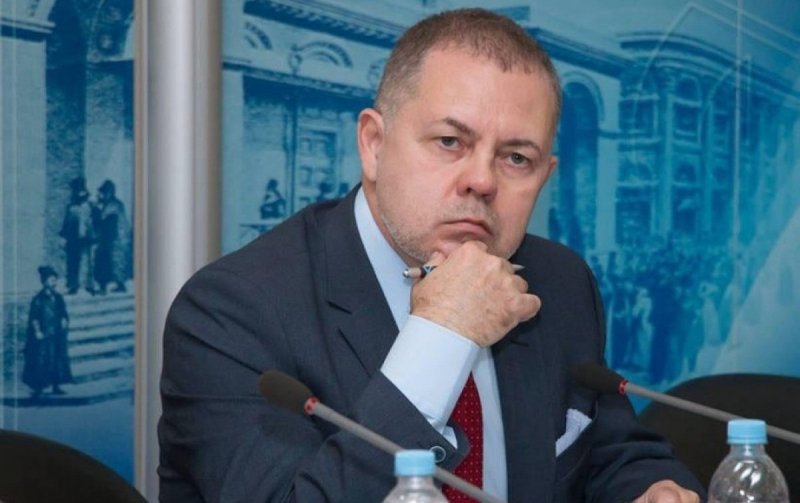
The political balance in the South Caucasus is once again entering a period of uncertainty. Russia is seeking to preserve its influence in the region while navigating increasingly complex realities: Azerbaijan has strengthened its position since the 2020 Patriotic War and has become an important player not only in the South Caucasus, but also across wider Eurasian transport and energy corridors. Armenia, meanwhile, is moving further away from Moscow’s orbit, openly discussing closer integration with the European Union and increasingly questioning its participation in Russian-led institutions.
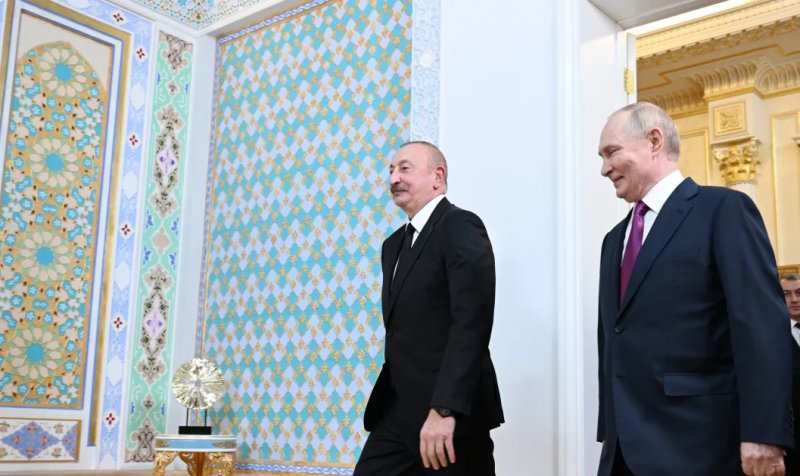
Against this backdrop, President Vladimir Putin’s recent positive remarks on relations with Azerbaijan, as well as his stated intention to meet President Ilham Aliyev, have attracted particular attention. At the same time, Moscow’s increasingly sharp rhetoric towards Yerevan has raised questions about whether Russia is reassessing its priorities in the region — and whether Armenia’s current political trajectory could lead to an irreversible break with Moscow.
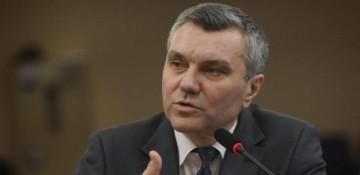
In an interview with News.Az, Russian international affairs expert Grigory Trofimchuk shared his views on Russia’s relations with Azerbaijan, the political situation in Armenia ahead of parliamentary elections, Prime Minister Nikol Pashinyan’s position, and the future of Armenia’s membership in the Eurasian Economic Union.
RECOMMENDED STORIES
- On the sidelines of SPIEF 2026, Vladimir Putin described Russian-Azerbaijani relations as “very good and kind” and announced a personal meeting with President Ilham Aliyev, highlighting energy as the key item on the agenda. At the same time, Moscow is toughening its tone towards Armenia, threatening to scale back economic integration if Yerevan moves closer to the EU. Does the current trajectory of relations with Baku indicate that Russia is strategically reorienting itself towards Azerbaijan as its key partner in the South Caucasus?
- Moscow clearly does not want, and in fact cannot afford, to fall out with Baku. This is because Azerbaijan has become an even more significant factor not only in its own region but also in terms of communications with Central Asia. This has been made possible by the victory of the Azerbaijani people in the Patriotic War, which remains, so far, the only victory of its kind in the modern history of the post-Soviet space.
At the same time, Moscow cannot, as you put it, simply reorient itself towards Azerbaijan, because such a position depends not only on its own wishes but also on the political configuration of the entire region. Fifteen or twenty years ago, the question could still be framed in those terms: Armenia or Azerbaijan? And, as we know, that is exactly how it was framed. But not anymore.
Today, it is entirely possible to lose both. So let us put it this way: Moscow would very much like to see Baku as a good, reliable and, moreover, key partner, but much now depends not only on Moscow’s wishes. Azerbaijan is spreading its wings and keeping a watchful eye on its surroundings.
 Source: AZERTAC
- How do you assess the pre-election situation in Armenia, and what are your forecasts for the results of the parliamentary vote, which will take place this Sunday?
- You probably know that I do not like numbers or polling; they are almost never present in my commentary. The pollsters give preference to Pashinyan’s party.
But the problem is not the numbers themselves. The problem is that Russia will not be able to simply get rid of Pashinyan, no matter who produces what figures. In the context of the broad-front confrontation that has now emerged, he feels like a fish in water. Moscow should never have created such comfortable conditions for him, allowing him to choose virtually any response to Russia.
In fact, for many years Pashinyan hesitated, fearing Moscow and making numerous contradictory moves and statements. But now Moscow itself has created both the ground beneath his feet and the water around him. Moreover, throughout all these years, since 2018, no new political force has emerged in Armenia that could be weighed against the rebellious spirit of Nikol Vovayevich. Who are they putting forward? Entirely discredited political figures, oligarchs, unprosecuted corrupt officials and former representatives of the Karabakh clan. There is not a single figure equal to Pashinyan in terms of character, style or political instinct.
After so many years, they could at least have created a new “man with a backpack”. Pashinyan is entirely comfortable with this situation; he is once again riding the wave of “revolution”. The pre-election debates in Armenia are a spectacle in themselves. From the outside, it feels as though the country is on edge: everyone is against everyone. Total unseriousness. And Azerbaijan is entirely satisfied with what is happening. For now, it is the only adult in this kindergarten.
- Putin suggested that Armenia hold a referendum on European integration, pointing to the incompatibility of membership in both the EAEU and the EU. Is such a referendum a genuine instrument or merely a political manoeuvre?
- To clarify, it was effectively the rest of the EAEU that proposed holding such a referendum, which suggests a common and coordinated position. At the same time, I think its participants know the history of the former Soviet space well and understand what may follow from such a stark framing of the issue. Armenia may be lost forever, though not according to the Ukrainian scenario, because by every measure it is not Ukraine, and there is no shared border with Russia.
History never repeats itself in exactly the same form, and Pashinyan is ready to offer his own model of withdrawal and European association. Let me remind you that it was this very word — association — that marked the beginning of the fatal deterioration in Russian-Ukrainian relations in 2013. I have recalled this in numerous interviews and commentaries over the years. Moscow must not go down this path again. Pashinyan can also play the referendum card in different ways; the ball is in his court.
Trying to frighten him with higher energy tariffs is the wrong approach. Unlike Ukraine, Armenia is located at the centre of a raw-materials “Eldorado”; it simply needs to be able to reach agreements with its neighbours.
We remember that in the USSR, raw materials were supplied to all fraternal republics practically free of charge. I do not want to delve into liberal fairy tales about how supposedly nothing is ever free. On that basis, demands could be made. But when the game is played according to so-called market prices, it becomes an entirely different arrangement, one that no longer allows pressure to be exerted on recipients in the same way. A dollar more, a dollar less — what difference does it really make? That is why the USSR was able to make demands.
Around 2015, at the beginning of the Eurasian Economic Union’s work, I proposed at various conferences and round tables that Eurasian goods — high-quality and relatively inexpensive — should be visible in every shop across the union, with distinctive branded price tags. Starting with bread, for example. But that never happened, and now there is neither leverage nor anyone to pressure; people simply do not see any meaningful difference.
Not to mention the way Armenia is currently helping its Russian partner circumvent sanctions — that is a separate topic altogether, including the question of which goods, Eurasian or European, are needed and by whom. The mistake made with Ukraine, to put it mildly, has come at a monstrous cost. Armenia should be handled far more carefully.
 Source: Getty Images
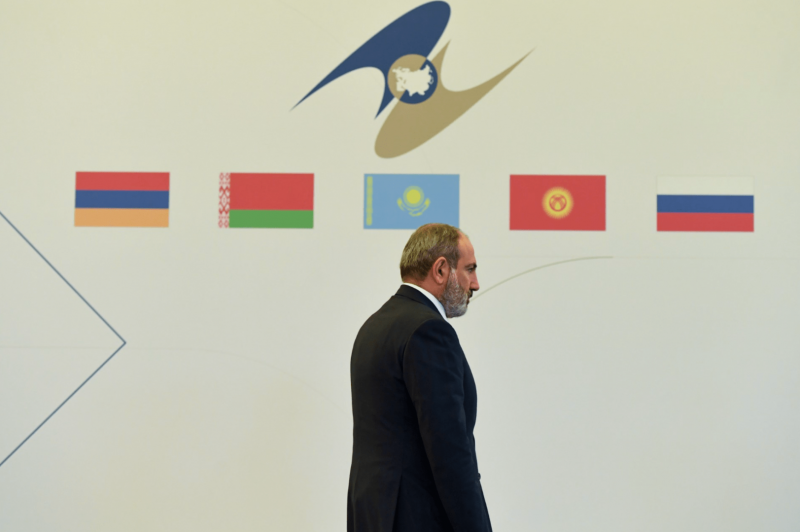
- Consideration of the issue of suspending Armenia’s membership of the EAEU has been postponed until December 2026. Is this a pause for diplomatic settlement or merely a delay of the inevitable?
- There is no need to rush events. But at the same time, the looming question cannot be avoided indefinitely. EAEU officials will drag things out, postpone, prolong and stretch the process for as long as possible. After all, such delays help maintain the appearance that everything is in order — in this case, with Armenia. But, as I have already said, Armenia can now choose both the timing and the method of its response. It knows that it is urgently needed.
And is the EAEU really the only problem? What about the CSTO? What about the Russian military base? For now, Pashinyan is holding the cards. He managed to give up Karabakh; he will give up the EAEU as well — “no big deal”, as they said in one film, “just small change”.
My warm greetings to all our officials who fail to feel the ground beneath their feet, even though it has long been burning. The problem is not Pashinyan. One will leave and another, perhaps even tougher, will come. The problem is what is happening to Russia itself.


Similar news