Upgrading China-Azerbaijan strategic partnership in the era of global changes


CGTN
Editor's note: Kang Jie is a special commentator on political issues for News.az, associate research fellow at Department for European-Central Asian Studies, CIIS. The article expresses the personal opinion of the author and may not coincide with the view of News.Az.
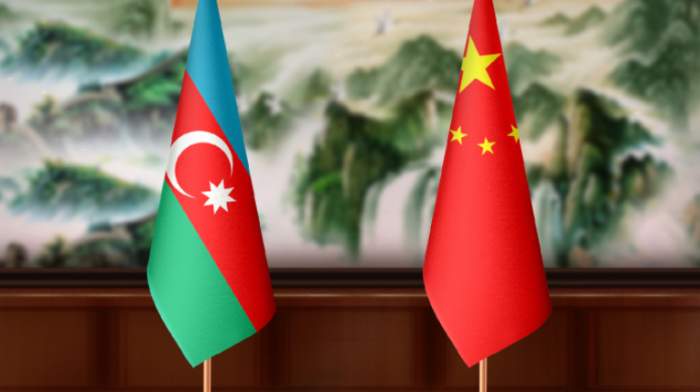
Under the joint leadership of President Xi Jinping and President Ilham Aliyev, China-Azerbaijan relations have reached unprecedented heights. The elevation of bilateral ties to a strategic partnership in July 2024 marked a significant milestone, signaling a new phase of cooperation. Amid dynamic global shifts, the partnership between China and Azerbaijan stands as a compelling example of how nations can navigate challenges and opportunities to build a robust, mutually beneficial relationship.Anchored in shared goals of economic development, technological innovation, and sustainability, this strategic partnership gains momentum through the Belt and Road Initiative (BRI) and Azerbaijan’s pivotal role as a bridge between East and West.
A new era of economic connectivity
The Trans-Caspian International Transport Corridor (TITR), also known as the Middle Corridor, has emerged as a critical trade route between China and Europe. Situated at the crossroads of Eurasia, Azerbaijan has leveraged its strategic location to become a vital transit hub within the BRI framework. This corridor provides a safe and efficient alternative for regional connectivity, particularly in light of geopolitical tensions that have disrupted global supply chains.
Both nations recognize the corridor’s potential to promote regional integration. Recent investments in the Baku-Tbilisi-Kars railway and Azerbaijan’s port modernization highlight their shared commitment. In July 2024, Presidents Xi and Aliyev reaffirmed their dedication to deepening cooperation in transport and logistics, culminating in a memorandum of understanding to align the TITR with China’s broader BRI vision.
The results are already tangible. Freight volumes through the Middle Corridor have surged, enabling Chinese goods to reach European markets more efficiently, while Azerbaijani energy and agricultural exports find new markets in China. This symbiotic relationship not only drives economic growth but also fortifies global supply chain resilience.
New frontiers in industrial cooperation
China’s unparalleled manufacturing capabilities form the backbone of global industrial stability. With over 220 of the world’s 500 major industrial products leading in output, China exemplifies innovation in transitioning toward high-end, intelligent, and green production. This transformation is driven by the “New Trio”—electric vehicles (EVs), lithium batteries, and solar photovoltaics—which redefine China’s industrial identity.
For Azerbaijan, these advancements open new horizons. Renewable energy and EV production have emerged as priority areas for collaboration. Hikmat Hajiyev, Assistant to the President of Azerbaijan, emphasized the country’s ambition to partner with China in green energy initiatives. A framework agreement with BYD, a leading Chinese new energy vehicle manufacturer, is a landmark step. BYD plans to invest $60 million in Azerbaijan, establishing a manufacturing base in the Sumgait Industrial Park to produce electric buses, light-duty trucks, municipal EVs, and passenger cars. Battery production for energy storage is slated to begin in 2028, with annual output reaching 500 units to meet domestic and export demands.
Similarly, NIO, another Chinese EV leader, has partnered with Azerbaijani firms to deliver smart EV solutions. These collaborations align with Azerbaijan’s broader "Azerbaijan 2030" strategy, aiming to achieve 30% renewable energy in electricity generation by 2030 through tax incentives and foreign investment policies.
China’s contributions to Azerbaijan’s renewable energy landscape are equally impactful. Projects like the Gobustan photovoltaic power station, built by China Dongfang Electric Corporation, will power over 100,000 households annually and reduce carbon emissions by 200,000 tons. The construction of a 100-megawatt solar plant by Universal International Holdings further underscores the synergy in clean energy development.
However, challenges remain. A comprehensive intergovernmental coordination mechanism is needed to ensure efficient policy alignment and project implementation, akin to China’s partnerships with Central Asian nations.
Transforming newly liberated territories
China’s unwavering support for Azerbaijan’s sovereignty extends to the reconstruction of the Karabakh and East Zangezur Economic Zones. These territories, liberated during and after the Second Karabakh War (2020), are undergoing transformative redevelopment aimed at achieving net-zero emissions and fostering green development. The alignment between President Aliyev’s vision for sustainable reconstruction and President Xi’s green development philosophy creates fertile ground for collaboration.
Chinese expertise in urban planning, renewable energy, and smart city development offers valuable insights. The Xiong’an New Area, a model of green urbanization in China, serves as an inspirational blueprint. Training programs and exchanges between officials could facilitate the transfer of best practices.
The agricultural potential of these territories is immense. With fertile lands and abundant water resources, the regions could benefit from China’s expertise in water-saving agriculture and land reclamation, enhancing food security while creating jobs and boosting economic growth.
Policy recommendations for deeper cooperation
To maximize the potential of the China-Azerbaijan strategic partnership, several policy initiatives should be prioritized:
1. Strengthen Leadership Engagement: High-level visits and dialogue are essential for accelerating strategic agreements and project launches.
2. Establish Policy Coordination Mechanisms: A multi-level, networked system encompassing economic, industrial, and trade policies would address bureaucratic challenges and enhance project management.
3. Enhance Cultural and Academic Exchanges: Initiatives such as joint research, student exchanges, and direct flights would deepen mutual understanding. Culinary exchanges, such as Azerbaijani restaurants in China and vice versa, could further enrich cultural ties.
4. Promote Think Tank Collaboration: Partnerships between Chinese and Azerbaijani think tanks can provide insights on regional development and shared challenges through joint publications and conferences.
(If you possess specialized knowledge and wish to contribute, please reach out to us at opinions@news.az).


Similar news