Valdis Zatlers: "The window of opportunity in Latvia-Russia relations was closed by Moscow’s decision" – VIDEO


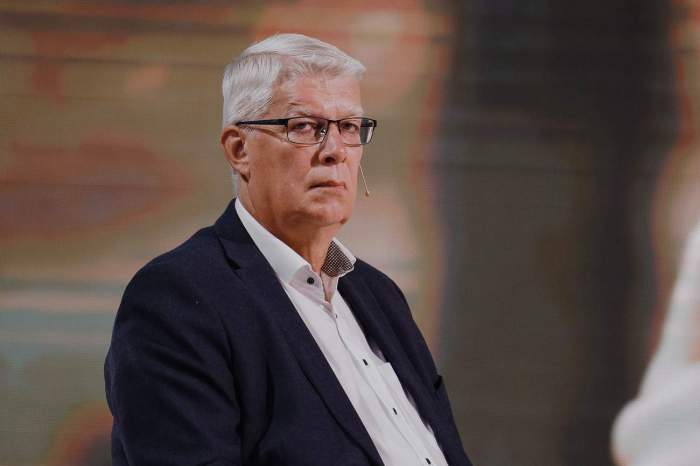

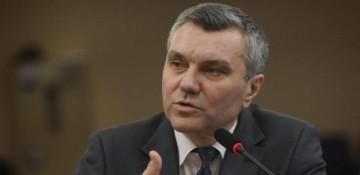
News.Az presents an exclusive interview with the former President of the Republic of Latvia, Valdis Zatlers.
- Relations between Latvia and Russia remain complex, particularly in the context of the ongoing Russia-Ukraine conflict. How do you assess the evolution of these relations from your presidency to the present day? What steps can the Baltic states take to adapt their policies to modern security challenges?
- The relationship between Latvia and Russia has always been unique, shaped by history and geography. I am the only Latvian president in the past 100 years to have made an official visit to Moscow, which itself underscores the unusual nature of our relations.

To understand the shifts, we must look back to 2010–2011, a period when Latvia-Russia relations were at their most constructive. My visit to Moscow aimed to build on this positive momentum, recognizing that it was a rare window of opportunity. However, that window closed quickly—not due to Latvia’s actions, as our foreign policy has always been stable and predictable, but as a result of a political decision by Russia.
When I asked a senior Russian diplomat why the window had closed, his response became one of my most frequently quoted remarks: "We diplomats are paid the same for opening and closing windows." This statement clearly reflected Moscow’s shift toward a more aggressive posture toward its neighbors. Unfortunately, this tendency has only escalated over the years, with no signs of improvement.
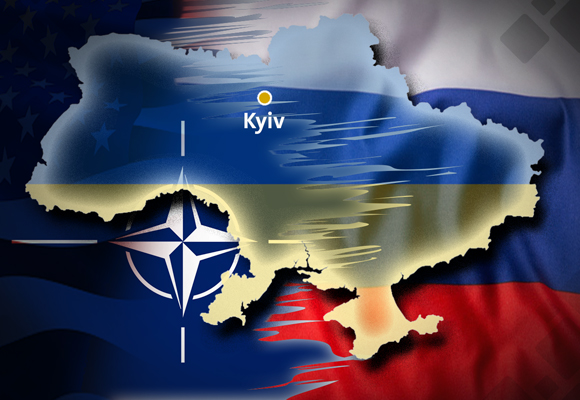
- Since Russia’s full-scale invasion of Ukraine, tensions have risen in neighboring countries. NATO is preparing for potential scenarios, and the Baltic states are considered among the potential targets of Russian aggression. How are the Baltic countries preparing for a possible war, and what is the likelihood of such a conflict?
- Looking back to 2007, when I assumed office as president, Latvia had no significant military infrastructure, nor did the other Baltic states. At the time, we did not anticipate any military threat from Russia. However, the 2008 war in Georgia changed our strategic thinking, leading us to engage in contingency planning. At first, these plans were purely theoretical. But after 2014—following the annexation of Crimea and the conflict in Donbas and Luhansk—NATO established a real presence in Latvia and the Baltic states.
Today, we do not claim that a Russian attack on the Baltic region is imminent, and we do not engage in alarmist rhetoric. However, some actors do play into Russia’s hands by escalating tensions, including through nuclear threats. While there is speculation about the potential use of tactical nuclear weapons, such an action would be strategically meaningless—offering little gain while inflicting severe long-term consequences.
I speak with confidence on this matter because I am a Chernobyl veteran. I was there in the immediate aftermath of the disaster and remained for two months. That experience taught me a great deal about nuclear energy—its uses, misuses, and the devastating consequences of nuclear contamination.

Today, NATO’s presence in the region is more crucial than ever. We have multinational forces stationed across the Baltic states: Canada leads in Latvia, the UK leads in Estonia, and Germany leads in Lithuania. Other allies, including Italy, Spain, and Sweden, also contribute to the security framework, ensuring that any aggression would trigger an immediate collective response. The principle of collective defense has never been stronger.
The war in Ukraine has revealed serious miscalculations on Russia’s part. The so-called "special military operation," initially planned to last three to five days, has turned into a multi-year conflict with minimal territorial gains. In historical terms, if we compare this to World War II, we are now in the summer of 1944—a stage where the war has lost its strategic sense but continues due to political misjudgment.

More broadly, Russia’s wartime economy presents a dilemma. It cannot sustain itself without ongoing conflict, which creates a dangerous incentive for prolonged military engagement. Additionally, the military-social contract inside Russia ensures that many people—soldiers, defense industry workers—are economically dependent on war. This is a precarious situation, as some view conflict as a source of stability rather than a crisis.
The key question now is: What happens after the war? Many Ukrainian refugees in Latvia express deep concerns about what the post-war world will look like. How will Ukraine rebuild? How will Europe adapt? What will be the geopolitical consequences? These are complex challenges that cannot be resolved overnight.
- In 2014, Latvia joined the Eurozone. How do you evaluate this step in terms of long-term economic stability? How has it influenced Latvia’s position within the EU?
- Joining the Eurozone was one of Latvia’s smartest decisions. As a small economy, we cannot afford isolationism or protectionism. Integration into a larger economic bloc was essential for long-term stability.
This move proved particularly beneficial during the 2009 financial crisis, when Latvia faced severe economic turbulence. Being part of the Eurozone ensured greater financial stability, as we received strong backing from the entire monetary union.
I firmly believe that the next step for the European Union should be to expand the Eurozone to include all member states. Stronger integration would reinforce economic resilience across Europe. While countries like Sweden, Poland, and Denmark feel confident in their independent financial systems, for smaller nations like Latvia, Eurozone membership was not just an option—it was a necessity.
- My final question concerns Latvia-Azerbaijan relations, which played an important role during your presidency. What key projects and initiatives do you consider the most successful? How do you see the future of bilateral ties, especially given the changing political landscape?
- As a small country, Latvia understands the importance of friendship and cooperation. We cannot afford unnecessary conflicts, as they threaten our very existence. Therefore, fostering strong relations with Azerbaijan was a key priority during my presidency.
One of my main goals was to demonstrate the value of high-level diplomatic engagement—ensuring that Latvian and Azerbaijani leaders met regularly, engaged in dialogue, and maintained a spirit of mutual respect. This set a positive tone for broader bilateral relations, encouraging people-to-people connections and economic partnerships.

While geography often shapes trade and economic relations, Azerbaijan is unique as an oil and gas powerhouse. Its energy resources are part of a global business network, transcending regional trade dynamics. However, our cooperation has been successful in other areas, including political and cultural exchanges.
From a geopolitical perspective, small and medium-sized nations have a role to play in global stability. Some argue that only major powers shape international affairs, but this is not entirely true. When smaller nations coordinate and cooperate, they can amplify their influence. Both Latvia and Azerbaijan share a common interest in regional stability—whether in the Baltic or the South Caucasus. Learning from each other’s experiences is invaluable.
Looking ahead, I am optimistic about Latvia-Azerbaijan relations. Regardless of future political changes, the friendship between our nations will remain strong, and it is our duty to preserve and build upon this foundation.`


Similar news