War will continue until Ukraine accepts Russia’s conditions – INTERVIEW


By Maria Zhigadlo
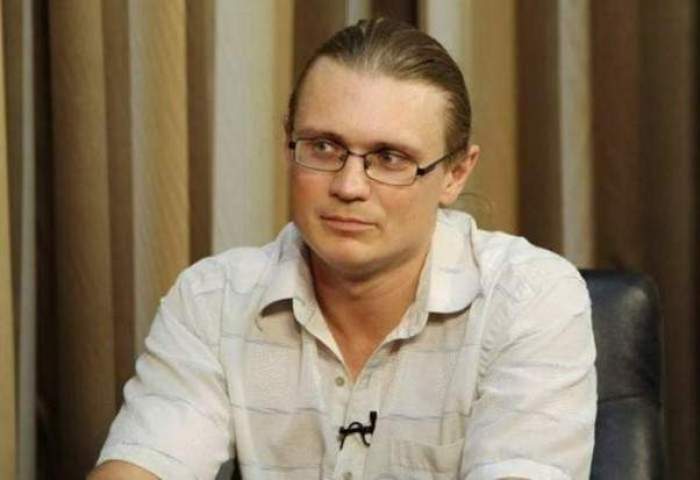
As the conflict in Ukraine continues, discussions around military aid, negotiations, and the broader geopolitical landscape remain at the forefront of international discourse. Amid ongoing debates about U.S. support for Ukraine and the possibility of future peace talks, questions arise about the prospects for ending the war and the shifting dynamics of global power. News.Az spoke with Dmitry Rodionov, a prominent Russian political analyst, to gain insight into Russia’s perspective on the current situation. In this interview, Rodionov discusses the implications of delayed Western military aid, the role of negotiations, and the potential outcomes of the ongoing conflict.
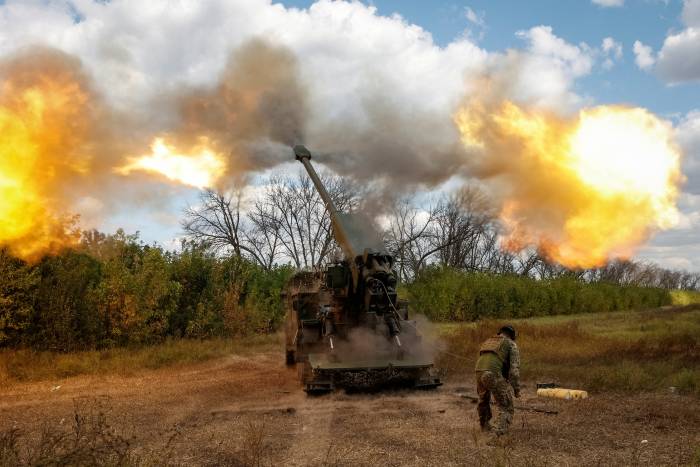
- According to Reuters, the transfer of American weapons to Ukraine has slowed down in the last year of Joe Biden’s presidency not only due to congressional inaction but also because of internal debates about the risks of escalating the conflict with Russia and concerns over the sufficiency of U.S. arms stockpiles. In your opinion, how will this slowdown in arms supplies affect the course of hostilities and Kyiv’s strategy amid the ongoing conflict?
- Let’s start with the fact that the slowdown in U.S. arms deliveries happens regularly. There are frictions in Congress, a lack of funds, and even shortages of weapons themselves. Furthermore, if we talk specifically about long-range missiles like ATACMS, they are simply, bluntly, and physically in short supply. Many types of weapons need to be reproduced anew because the American industry cannot replenish stocks quickly enough—stocks that have already been depleted due to supplies to Ukraine. So, these delays happen regularly; there is nothing new here.
I also want to emphasize that I do not support the viewpoint that if Trump comes to power, aid to Ukraine will be cut off. No one will stop it because the Ukrainian conflict is an issue of significant importance to the United States. Under no president will the U.S. abandon Ukraine or hand it over to Russia. The supply of weapons will continue.
Just now, I’m reading reports from our Telegram channels stating that there is unprecedented activity in transferring American weapons to Rzeszów, Poland, from stockpiles in South Carolina, Delaware, and Alaska, as well as via Canadian Air Force aircraft. The Swedish Air Force is also getting involved in the logistics for Ukraine with its transport planes. I don’t know how accurate this information is, but I am inclined to believe it.
So, once again, I stress: I absolutely do not believe that arms supplies to Ukraine will stop. Even if there are some delays—and as I mentioned, they occur periodically—how will it affect the situation? Of course, Ukraine will have fewer resources to resist, and Russian forces will be able to advance faster. But this will only impact the intensity of the fighting and the speed of the Russian army’s progress. It will not, in any way, affect the overall outcome of the conflict.
As an example, I can recall the Korean War: combat operations continued for about two years after negotiations had begun. So, a similar scenario here is quite possible—if not even longer.
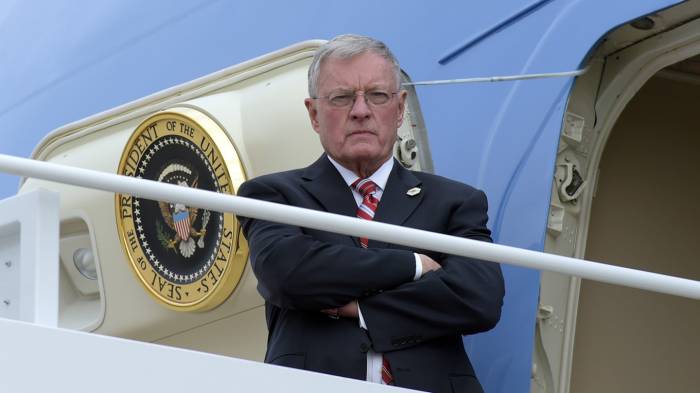 Photo: Keith Kellogg Photo: JKTKMM
- The Wall Street Journal reports that U.S. President Donald Trump has tasked his special representative for Ukraine and Russia, retired General Keith Kellogg, with achieving an end to Russia’s war against Ukraine within 100 days. Do you believe it is possible to conclude the war in such a short time frame? What factors could either facilitate or hinder the achievement of this goal?
- If you remember, Trump initially promised to end the war on his very first day in office. Then, at the end of last year, he mentioned a six-month timeline. Now, it’s 100 days. I don’t think this is realistic. It just seems like a game of throwing out numbers, which, frankly, appear to be plucked from thin air.
Obviously, Trump will no longer repeat the utterly ridiculous claim that he can end the war in a single day. That may have worked during the election campaign, but it doesn’t hold up now. And at this stage, he may actually be held accountable for his promises: "You said it—now deliver."
So, we will continue to hear numbers—100 days, six months, a year, and so on. But I see absolutely no preconditions for the war to end within such a timeframe. In fact, I see no preconditions for negotiations at all right now. And even if negotiations were to begin, they could drag on indefinitely. Again, I will refer to the Korean War, where combat continued for two years after negotiations started. So, it’s entirely possible that the same thing—or something even longer—will happen here.
- In an interview with the TV channel "Russia 1" (VGTRK), President Vladimir Putin stated that although Moscow considers Volodymyr Zelensky an illegitimate leader, Russia is ready to negotiate "with anyone" if Ukraine expresses such a desire. How do you assess the likelihood of negotiations between the parties within a year, and what conditions could facilitate this process?
- Regarding Zelensky, Putin said that Russia is ready to negotiate with anyone if Ukraine is willing to do so. But I would add: only if there is clarity on what the negotiations would actually be about. Because if, for instance, the discussion is about an immediate capitulation, then yes, we are truly ready to negotiate with anyone. Even if Zelensky were to meet the same fate as Hitler and a successor took over, it wouldn’t matter. The key issue is not who participates in the negotiations, but rather what they are about.
What we currently see from the Kyiv regime, led by Zelensky—whether he is legitimate or not is irrelevant, as he effectively holds power—is that he often talks about negotiations on territorial exchanges. The idea that "we will return Crimea, and you will give us back some of Russia’s new territories" is a non-starter. No one will negotiate on such terms—not with Zelensky, not with Trump, not with anyone else.
So, whether negotiations will take place or not is not the main question. Once again, it’s not about who is at the table but rather what is being discussed. If the conditions for negotiations include, first, the recognition of territorial realities, and second, denazification and demilitarization—meaning a final resolution of the issue of Ukraine as an anti-Russian state—then discussions could take place. For example, will all of Ukraine become part of Russia, or will a buffer state be established? If it’s the latter, who will guarantee its neutrality? How will that neutrality be maintained? There is substantial room for negotiations in this regard.
But the key issue right now is the recognition of territorial realities. The Ukrainian Armed Forces must withdraw from Zaporizhzhia and Kherson regions, and they must also leave Luhansk and Donetsk People's Republics. Until the opposing side agrees to these basic conditions, there should be no negotiations—neither with Zelensky nor anyone else.
How do I assess the chances of negotiations starting in the coming years? Honestly, I am quite skeptical. As of now, I see no indications that the Ukrainian regime or its backers in the United States are willing to accept even this minimum set of conditions, without which Russia will not enter into talks.
The course of negotiations will depend on the situation on the ground, meaning the progress of military operations. And at the moment, the fighting is developing in favor of the Russian army. I see no preconditions for this trend to change in any way.


Similar news