West prepares to drain 1.5 trillion rubles from Russia


By Tural Heybatov
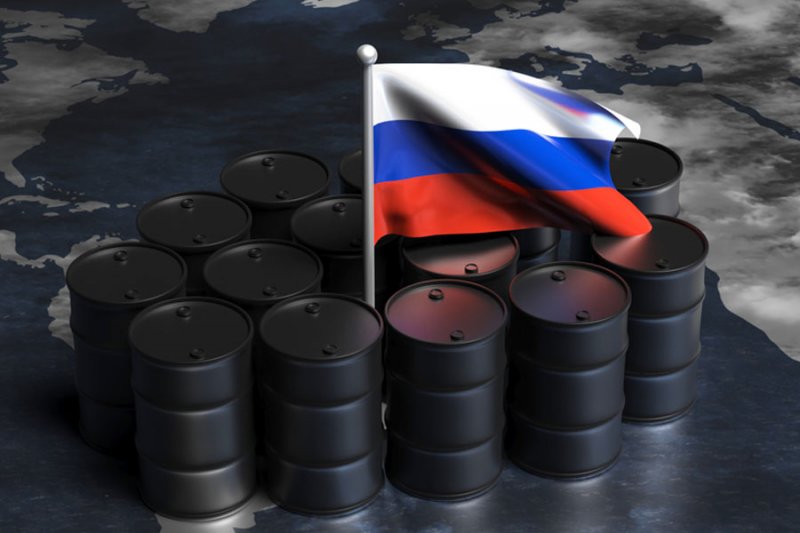
At last week’s G7 finance ministers’ meeting, Canada proposed lowering the price cap on Russian oil. The initiative was supported by EU countries and other G7 members, but U.S. Treasury Secretary Scott Bessent opposed the idea, Financial Times reports. Following his rejection, the issue was referred for further evaluation. Nonetheless, the participating countries agreed in a joint communiqué to continue developing measures aimed at tightening restrictions on Russia. These measures are expected to be introduced if no ceasefire is reached in Ukraine.
The Financial Times notes that the proposal was also backed by Hungary and Greece—two countries that had previously opposed similar sanctions.
Back in mid-January 2025, Reuters reported that six EU nations—Sweden, Denmark, Finland, Latvia, Lithuania, and Estonia—had urged the G7 to lower the price ceiling on Russian oil. At the time, they did not specify a target price. That has since changed: the European Commission and several leading EU countries are now calling for a reduction in the cap from $60 to $45 per barrel. These figures were confirmed to journalists by sources familiar with preparations for the 18th sanctions package against Russia.
According to RBC, the EU has yet to reach a unanimous decision on the matter. The EU and Australia first imposed a price cap on Russian oil in December 2022. It was later extended to petroleum products, with a ceiling of $100 per barrel for diesel and $45 for discounted fuel oil. In response, Moscow banned exports of oil and petroleum products under contracts that comply with the Western-imposed price cap. The relevant presidential decree has been repeatedly extended, most recently through June 30, 2025.
A consensus on lowering the cap will likely be reached. But the bigger question is whether it can be enforced. In 2023, following the previous year’s price drop, Russian oil began to rise again and by mid-year had surpassed the $60 per barrel threshold.
While Moscow attempts to downplay the West’s latest initiative, a reduction in the price cap would likely have serious consequences for Russia.
According to Russian business outlet Finam, the proposed measures could lead to a decline in the Russian stock market due to falling share prices of oil companies and growing geopolitical pressure on the broader economy. Shares of transportation and logistics companies could also suffer amid possible supply disruptions and reduced cargo volumes. Oil exporters such as Lukoil, Tatneft, and Surgutneftegaz would be among the hardest hit.
Finam emphasizes that Russia’s federal budget is heavily dependent on oil and gas revenues, especially during periods of increased spending. A drop in export prices would reduce revenues and widen the fiscal deficit.
Experts say it’s too early to quantify the total losses. That will only become clear once the West finalizes its decision. However, according to federal budget calculations, every $1 decrease in the export price of oil reduces annual oil and gas revenues by roughly 100 billion rubles. This means that lowering the cap from $60 to $45 per barrel could cost the Russian budget up to 1.5 trillion rubles per year.
Speaking at the Caucasus Investment Forum, Russian Deputy Prime Minister Alexander Novak said Russia rejects any discussion of price caps on its oil, according to KP.ru. “We’ve always opposed these non-market mechanisms—setting price ceilings, bans, deciding where you can export and where you can’t. It’s all anti-market and distorts the system,” Novak told reporters. He added that, in any case, such decisions would not impact Russia’s oil exports.
The devaluation of Russian oil will undoubtedly hurt Russia. But it may also backfire on the initiators of the measure. Not necessarily as a direct consequence, but because previous sanctions against Moscow have already harmed the interests of several European countries. Russia is preparing for such scenarios in advance: the oil price used for budget planning has already been revised downward.


Similar news