Baku and Kyiv deepen partnership amid shifting geopolitics - EXPERT OPINIONS


.png)
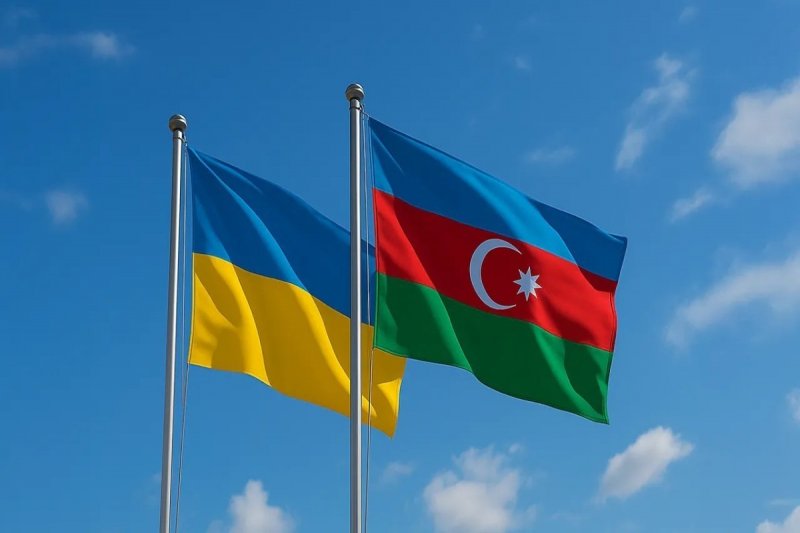
Azerbaijan–Ukraine relations continue to deepen as both countries expand cooperation across the energy, transport, and security sectors. Officials in both Azerbaijan and Ukraine highlight growing strategic alignment driven by shifting regional dynamics and shared interests in sovereignty and economic resilience.
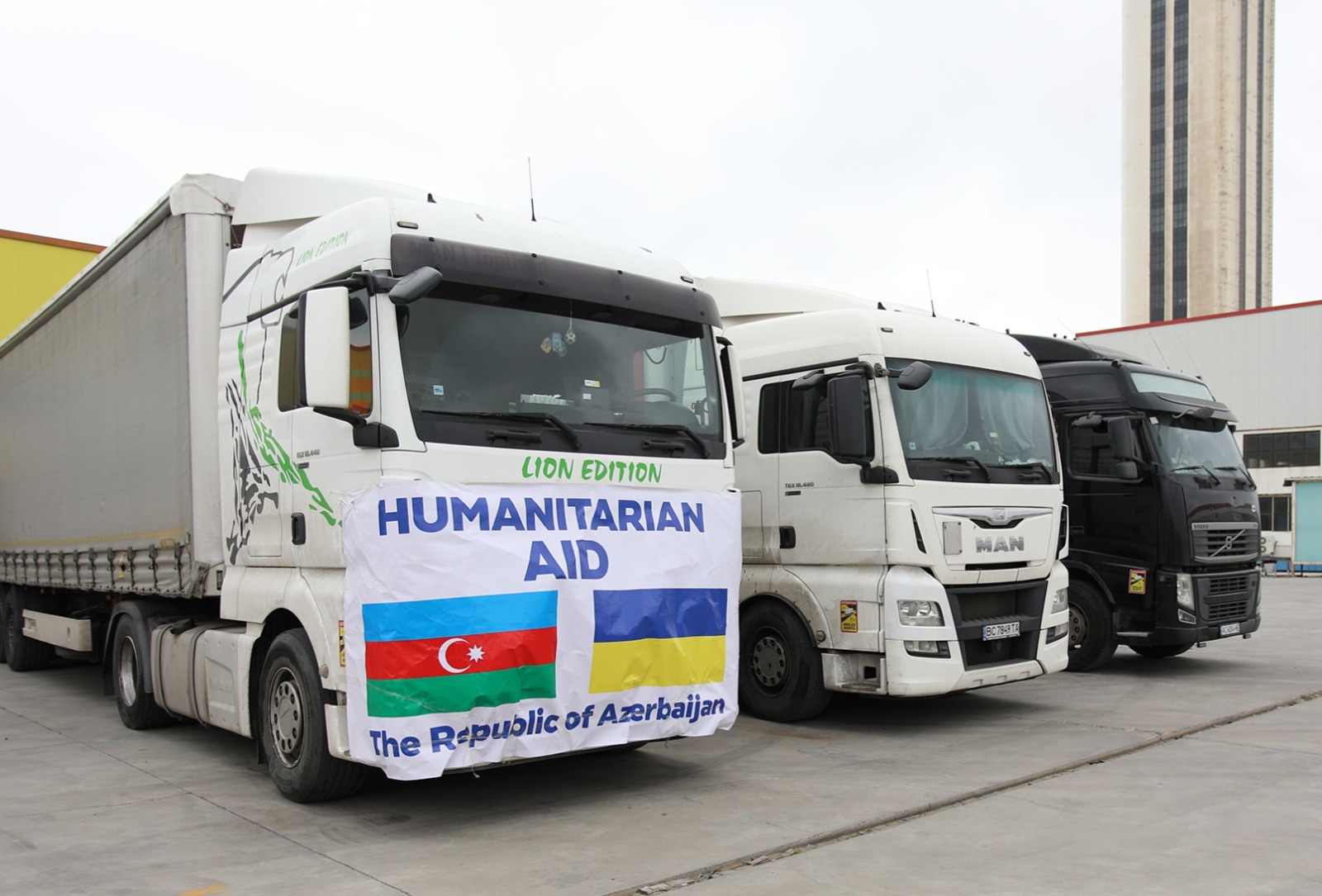
Azerbaijan has supported Ukraine with humanitarian aid and energy assistance, while Kyiv offers expertise in defence technologies, including drones and air defence systems. High-level political dialogue, including contacts involving President Volodymyr Zelensky, signals an intention to further broaden ties.
Bilateral relations between Azerbaijan and Ukraine have historically remained strong, evolving steadily over decades and adapting to both regional and global political trends, Ukrainian political scientist Alexander Kovalenko told News.Az.

Photo: Ukrainian political scientist Alexander Kovalenko
According to Kovalenko, current developments in global politics are significantly influencing the trajectory of bilateral relations. He noted that rapidly unfolding international events, including the ongoing conflict in the Middle East, are reshaping not only regional dynamics but also global political alignments.
The expert emphasised that Azerbaijan has long outgrown its role as a purely regional actor in the South Caucasus and is increasingly positioning itself as a stable player on the global stage.
“In this context, recent high-level engagements between the leaders of Azerbaijan and Ukraine reflect the growing international relevance of both countries,” he said.
Kovalenko highlighted that cooperation between the two nations extends beyond economic ties to include cultural and humanitarian dimensions. He recalled that in 2022, following the start of the full-scale invasion of Ukraine, Azerbaijan provided substantial humanitarian assistance, hosted Ukrainian refugees, and supported rehabilitation efforts for children from affected regions.
“These actions significantly strengthened bilateral contacts not only in economic and diplomatic terms but also at the cultural level,” he said.
The political scientist described the current phase of relations as a new stage shaped by changing geopolitical realities. He pointed to Volodymyr Zelensky’s recent diplomatic outreach to the Middle East and improved engagement with Gulf countries as factors that made a visit to Azerbaijan both logical and predictable.
Kovalenko noted that defence cooperation remains a key pillar of the partnership.
“Collaboration in the military-industrial sector existed even before the full-scale invasion and continues to expand, with Ukraine now capable of offering innovative technologies, including solutions relevant to security in the Caspian Sea,” he stressed.
“Energy cooperation also featured prominently in discussions, particularly in light of ongoing attacks on Ukraine’s energy infrastructure,” Kovalenko said, adding that Azerbaijan has supported Ukraine by supplying equipment, generators, and other humanitarian aid aimed at restoring the country’s energy system.
Source: minenergy.gov.az
The expert further underscored the importance of diversifying energy supplies, an issue that had been under consideration even before 2022.
“Cooperation in this area remains crucial for enhancing resilience against external pressures,” he noted.
“Recent global developments, including the war in Ukraine and tensions involving Russia, have also influenced bilateral dynamics,” he said, referring to incidents affecting Azerbaijan, including the downing of an AZAL aircraft, as contributing factors to the broader geopolitical environment.
In terms of future cooperation, the political scientist identified several stable areas, including energy, defence, and joint investment projects.
“Both Baku and Kyiv are interested in expanding collaboration, particularly in the development of their military-industrial complexes,” he emphasised.
Kovalenko also pointed to potential cooperation in advanced defence technologies, suggesting that Azerbaijan could benefit from Ukraine’s experience in developing maritime drones and unmanned surface vessels, which could be particularly relevant for a Caspian littoral state.
Additionally, he highlighted Ukraine’s advancements in short-range air defence systems, including interceptor drones capable of countering threats such as Shahed-136 drones and reconnaissance UAVs.
“Localisation and further development of these technologies within Azerbaijan’s defence industry could become a promising direction,” Kovalenko said.
He concluded that strengthening cooperation in the transport, energy, and security sectors will remain essential, especially as Ukraine continues to seek reliable access to Azerbaijani energy resources.
The expert described the recent high-level dialogue between the two countries as a potential starting point for new joint initiatives, emphasising that such engagement is crucial for maintaining regional stability amid an increasingly tense global environment.
In turn, Ukrainian political scientist Valeriy Dimov told News.Az that Ukraine–Azerbaijan relations have entered a new phase marked by deeper strategic alignment and expanding cooperation.

Photo: Ukrainian political scientist Valeriy Dimov
According to Dimov, ties between the two countries have historically been stable and mutually beneficial, grounded in respect for sovereignty, territorial integrity, and pragmatic partnership.
“Over the years, cooperation has developed across key sectors, including energy, transport, trade, and humanitarian assistance, with the foundation laid by agreements signed in 2008 and 2011,” he said.
The expert noted that in recent years, however, the partnership has gained renewed momentum amid shifting geopolitical realities.
“Russia’s war against Ukraine and the gradual decline of Moscow’s influence in the South Caucasus have accelerated this process,” he said, adding that Azerbaijan is increasingly emerging as a strategic transit hub within trans-Caspian corridors connecting Europe, Central Asia, and the Middle East, while Ukraine continues to play a critical role in European security and logistics despite ongoing hostilities.
“Bilateral trade, currently estimated at around $500 million, is seen as having significant growth potential,” he said.
Dimov noted that cooperation is intensifying in areas such as energy security, transport connectivity, and defence technologies.
“Ukraine’s battlefield experience, particularly in drone warfare and modern military systems, opens prospects for joint production and security collaboration. At the same time, Azerbaijan’s growing role in energy supply and transit infrastructure reinforces the economic dimension of bilateral ties,” he said.
“Against this backdrop, Ukrainian President Volodymyr Zelensky's visit to Azerbaijan is viewed as a key political and geopolitical milestone,” the expert said, adding that the visit, held in a complex international environment, underscored the strengthening strategic partnership between the two countries.
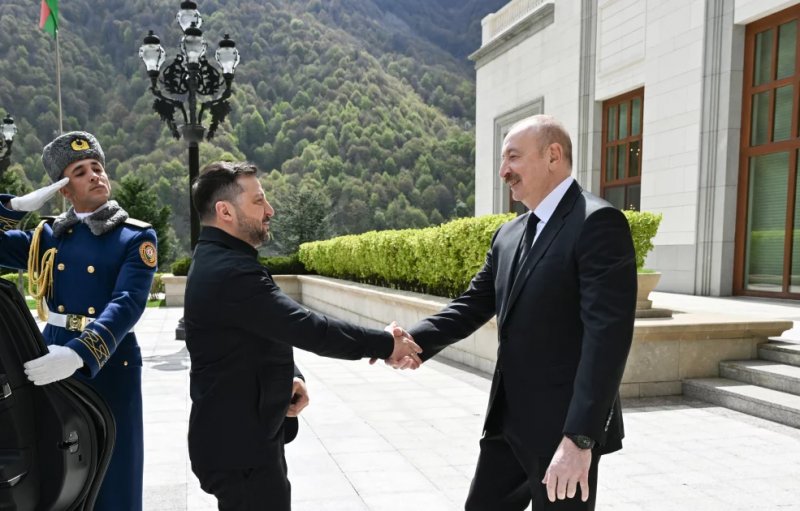
Source: AzerTAG
“Despite reported opposition from Russia and attempts to disrupt Zelenskyy’s regional tour, the meeting in Azerbaijan took place as planned, highlighting Baku’s independent foreign policy,” Dimov said.
He added that shortly before the visit, Russia agreed to compensate the victims of the downing of an Azerbaijani passenger aircraft — an indirect acknowledgement of responsibility that some analysts believe was aimed at influencing the diplomatic backdrop. However, he said, this move did not affect the course of events.
He stressed that during the visit, Zelensky also signalled readiness for broader diplomatic engagement, including the possibility of a trilateral meeting with representatives of Russia and the United States in Baku.
“The statement was seen as symbolic and indicative of Azerbaijan’s growing role as a platform for international dialogue,” the expert added.
Dimov emphasised that practical cooperation remains a central pillar of the relationship. He added that Ukraine has expressed gratitude for Azerbaijan’s humanitarian support, including assistance to children from war-affected regions and the supply of critical energy infrastructure during Russian attacks.
“These efforts have strengthened trust and demonstrated tangible solidarity between the two nations,” he noted.
“Overall, the evolving partnership reflects a transition to a new stage in Ukraine–Azerbaijan relations, shaped by shared strategic interests, changing regional dynamics, and a common focus on sovereignty and resilience,” he said, adding that both countries are increasingly positioning themselves as active contributors to a new regional security and economic architecture in a rapidly transforming global environment.


Similar news