Why Azerbaijan is expanding military cooperation with Czechia


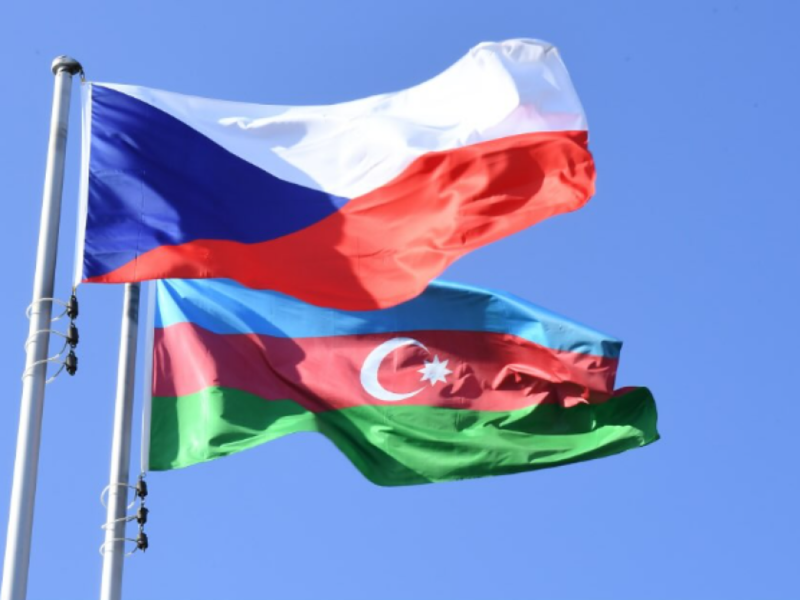
Azerbaijan purchases a significant volume of military equipment from Czechia, and negotiations are currently underway on specific joint production projects, Azerbaijani President Ilham Aliyev said during a press briefing with Czech Prime Minister Andrej Babiš on Monday. According to the president, future cooperation with countries such as Czechia, which possess extensive expertise in this field, is particularly important.
Military-technical cooperation between the two countries dates back to the years of the Karabakh conflict.
In 2017, media reports indicated that Azerbaijan had acquired new Czech-made self-propelled artillery systems. These systems were immediately deployed in large-scale military exercises held in September of that year, involving various branches of the armed forces.
At the time, the appearance of Czech howitzers in Azerbaijan attracted considerable attention. Azerbaijan did not conceal these acquisitions. After reviewing promotional footage of the exercises, the Armenian side requested clarification from Czechia regarding how RM-70 multiple launch rocket systems and Dana-M1 self-propelled artillery units, produced by Czechoslovak Group, had reached Azerbaijan. No clear explanation was provided, but reports suggested that deliveries of Czech military equipment to Azerbaijan continued. One account indicated that older howitzers were transported from Czechia to a facility in Trenčín, Slovakia, where they were refurbished and then sent to Israel for the installation of communication and navigation systems. After modernization, the systems were reportedly delivered to Azerbaijan.
Despite the controversy, cooperation between Baku and Prague continued. Azerbaijan’s interest in the Czech defense sector began as early as 2011, when a delegation from the Ministry of Defense Industry visited Czechia to explore the capabilities of its companies.
On April 24, 2026, negotiations on bilateral military cooperation took place in Baku, involving representatives from the defense ministries of Azerbaijan and Czechia. Following these discussions, the two sides signed a bilateral military cooperation plan for 2026.
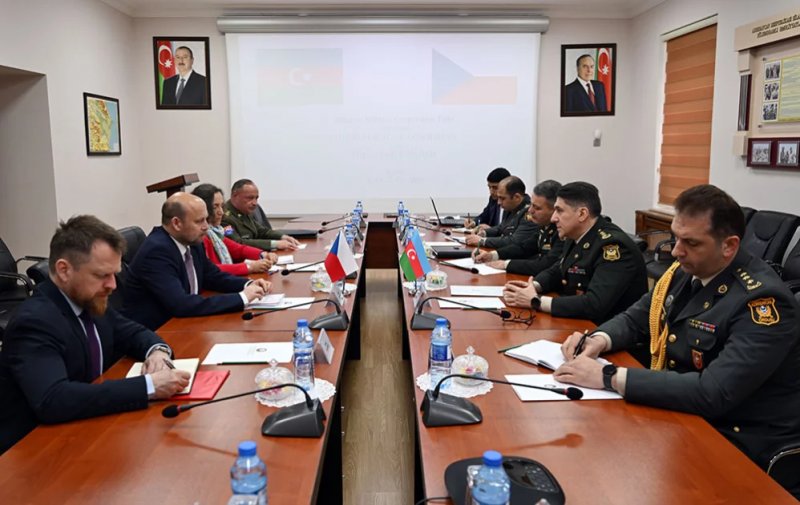
Source: AzerTAG
The Czech defense industry offers a wide range of capabilities relevant to Azerbaijan. It is a rapidly developing sector specializing in the production of small arms, ammunition, armored vehicles, and aircraft. Leading companies supply NATO partners and export their products globally. The sector is currently expanding, with investments aimed at increasing production capacity, including for combat vehicles and radar systems.
Experts suggest that defense manufacturing is becoming a major driver of the Czech economy and may eventually rival the country’s automotive sector. While the recent growth of the Czech defense industry is partly linked to the war in Ukraine, it also reflects long-term global trends, particularly rising demand for military equipment.
Over the past three decades, as noted by Deutsche Welle, Czechia became the global leader in car production per capita. However, as automotive output declines, the country is experiencing significant growth in its defense industry. In the last three years, Czech arms manufacturers have expanded production and increased profits substantially.
There is a growing view in Czechia that the defense sector could become a new engine of both national and European economic growth. It has the potential to utilize available industrial capacity and workforce resources from the automotive sector, stimulate economic development, and strengthen national security. Czech arms manufacturers are currently experiencing a period of strong growth.
Historically, the region has long been associated with arms production. The territory of the present-day Czech Republic was one of Europe’s major arms manufacturing centers even before World War I. During the interwar period and afterward, Czechoslovakia was among the world’s leading producers and exporters of weapons.
Between 1958 and 1989, Czechoslovakia produced approximately 10,000 fighter and training aircraft. Experts consider Czechoslovak weaponry to have been among the most advanced within the socialist bloc, with exports reaching dozens of countries. Following the dissolution of Czechoslovakia in 1993, the defense industry was divided: tank and heavy equipment production remained largely in Slovakia, while aviation, ammunition, radar systems, and especially small arms production stayed in the Czech Republic.
By 2025, Czechia had become a global leader in ammunition production. According to Czech media, the war in Ukraine has contributed to a significant increase in demand, particularly for ammunition. Czech manufacturers have secured strong positions in this market, in some cases controlling up to one-third of global supply in certain calibers.
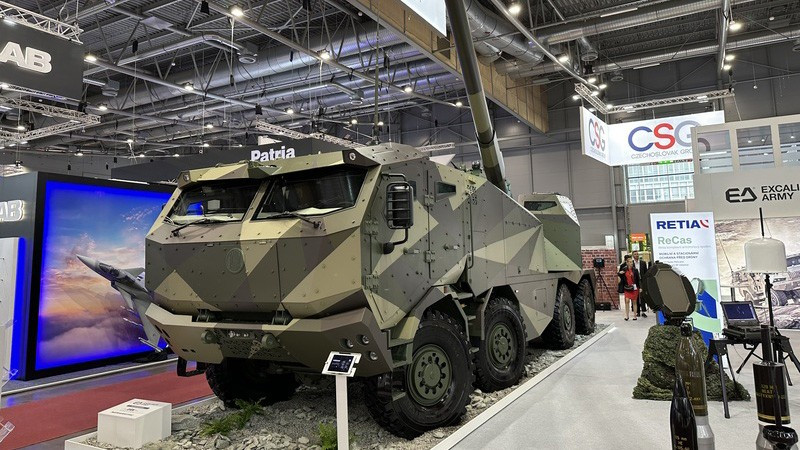
Source: Czechoslovak Group
Three major companies dominate this sector: STV Group, Colt CZ Group, and Czechoslovak Group. These firms are among the world’s leading producers of both small-caliber ammunition and large-caliber artillery shells.
Czech companies are also expanding internationally. Czechoslovak Group has acquired manufacturers such as Fiocchi Munizioni and Lyalvale Express, as well as the US-based Kinetic Group, which owns well-known brands including Remington, Federal, and CCI Ammunition. Following these acquisitions, Czechoslovak Group entered the top tier of global small-caliber ammunition producers.
The company’s portfolio is highly diversified, covering a wide range of military products, including infantry fighting vehicles, self-propelled artillery systems, tanks, rocket launchers, military chassis, and large-caliber ammunition.
STV Group is a leading producer of large-caliber shells in Czechia and aims to increase annual output to 500,000 artillery rounds. This is a significant target, given that the United States produces approximately 1.2 million such rounds annually.
According to Radio Prague International, in the first year of Russia’s war against Ukraine alone, the explosives manufacturer Explosia recorded a turnover of 1.5 billion Czech koruna, equivalent to about 61 million euros.
At the same time, the Czech aerospace company Aero Vodochody has secured orders extending several years into the future.


Similar news