Ukraine and Azerbaijan: strategic partnership enters a broader geopolitical phase


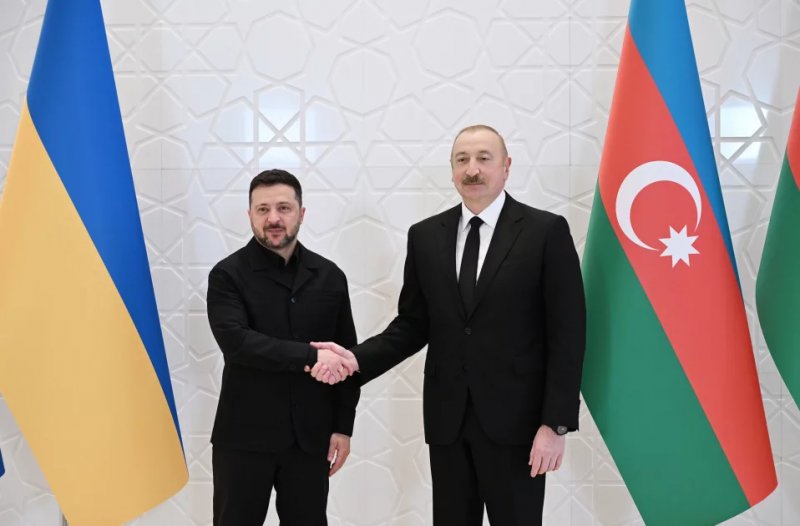
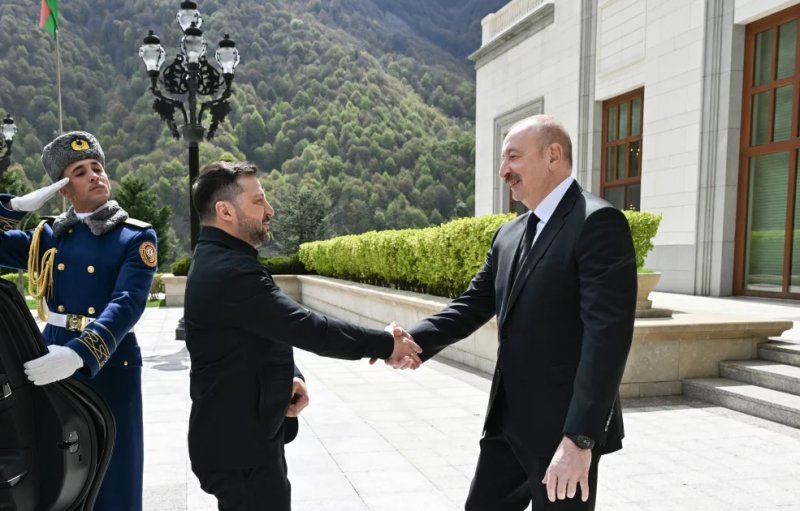
Ukrainian President Volodymyr Zelensky’s working visit to Azerbaijan, which took place not in the capital Baku but in Gabala, carries a symbolism that goes far beyond a formal diplomatic event.
The choice of location is not accidental. Gabala is more than a tourist destination. In the relatively recent past, a Russian radar station was located there, and its removal marked a significant diplomatic success for Azerbaijan. That step underscored Baku’s ability to pursue an independent and sovereign foreign policy even within a complex geopolitical balance.
Today, Gabala has evolved into a venue for high-level meetings, a space where sensitive issues can be discussed in a more private and discreet atmosphere. It is precisely this kind of setting that appears to have been required for the current negotiations.
Interestingly, Zelensky himself visited Gabala long before becoming president, at a time when he held an entirely different role. This detail further reinforces the symbolism of the visit: a return to a familiar place, but now as the head of a state engaged in one of the most complex wars of modern times.
RECOMMENDED STORIES
Looking back, Zelensky’s first official visit to Azerbaijan in December 2019 laid the foundation for a strategic partnership between Kyiv and Baku. At that time, the focus was on energy, transport, and diversification. Ukraine aimed to reduce its dependence on Russian energy resources, while Azerbaijan strengthened its position as a key energy and logistics hub connecting East and West. A range of agreements were signed covering energy, transit, agriculture, digitalization, and humanitarian cooperation.
Since then, both regional and global realities have changed dramatically. The Russia-Ukraine war has become a defining factor in the security architecture of Eurasia. Against this backdrop, Azerbaijan’s position has remained consistent: support for Ukraine’s sovereignty and territorial integrity, combined with a pragmatic foreign policy and the maintenance of communication channels with various centers of power.
Following his meeting with his Ukrainian counterpart, President Ilham Aliyev noted in a press statement that seven meetings between the presidents of Azerbaijan and Ukraine over the past four years, including the most recent in Munich in February, demonstrate the dynamic nature of bilateral relations. Baku has consistently supported Ukraine’s territorial integrity, regardless of challenges that may arise in its relations with Russia.
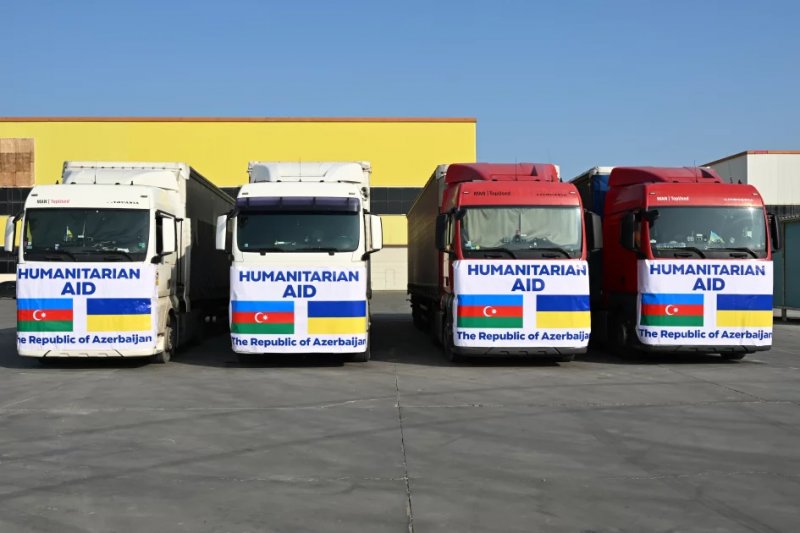
Moreover, Azerbaijan’s support is not limited to political statements. Humanitarian assistance, including aid to Ukraine’s energy infrastructure and rehabilitation programs for Ukrainian children, has become an important and tangible component of this support. These efforts have been publicly acknowledged by the Ukrainian side.
However, the current visit goes beyond humanitarian and traditional economic issues.
Security and military-industrial cooperation became a central focus of the talks. Zelensky explicitly expressed Ukraine’s readiness to share the practical experience accumulated over four years of war. This experience primarily relates to air defense systems, electronic warfare, and countering unmanned aerial systems.
Here, a notable synergy emerges. Ukraine today functions as a real-time laboratory of modern warfare, where new tactics and technologies are tested daily under combat conditions. Azerbaijan, in turn, is among the countries that have already demonstrated how 21st-century warfare is shaped, particularly through the decisive role of drones.
During the Second Karabakh War, the extensive use of UAVs, including the widely known Bayraktar TB2, marked a turning point and significantly reshaped modern military thinking.
Today, Kyiv offers not only technologies but also a broader concept of integrated defense — combining air defense, electronic warfare, and drone systems into a unified operational framework. Azerbaijan, for its part, already possesses a diversified weapons system and practical experience in integrating such systems.
This creates a clear rationale for cooperation, including joint production, technology exchange, and the implementation of large-scale defense solutions. President Aliyev also confirmed this direction, noting broad opportunities for joint projects in the military-industrial sector and industry more generally. In this context, Azerbaijan is not merely a recipient of technology but a full-fledged partner with an established defense industry and export potential.
While defense and security cooperation attracted significant media attention, the economic dimension of the visit and broader bilateral relations should not be overlooked. In 2025, trade turnover between the two countries exceeded $510 million, reflecting growth of more than 11 percent. Ukraine remains an important non-oil export market for Azerbaijan and a potential platform for participation in post-war reconstruction, particularly with the involvement of European funding. Azerbaijan has already accumulated considerable experience in post-conflict reconstruction, which may prove relevant for Ukraine.
The presence of Azerbaijani businesses in Ukraine is also notable. NEQSOL Holding controls one of the country’s largest mobile operators, Vodafone Ukraine. The company has also entered the strategically important titanium sector through the acquisition of a major raw material producer. Although oil supplies were halted after 2020, the energy sector still retains limited potential, with discussions ongoing about possible gas supply routes via Europe, albeit with uncertain prospects.
The geopolitical context of the visit adds further significance. Zelensky’s trip to Azerbaijan is a rare occurrence for the post-Soviet space after 2022, as such visits have been exceptional in recent years. Previously, contacts between the two leaders often took place at neutral venues such as the Munich Security Conference. This helps explain the choice of Gabala, where reduced visibility likely allowed for more sensitive discussions.
It is possible that the idea of Azerbaijan acting as a mediator between Moscow and Kyiv was also raised. This may even have been one of the central topics of the Ukrainian president’s unexpected visit. In a press statement, Zelensky explicitly expressed readiness for negotiations in Azerbaijan, stating: “If Russia is ready for diplomacy, we are naturally ready to hold such talks in Azerbaijan in the near future.”
Azerbaijan already has experience hosting dialogue between major international actors, including meetings involving Russian and American military representatives. This has contributed to its reputation as a relatively neutral and convenient platform for dialogue.
All of this allows for several conclusions. Zelensky’s visit to Gabala represents more than a routine diplomatic engagement. It reflects the evolution of the Kyiv–Baku partnership, the search for new security cooperation formats, and Azerbaijan’s growing role as a regional hub where economic, political, and diplomatic processes intersect.
Ultimately, the visit also demonstrates that even in a period of global instability, there is still room for pragmatic dialogue and mutually beneficial cooperation.
By Tural Heybatov


Similar news