In her interview with News.Az, Russian Iranologist Lana Ravandi-Fadai provides an in-depth assessment of the visit’s significance, the situation inside Iran following recent unrest, the prospects for easing tensions through U.S.-Iran nuclear talks, and the risks of military escalation.
She also outlines potential scenarios for Iran’s political future, highlighting why caution and pragmatism continue to shape Tehran’s decisions amid an uncertain regional landscape.
- What lies behind the recent visit of Iranian Defense Minister Aziz Nasirzadeh to Azerbaijan?
- There is no sensational backdrop to Iranian Defense Minister Aziz Nasirzadeh’s visit to Azerbaijan — no “secret alliance” or dramatic shift in policy. This is precisely one of those moments when quiet diplomacy matters far more than loud declarations.
Iran is currently operating under conditions of heightened uncertainty: sustained pressure from the United States, ongoing tensions surrounding Israel, discussions of possible escalation, and internal unease following recent months of turmoil. In such circumstances, Tehran’s priority is to stabilize its immediate environment, especially along its borders.
For Iran, the South Caucasus is not an abstract geopolitical concept but an issue of direct national security.
Azerbaijan occupies a particularly important position in this context. It is a neighboring country with which Iran has had at times complicated, yet fundamentally pragmatic relations, spanning trade, transport corridors, energy cooperation, border management, and, naturally, military affairs. Nasirzadeh’s visit sends several distinct signals.
First, Tehran wants to ensure stability along its northern frontier. At this moment, it is critically important for Iran that none of its neighbors become a platform for pressure or indirect actions against it. This is not an accusation toward anyone, but rather an issue of self-preservation.
Second, the visit reflects an effort to maintain direct military dialogue in order to avoid misunderstandings. In a tense regional environment, clearly articulating positions is far preferable to dealing later with the consequences of rumors, misinterpretations, or information leaks.
Third, Iran is demonstrating that it has no intention of isolating itself. Despite sanctions and external pressure, it continues to actively engage with its neighbors, including those that maintain partnerships with the West and Israel. This is meant as a display of confidence rather than weakness.
In essence, the visit is not about forming alliances or preparing for confrontation, but about insulating Iran from chaos. Tehran is focused on preventing the emergence of new flashpoints around its borders, particularly those that could be exploited by external actors. That is why the defense minister’s trip to Baku should be seen as a sign of caution and pragmatism, not a prelude to any drastic action.
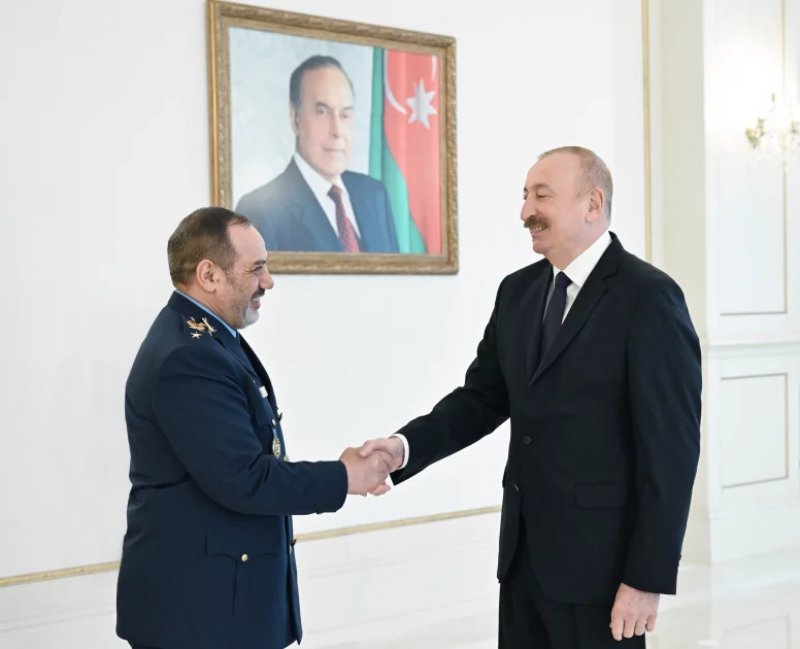
Photo: AZERTAC
- How would you assess the situation inside Iran after the recent protests subsided?
- Iran is not currently in a state of upheaval, but rather in what could be described as a tense pause.
The protests have indeed subsided, the streets are calmer, and from the outside it may appear that the crisis has passed. The authorities have reasserted control, security forces are functioning, and state governance remains intact. From the perspective of the state, this represents a success: the system endured, and a sudden collapse did not occur.
However, it is important to understand that this is not a full return to normality. It is, more accurately, the calm that follows a storm. The underlying causes that drove people into the streets have not disappeared. Economic pressure, inflation, a sense of social injustice, and fatigue from years of sanctions all persist. Society is exhausted and waiting to see what comes next.
There is also a significant psychological factor at play. Many people remain in shock after recent events. The violence, street clashes, and actions of radical groups, organized and directed from outside by Iran’s adversaries, became a profound psychological turning point. For many Iranians, it was difficult to comprehend that such developments could unfold within their own country.
This is also a challenging period for the authorities. On the one hand, they are projecting resilience. On the other, they are acutely aware that another wave of unrest could emerge if economic conditions worsen or if an external trigger appears. As a result, the government faces the difficult task of finding solutions under extremely constrained circumstances.
Overall, Iran today exists in a state of controlled but fragile stability. It is neither collapse nor revolution, but it is also far from genuine calm. Rather, the country appears to be entering a prolonged transition, where developments will depend less on street protests and more on economic conditions, external pressure, and how cautiously the authorities act moving forward.
- The United States and Iran have held talks on the Iranian nuclear program. How likely are these contacts to reduce tensions around Iran?
- In reality, the United States and Iran have not concluded negotiations in any meaningful sense — they have merely completed another round of contacts. This is neither a comprehensive agreement nor a resolution of disputes, but rather an attempt to pause and reduce the risk of sudden escalation.
On a basic level, tensions may ease somewhat. The very fact that dialogue exists lowers the likelihood of impulsive or abrupt actions. When parties are communicating, even indirectly, the risk of surprise attacks or uncontrolled escalation diminishes. That alone is a positive development. At the same time, it is worth recalling that the 12-day war began on the eve of negotiations, making it clear that Israel did not consider talks a restraining factor.
At a deeper level, however, these contacts do not resolve the core conflict. The nuclear issue is only one element of a much broader confrontation. Sanctions, regional rivalries, the Israeli factor, pressure on Iran’s allies, and, most importantly, the near-total absence of trust all remain unresolved.
Another key issue is that Washington and Tehran define “success” very differently. For the United States, imposing restrictions and oversight may be sufficient to claim that a threat has been contained. For Iran, success means tangible economic relief, not merely formal arrangements. If these expectations diverge, tensions can quickly resurface.
It would therefore be more accurate to say that negotiations may temporarily cool the situation, but they will not transform the region into a stable or peaceful space. This is not a solution, but an effort to buy time. Any reduction in tensions will be fragile and dependent on whether dialogue is followed by concrete steps, particularly in economic policy and sanctions relief.
That is why there is no sense of real relief around Iran today, only cautious anticipation of what comes next.
- Despite the talks, U.S. President Donald Trump continues his harsh rhetoric toward Iran. How likely is a military strike?
- Donald Trump’s anti-Iran rhetoric is primarily a tool of pressure rather than a direct signal of an imminent military strike. His political style relies heavily on aggressive public statements — threats, deadlines, and demonstrations of force. This approach is intended to raise the stakes and test the other side’s reaction. In that sense, rhetoric is part of a negotiating strategy, not necessarily a prelude to war. And as a businessman by instinct, Trump carefully weighs risks.
A military strike is theoretically possible, but in practice it represents an extreme and highly risky option. Any attack on Iran, even a limited one, would almost certainly provoke retaliation, draw in regional allies, lead to strikes on U.S. bases, drive up oil prices, and trigger broader destabilization. Such a scenario would be extremely difficult to control and even harder to bring to a swift conclusion.
Moreover, Trump is fundamentally a pragmatist. He calculates the political, military, and economic costs of every decision. In this case, those costs are exceptionally high. That is why, alongside harsh rhetoric, we see negotiations, mediators, and efforts to keep the situation within a manageable framework.
The most likely scenario, therefore, is continued pressure without open war: strong rhetoric, sanctions, and displays of force, but no immediate strike. The risk exists, but it is not extreme. This is not peace, but a delicate balancing act in which words currently outweigh actions.
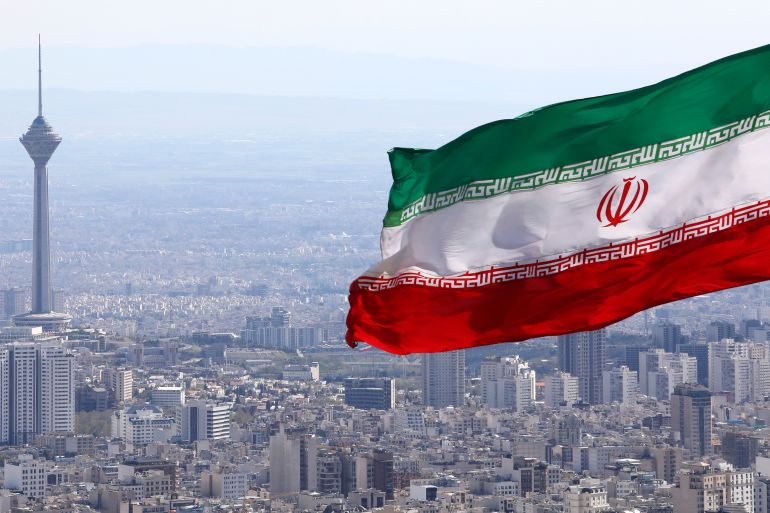
Photo: AP
- What scenarios are most likely for Iran’s statehood in the event of a potential regime change?
- If we hypothetically consider the possibility of regime change in Iran, it is important not to expect a simple or rapid outcome. History, both in Iran and elsewhere, shows that political transitions are rarely smooth or straightforward.
The first and most probable scenario is a prolonged transition period. In this case, the existing system weakens while a new one has yet to fully take shape. The influence of security structures, bureaucracy, and temporary governing bodies would increase, and behind-the-scenes agreements among elites would become more important. For society, this is the most stressful phase, marked by uncertainty, power struggles, and cautious, incremental steps rather than sweeping reforms.
The second scenario involves a restructuring of the system without a total collapse of the state. Iranian statehood, institutions, the armed forces, and borders would be preserved, but the balance of power among key actors would shift. Within Iran’s political elite, this option is often viewed as the least risky.
The third scenario entails growing regional fragmentation if the process spins out of control. This does not imply the country’s disintegration, but rather the strengthening of regional and ethnic dynamics, increased autonomy, and a weakening central authority. This is the most dangerous path, as it would leave Iran highly vulnerable to external pressure.
By contrast, scenarios involving a rapid restoration of the monarchy or an immediate transition to an idealized new political model appear highly unrealistic. There is neither a broad societal consensus nor established institutions capable of supporting such outcomes.
The main conclusion is therefore straightforward: if changes occur, they are likely to be evolutionary, complex, and drawn out—not revolutionary or instantaneous. This understanding is shared today both inside Iran and abroad. The experiences of countries such as Iraq or Libya serve as stark reminders. In those cases, external intervention justified by promises of security and stability led instead to prolonged chaos, institutional collapse, civil conflict, and widespread violence.
It is precisely this historical experience that fuels the caution and anxiety surrounding Iran today. The cost of such “experiments” for states and their populations is already painfully well known.