Why Tokyo and Seoul want to keep contacts with China open



Editor's note: Dr. Stephen Blank, a Senior Fellow at the Foreign Policy Research Institute. The article reflects the author's opinions and not necessarily the views of News.Az.
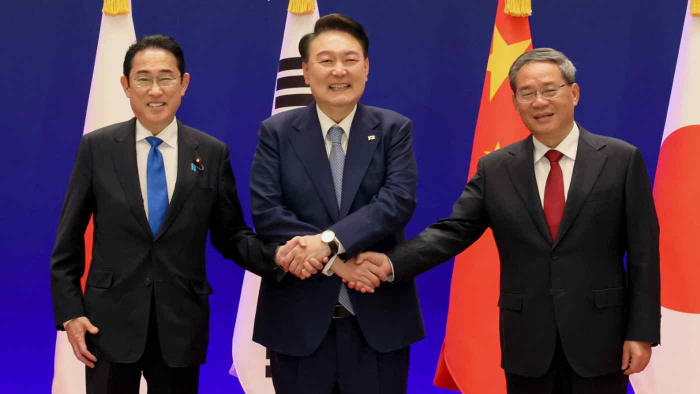
The recent tripartite Sino-Japanese-South Korea meeting deserves a clarification of the parties’ motives. Only then can we understand whether it can lead to a meaningful change in the trajectory of Asia’s international relations.For example, although the three states all advocated enhanced cooperation; it is quite clear that their motives are very different if not at odds with each other. Thus, China's call for increased trade reflects its rising apprehension that American decoupling of trade with China will lead as well to a substantial reduction of trade with those two Asian powerhouses and the rest of Asia. That outcome would also lead to greater political isolation of China in Asia.
At the same time, a rupture of trade with China could inflict serious damage on both their economies. For example, China is South Korea's largest trading partner so obviously an impending decoupling greatly affects it. Likewise, decoupling of economies significantly affects Japan who also has a major economic interest in China.
But we should not think that economics alone drove this meeting. In fact, the strategic factors that drive all three countries' overall policies were clearly in evidence here. South Korea, for example, clearly feels menaced by North Korea's nuclear and missile programs that with Chinese and Russian help have broken free of any international supervision. Moreover, some of the many increasingly sophisticated Sino-Russian joint military exercises in the Pacific Ocean have directly threatened South Korea. Lastly, China remains North Korea's chief economic partner, and therefore, an important potential restraint on whatever policy choice North Korea might adopt. These considerations make it abundantly clear why Seoul wants to keep the wires open to Beijing.
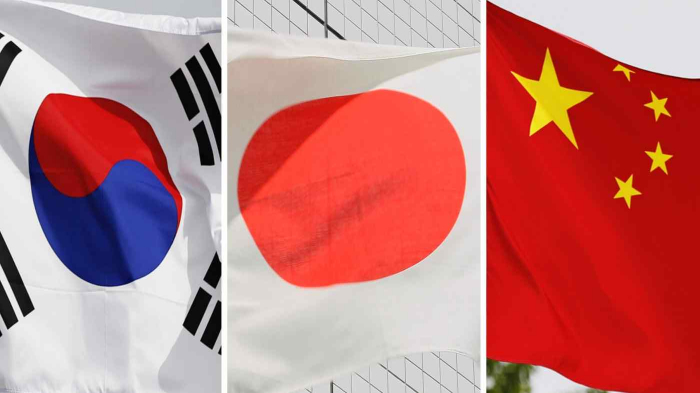
Similarly, Japan is equally under threat from North Korea and simultaneously under an even greater Chinese threat that can be discerned from both China's military buildup and its repeated threats against Japan either alone or in tandem with Russia. Therefore, any opportunity to increase dialogue with China is to be welcomed even as both Tokyo and Seoul are consistently strengthening alliance ties with Washington and other Asian states not least India.
These considerations also may be influencing China as it now contemplates the utter failures of its wolf warrior diplomacy and its aggressive tactics against India, Australia, and the Philippines, not to mention other Asian states.
The upshot has been the invigorated alliance system or network led by the United States. So perhaps partisans of a more tempered diplomatic approach have prevailed in Beijing regarding Japan and South Korea even as aggressive Chinese moves against Taiwan and the Philippines continue.
We may see further such moves among Asian states as they seek to enhance their freedom of action vis-a-vis China and the U.S. Indeed, such diplomatic flexibility typifies Asian governments' diplomacy according to many scholars. Nevertheless. such moves will probably not lead to a major moderation of the Sino-American conflict absent a fundamental change in foreign and economic policy in either of these great powers. While the American election might trigger such changes; it is quite unlikely that a Trump administration will enhance Asian security. And in that case it is likely that we will then see even more states trying to draw closer to China.
(If you possess specialized knowledge and wish to contribute, please reach out to us at opinions@news.az).


Similar news