Xi Jinping pledges $50.7 billion to Africa, alongside the creation of one million jobs


By Samir Muradov
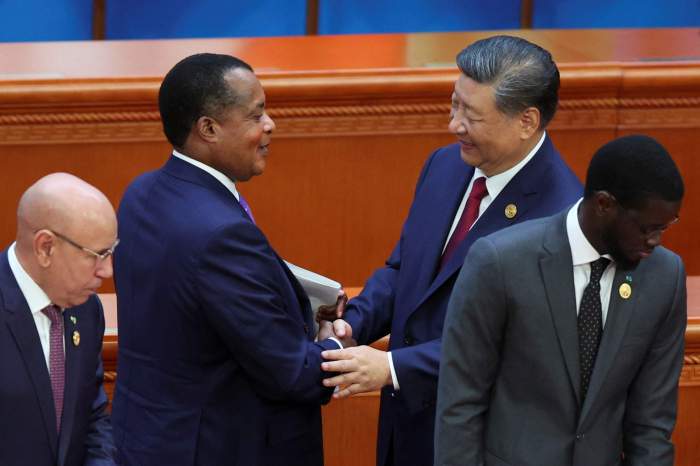
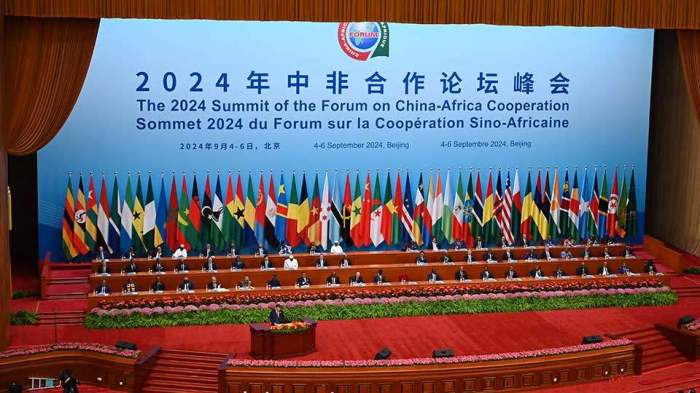
Chinese President Xi Jinping has launched a major initiative at the 9th Forum on China-Africa Cooperation (FOCAC), taking place from September 4 to 6, 2024 . He announced a $50.7 billion (360 billion yuan) funding package for African countries over the next three years. These funds are aimed at deepening cooperation with African nations and elevating bilateral relations to the level of strategic partnerships. Xi also promised to create at least one million new jobs in Africa as part of this initiative.In his speech at the summit, Xi proposed raising bilateral relations with African countries that have diplomatic ties with China to the level of strategic cooperation. This signifies a new level of interaction, where China and Africa will pursue modernization based on the principles of fairness, openness, mutual benefit, and environmental sustainability. Half of the promised funding will be provided as loans, while $11 billion will be allocated as grants.
The forum , attended by heads of state and government from 53 African countries—except Eswatini, which maintains ties with Taiwan—adopted a 10-point action plan outlining the main areas of cooperation. Among the priorities is a focus on creating eco-friendly and inclusive projects, as well as maintaining peace and security on the continent.
China, Africa’s largest trading partner, has played a key role in infrastructure development on the continent over the past 20 years, building about 100,000 kilometers of roads and 10,000 kilometers of railways. However, this time, Beijing plans to shift its focus from large-scale infrastructure projects to promoting green technologies and sustainable development. Xi expressed China’s intention to create a “China-Africa network,” which will include both land and sea routes, ensuring coordinated development and improved logistical infrastructure.
Despite this shift, several major infrastructure projects were announced during the summit. For instance, China and Nigeria agreed to deepen cooperation in infrastructure, including transportation, ports, and free trade zones. An agreement worth $3.3 billion was signed between the China Road and Bridge Corporation (CRBC) and Nigeria’s Brass Fertilizer and Petrochemical Company Ltd (BFPCL) for the construction of the Brass Industrial Park and a methanol complex.
Tanzania also received a commitment from China to revive the long-stalled railway connecting it with Zambia, a project originally completed in 1975. In February 2024, China offered $1 billion to restore this 1,860-kilometer railway, allowing Zambia to gain access to the sea through Tanzania, bypassing dependence on Zimbabwe and South Africa.
Additionally, Xi Jinping promised to deepen cooperation with Zimbabwe in agriculture, mining, energy, and transportation infrastructure. Kenya secured guarantees for support in exporting its agricultural products to China and assistance in building the Rironi-Mau Summit-Malaba motorway, a project costing $1.2 billion. Kenya also recently joined the China-led Asian Infrastructure Investment Bank (AIIB), providing the country with access to long-term loans, bypassing the IMF and World Bank, especially in light of increased risks of default on sovereign debts.
It is important to note that China is the largest bilateral creditor to African countries. According to Boston University, China provided African nations with approximately $191 billion between 2006 and 2021, and Chinese loans to African countries reached a seven-year high in 2023. The volume of loans in 2023 amounted to $4.61 billion, three times the previous year’s figure. Interestingly, a significant portion of Chinese loans is now directed to local banks, reducing risks for Beijing.
Thus, China continues to strengthen its influence in Africa , particularly amid escalating tensions with the U.S. and Western countries. Africa is becoming a key arena for China’s geopolitical competition with the West. Currently, nearly a quarter of African exports, primarily minerals and metals such as copper, cobalt, lithium, and rare earth elements, are shipped to China, which also plays a key role in developing these resources.
Xi Jinping’s initiative aims to elevate China-Africa relations to a new level, fostering economic growth and sustainable development on the continent, positioning Africa as a crucial partner in realizing China’s global strategic goals.


Similar news