Abraham Shmulevich: War halted halfway as Trump avoids Iran’s defeat - INTERVIEW


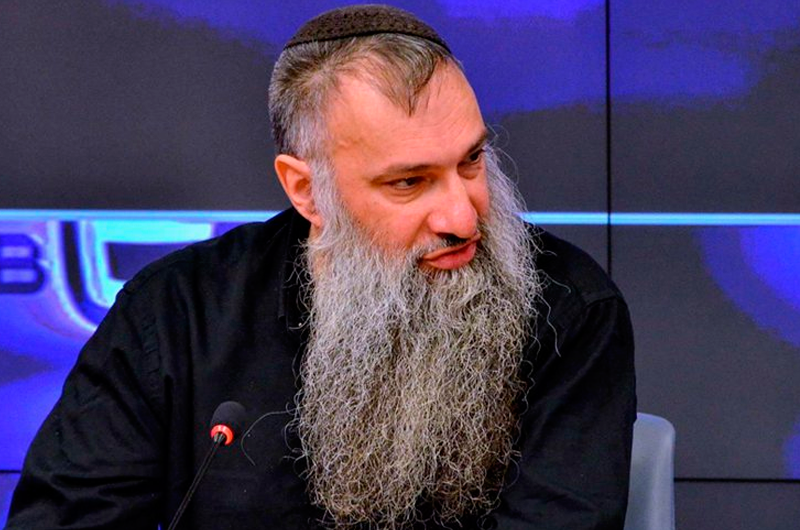
Amid the rapidly evolving dynamics of the Iran-related conflict and growing uncertainty over a fragile ceasefire, key questions remain unresolved: who benefited most from the confrontation, why the escalation halted at a critical moment, and whether the region is entering a new phase of instability. The situation continues to reshape the balance of power across the Middle East, exposing shifting alliances, strategic calculations, and persistent risks.
In this context, Abraham Shmulevich, an Israeli political scientist and president of the Eastern Partnership Institute, shared his assessment in an interview with News.Az, offering a critical perspective on the outcomes of the conflict, the role of global actors, and internal developments within Iran.
– What are the main outcomes of the war around Iran at this stage?
– If we attempt to draw an interim conclusion, one thing becomes clear: Donald Trump, at least for now, does not seek the complete defeat of Iran. What we are witnessing is, in many ways, a paradoxical situation. The results have largely benefited the Islamic Revolutionary Guard Corps. At the same time, Israel can also claim victory. Meanwhile, the implications for the global economy and the U.S. administration remain uncertain. Perhaps most unexpectedly, the biggest losers have been the Arab monarchies of the Persian Gulf.
– Why do you say that Trump effectively stopped the war halfway through?
– Because this is already the second such case. During the previous conflict a year ago, Trump suddenly announced a ceasefire and declared that all objectives had been achieved, including the destruction of Iran’s nuclear program. At that very moment, Israeli aircraft were already airborne and heading toward their targets, but they were ordered to turn back.
It later became clear that Iran’s nuclear program had not been destroyed. We are now seeing a similar pattern: once again, statements are being made about achieved objectives, but the reality on the ground does not fully correspond to those claims.
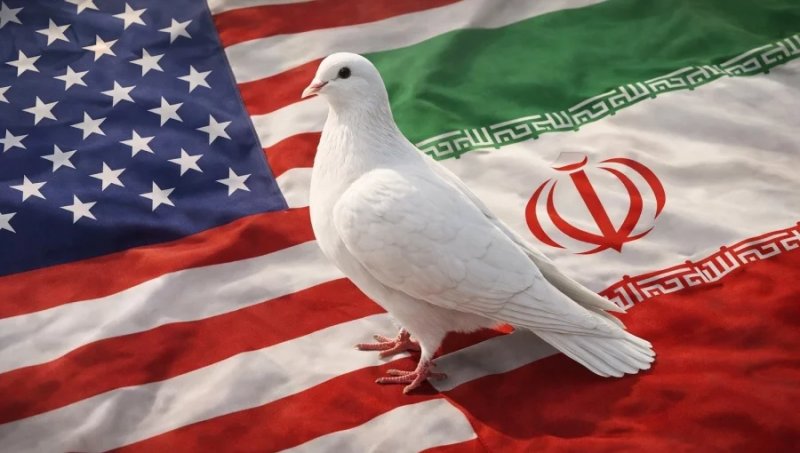 Source: Xinhua
– How did the previous war affect the internal situation in Iran?
– It did not weaken the regime — on the contrary, it strengthened it, but in a very specific way. Real power was ultimately consolidated by the Islamic Revolutionary Guard Corps. They pushed aside the traditional religious elite and concentrated control of the state in their own hands.
It is important to emphasize that the main beneficiary of that war was the IRGC — not the Iranian people, not the formal leadership, and not even the ayatollahs.
– What has changed after the current phase of the conflict?
– The key point is that the IRGC has not only survived but has grown stronger. Moreover, they have advanced their own figure — Mojtaba Khamenei, the son of the previous Supreme Leader.
However, this is essentially a nominal figure. Even if he is alive and formally in position, he lacks both the experience and the real capacity to govern. He is a classic placeholder, entirely dependent on the IRGC generals.
– Why do you believe Israel emerged as a winner?
– From a military standpoint, this is an absolute victory. The scale of losses for the United States and Israel is unprecedentedly low.
Across approximately 15,000–20,000 combat sorties, the United States lost only one aircraft, with another damaged. Israel did not lose a single aircraft. In the history of warfare, such figures are virtually unheard of.
Moreover, Iran has been pushed back significantly: key elements of its military infrastructure, including missile production capabilities, have been destroyed. Israel’s primary objective — to weaken Iran for an extended period — has been achieved.
– And what about the political outcomes for Israel?
– They are equally significant. For the first time in its history, Israel fought not alone, but alongside an ally — the United States — directly on the battlefield.
Previously, Washington often restrained Israel, applying pressure and demanding the cessation of operations. Now we see the opposite: coordinated military action.
In addition, Arab states, particularly Jordan and the Gulf monarchies, effectively acted on Israel’s side by intercepting missiles. This represents a profound shift in regional dynamics.
– But if everything has been so successful, why do you speak of uncertainty?
– Because the statements made by the parties contradict each other. We do not fully understand what has actually been agreed upon.
Iran claims that the United States has violated parts of the arrangement, specifically regarding a demand to halt strikes against Hezbollah in Lebanon. Israel denies this and continues its operations. Just recently, strikes were carried out against around 100 targets.
– What is happening with the Strait of Hormuz? Has it really been reopened?
– The Americans claim that it has. However, in reality, hundreds of vessels — around 500 — remain in limbo.
Iran asserts that it has been granted the right to charge transit fees for ships passing through the strait. If true, this would represent a major success for Tehran. The United States denies this. Once again, we are facing complete ambiguity.
– What is known about the current leadership in Iran? Is there a new government, as Trump suggested?
– We do not see any new leadership. All key figures remain the same.
Statements continue to come from the same officials — the Speaker of Parliament, the Foreign Minister. Formally, Mojtaba Khamenei is considered the Supreme Leader, but he does not appear publicly. His messages are read out by announcers.
If he truly controlled the situation, we would see him. So far, we do not.
– What is happening with Iran’s nuclear program?
– Iranian sources claim that uranium enrichment has been permitted. The Americans say the opposite.
There is no clarity whatsoever. This is yet another example of complete informational uncertainty.
– Can it be said that Iran was close to total defeat?
– Yes. At the moment the conflict was halted, Iran was in an extremely vulnerable position.
Its air defense system had been nearly destroyed. The United States and Israel could have continued strikes for weeks or even months, leading to the complete destruction of Iran’s military-industrial capacity and much of its economy.
Such conditions could have paved the way for regime change. The leadership would have lacked the resources to maintain control.
– Then the key question: why did Trump stop?
– This is the central, and still unanswered, question. He halted the war precisely at the moment when he could have achieved his stated objectives.
We can only observe the fact: Trump does not want the complete defeat of Iran. The reasons behind this decision remain unknown.
– How is Iran behaving after the ceasefire?
– Not like a defeated party. Iran is making demands, speaking about control over the strait, and insisting on ending the war in Lebanon.
This is the behavior of a country that believes it has gained time and secured a strategic pause.
– What are the consequences for the Persian Gulf countries?
– They have emerged among the losers. They suffered strikes but received no security guarantees for the future.
This leaves them in a highly vulnerable position.
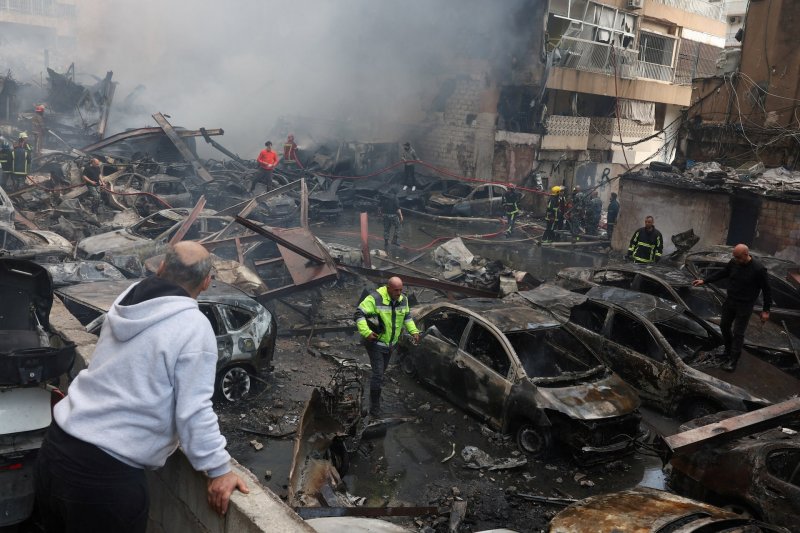 Source: Reuters
– What is Israel’s position now?
– Prime Minister Benjamin Netanyahu has made it clear: Israel will not stop its operations against Hezbollah in Lebanon.
This is a principled stance, also driven by domestic political considerations, particularly with elections approaching.
– How is the situation developing now? Is there a risk of renewed escalation?
– Yes, and a very high one. There are already reports of explosions in Tehran and strikes on targets in Gulf countries.
Both Iran and the United States are issuing hardline statements. Any spark could trigger a new phase of the war.
– Your overall conclusion?
– The situation remains extremely uncertain. We are witnessing a classic “fog of war”, and perhaps also a fog in political decision-making.
Israel has achieved both strategic and tactical success. The IRGC has secured a tactical victory by preserving its hold on power. The United States, for now, has no clear outcome.
Everything could change at any moment. For now, Israel is returning to normal life, but this may prove to be only a pause before the next stage of the conflict.


Similar news