AI reconstructs 2,000-year-old Babylonian Hymn, unveiling hidden facets of ancient society


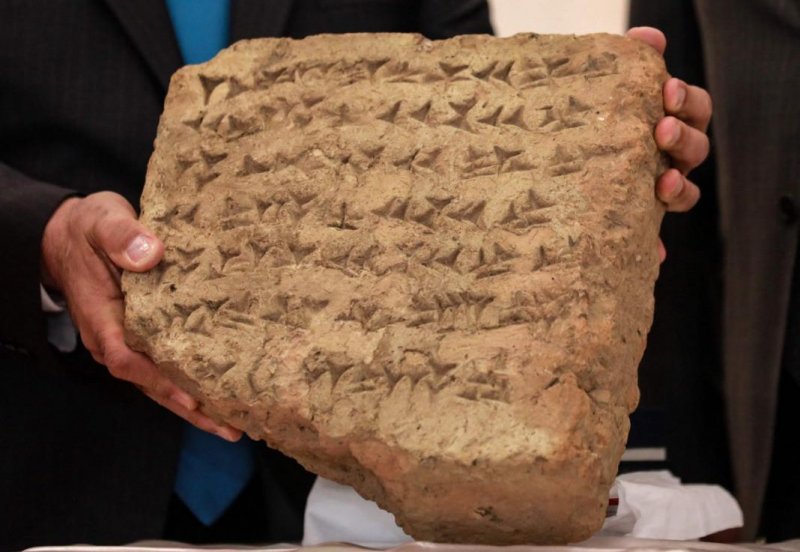
In a landmark fusion of technology and archaeology, researchers have fully reconstructed a 2,000-year-old Babylonian hymn once thought lost to history.
The 250-line text, pieced together by Professor Enrique Jiménez and teams from Munich and Baghdad universities, was restored using advanced AI tools that analyzed and matched 30 fragmented clay tablets, News.Az reports, citing Ground News.
The hymn, which had remained incomplete and unreadable for over a millennium, offers stunning new insights into ancient Babylonian life. It praises the grandeur of Babylon, then the world's largest city, and includes rare descriptions of women serving as priestesses, foreigners being welcomed, and a society deeply engaged with natural and spiritual forces.
Scholars are hailing the find as one of the most significant cultural discoveries in Mesopotamian studies. Its widespread copying in antiquity suggests it was not only a spiritual text but also an educational cornerstone in Babylonian society.
"This is a fascinating hymn that describes Babylon in all its majesty and gives insights into the lives of its inhabitants, male and female," said Professor Jiménez.
The reconstruction effort highlights the revolutionary impact of AI on archaeology. Tasks that would have taken decades were completed in a fraction of the time, prompting many to describe the moment as a turning point in digital humanities. However, experts emphasize that AI complements, rather than replaces, traditional scholarship.
The hymn’s revival has sparked interest beyond academic circles, with some religious commentators linking it to biblical prophecy and end-times narratives involving Babylon.
Whether viewed through the lens of historical inquiry or religious symbolism, the rediscovered hymn provides an extraordinary window into the values, beliefs, and daily life of an ancient civilization that continues to captivate the modern world.


Similar news