Astronomers discover "Loki": The scattered remains of a lost ancient galaxy


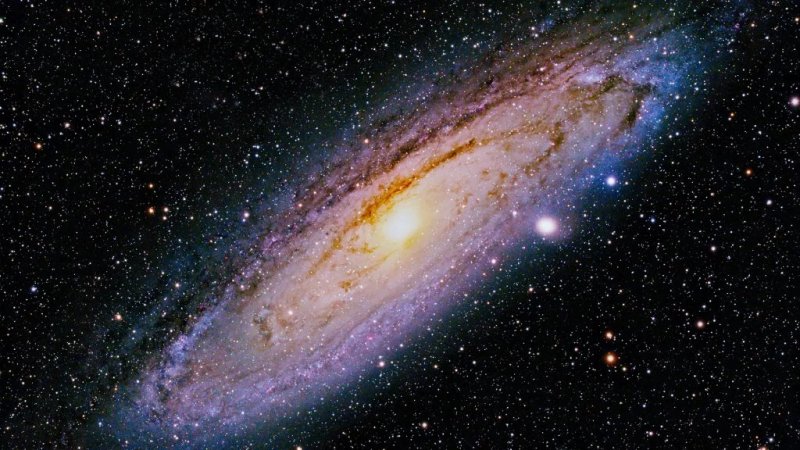
A recent study published in the Monthly Notices of the Royal Astronomical Society suggests that some of the oldest stars near Earth may not have originated in the Milky Way.
An international team of researchers analyzed 20 "very metal-poor" stars located within 6,500 light-years of the Sun and discovered that they share unusually similar chemical fingerprints, News.Az reports, citing The Debrief.
These findings indicate that the stars likely formed in a common, substantial environment—tentatively named "Loki"—before being swallowed by the Milky Way during its violent early assembly.
The stars examined are considered astronomical fossils because their low metal content implies they formed in the early universe, preserving signatures of the first supernovae and neutron star mergers.
RECOMMENDED STORIES
- Frozen ice core from Antarctica offers rare 6 million year glimpse into Earth’s past
- Ancient gold treasures from Abbasid era uncovered in Saudi Arabia
- Scientists identify massive new dinosaur Nagatitan Chaiyaphumensis in Thailand discovery
- Samsung Galaxy S26 Ultra user highlights surprising utility of overlooked tool after switching phones
While traditional models suggest such ancient stars should be scattered throughout the Galaxy’s spherical halo, this specific group travels in flattened, eccentric orbits close to the galactic plane. Despite moving in both prograde and retrograde directions, their tightly clustered chemical abundance patterns suggest they were deposited by the disruption of a single, dwarf-like system rather than a random sampling of the halo.
Cosmological simulations support the theory that a substantial progenitor system falling into the chaotic proto-Milky Way could scatter stars into diverse orbital paths. The chemical signatures of these stars resemble those found in classical dwarf galaxies, which are large enough to retain and mix heavy elements from powerful stellar explosions. While the researchers caution that the sample size is small and that other ancient systems may have also contributed to the Milky Way's population, "Loki" remains a compelling candidate for a vanished galactic ancestor whose remnants still orbit near the galactic disk billions of years later.
By Leyla Şirinova


Similar news